| Tagline: | fernsehen, video, multimedia |
|---|---|
| Venues: | Podewil |
| Date: | 15.02 – 25.02.1996 |
| Organisation: | Mediopolis Berlin e.V. |
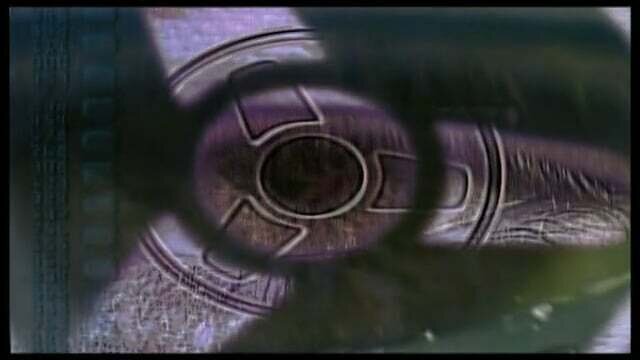
Technological advances were growing at an exponential rate, and electronic art had started to invariably succumb to the digital. To deal with these developments, the VideoFest had restructured itself: video, television and multimedia were now given equal attention, and even the screening of films made with digital production elements was now possible.
festival preface
The VideoFest is in its 9th year and using its old name for the last time. Video was always Important to us and, for as long as the medium exists, will remain so. Video: 30 years ago this new art form was developed world-wide, enabling people to work and express themselves non-commercially. It led to a demand for a different public realm, unlike the all-encompassing one of aggressive politics and media. Quality videos belonged to the Avantgarde. They set standards for the aesthetic language used in film and television. But is video on the way out? Computerised digital editing systems are gaining. Working with tapes for a production, and even when recording, Is becoming obsolete. Television is changing as well. Virtual studios, interactive TV and integrating television and computer nets: these are today's magic words. Films will be shot directly on film or video, digitally cut in computers, and distributed as CDs, videos or features. Screenings in cinemas will use digital copies sent by satellite. The boundaries between film, television, video and multimedia are fading. As one medium draws from the other, their exchange of bytes is trans-medial. Pictures, books, music, and newspapers are digitally produced; and, in data nets, a book with music is not just a dream of the future. Communication is experiencing new dimensions.
Technological advances are growing at an exponential rate, and electronic art will Invariably succumb to the digital. To deal with these developments, the VideoFest has restructured itself: Video, Television and Multimedia are now given equal attention, and even the screening of films made with digital production elements Is now possible. Our VideoFest prizes also move with this change: we award three prizes of DM 2,500 each to chosen works from the categories of Video, Television and Multimedia. Although our MAIN PROGRAMME and NIGHTFLIGHT program are dominated by videos, the number of works for television have been greatly increased.
In addition, the MAIN PROGRAMME showcases the European premiere of Interactive feature film Psychic Detective by John Sanborn (USA), and a video-dance-performance by Jean-Marque Matos (France). Another performance, too, enriches the NIGHTFLIGHT: The cabaret artist Matthias Beltz snd the philosopher Geburg Treusch-Dieter, on the tracks of catastrophe-culture and human lust.
Our student competition is new. A jury of Berlin students made two special programmes from videos gathered from art schools, and chose a winning entry. The prize: a trip to the VideoFest '96. Once again, more about the VideoFest has changed than can be fitted in here. But we are still flexible without adapting to conventions, and concerned with transporting and reflecting upon new forms of media-culture. Our festival initiates a discourse on Innovation Instead of a mammoth show bombarding viewers with Its products. As always, we wish you the finest combination of entertainment, information and reflection. Incidentally, from 1997 on, our new name will be: transMedia.
Knut Gerwers, Micky Kwella, Johannes Lenz-Hawliczek, Susanna Mende, Bea Wölfling (The VideoFest Team)
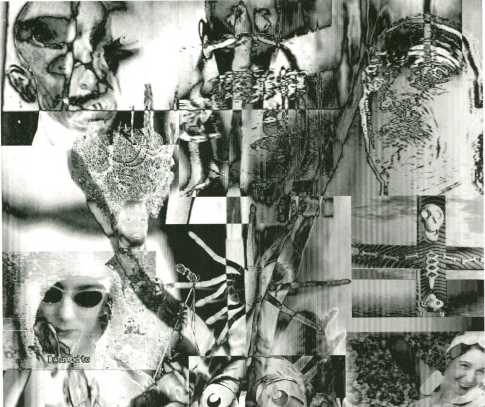
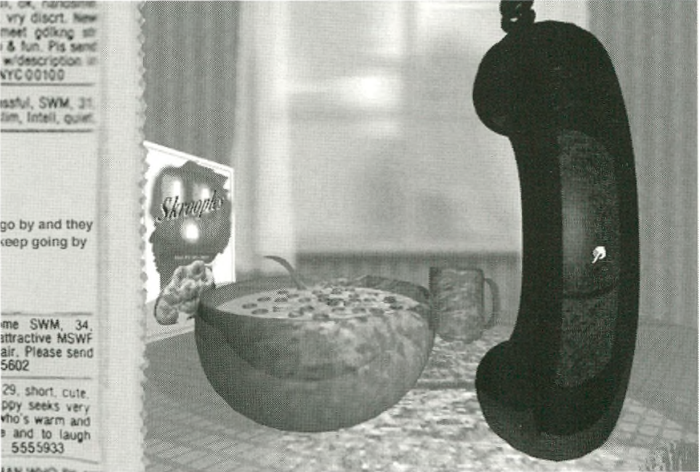
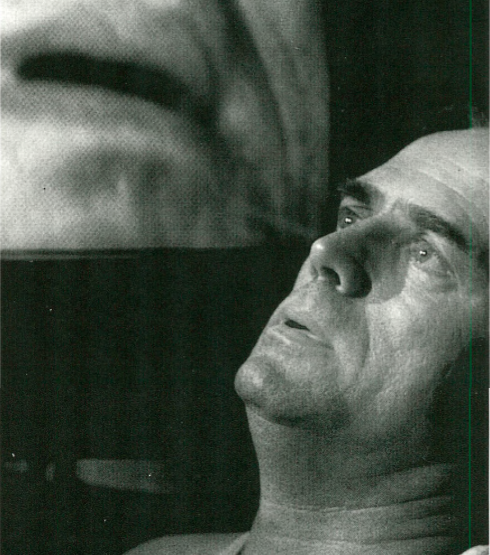
After the restructure of the VideoFest, although the MAIN PROGRAMME and NIGHTFLIGHT programme were dominated by videos, the number of works for television were greatly increased. The notion of looking for and securing traces guided their choice of installations on this year, together with a selection of videos and installations from Polish artists. Alongside staged presentations, the Multimedia exhibition showed a selection of 20 individual works where the viewers could move about freely among the projects being displayed.
The festival catalogue includes information of all events and artworks of the VideoFest '96. Since technological advances grew at an exponential rate, and electronic art started to invariably succumb to the digital, the VideoFest '96 had restructured itself and payed more equal attention to video, television, and multimedia.
Prizes will be awarded to works which are of outstanding creativity and contribute to the furtherance video, TV and multimedia, or those which deal with important social topics in an unusual way. The prizes will be granted by the selection committee of the VideoFest (Knut Gerwers, Micky Kwella, Susanna Mende, Bea Wölfling).
Our student competition is new. A jury of Berlin students made two special programmes from videos gathered from art schools, and chose a winning entry. The prize: a trip to the VideoFest '96.
team
Micky Kwella Festival Director, Program, Johannes Lenz-Hawliczek Business Manager, Susanna Mende Program, Bea Wölfling Program, Axel Bohse Video Installations, Bea Wölfling Press, Katja Schulz Assistant to the Director/Festival Realization, Danja Swindall Office & Counter, Kerstin Rautenberg Counter, Klaus Meier EDP, Matthias Behrens, Hannes Ickert, Home of Pirates International Technical Support**, Raimund Schlie** Coordination Podewil, Andreas Keßler Technical Support Podewil, Jens-Peter Steinert Videofest-Trailer
supporters
Funders: Senatsverwaltung für Kulturelle Angelegenheiten Berlin, Panda soft, NOKIA, VideoVox AV-Produktionen, Contrib.Net, PIK, Fritz, Pro Publico Medeingesellschaft, Berliner Kindl, Grenzenlos Kulturelle Begegnung mit Polen 1995
special thanks to following the institutions & companies: Auswärtiges Amt in Bonn, Minhoff, MACup-Verlag in Hamburg, TIP Magazin, Foro Artistico Eisfabrik Hannover, SiliconGraphics Computer Systems, Sharon Barnes in Dublin, and all speakers