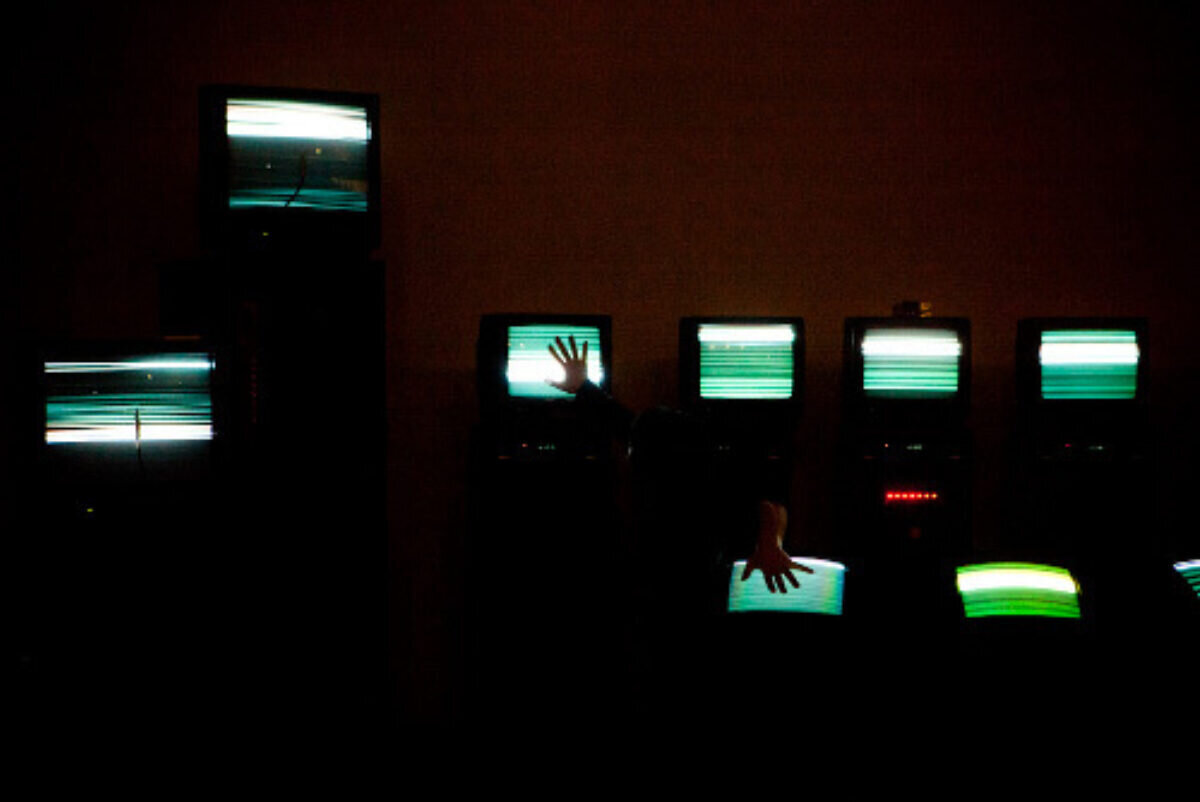
Haus der Kulturen der Welt (HKW)
2 – 5 February 2011
The festival theme RESPONSE:ABILITY is also a reflection of the Internet as an increasingly political sphere. Our entire repertoire of digital action – online-profiles, shopping, exchange and networking – is socio-politically ever more relevant and leaves traces in the real world. The Internet has become a strategic action zone, one that demands evermore composure from the statusupdaters and prosumers of the Web 2.0 era.
While artists, activists and entrepreneurs seem to embrace this new terrain with visionary experimentation, governments and copyright owners however see the Internet as a problematic zone. They respond with the same urge for privatisation and normalisation we already know from the realm of urban regulations. The Open Web, originally the system norm, is becoming more and more a competitive resource.
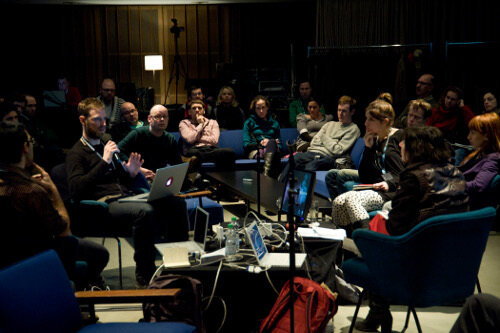
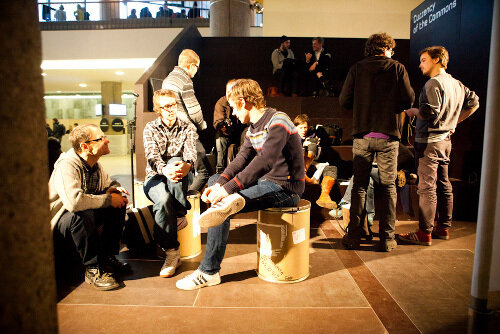
The Open Zone is thus a networked experiment with different social territories that, for the duration of transmediale.11, are occupied by artists and media activists. We focus on the split second between “Stand by” and “On” – the moment where a person decides to act and a passive system becomes active. The strategic requirements of Open Culture are examined and can be experienced by visitors in open studios, project labs, exchange centres and experimental spaces located in the foyer of the Haus der Kulturen der Welt.
This model of a responsive city reflects the human capacity to deal with the overwhelming flow of events responsibly acting in a self-determined way. For a free digital culture that is shaped by us all, these are the basic requirements.
The network is here and now, it is ‘live’. Others have built it for us – now we have to configure it.
Ela Kagel, Programme Curator, The Open Zone
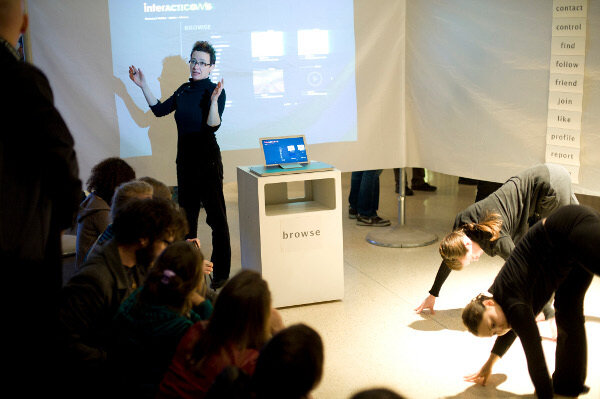
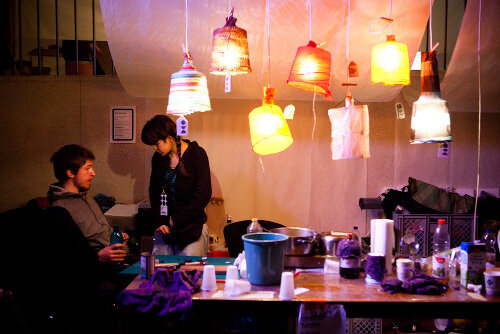
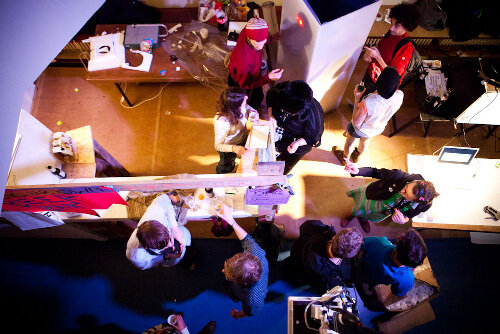
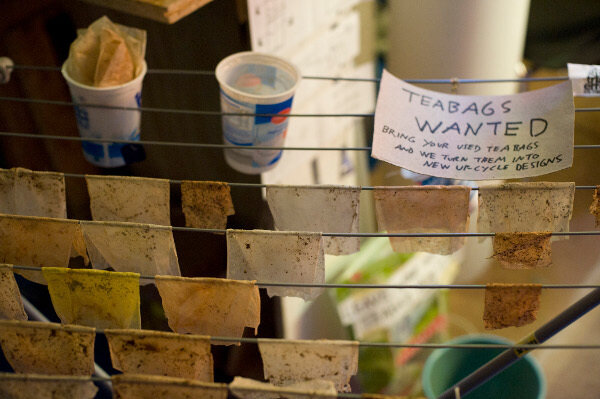
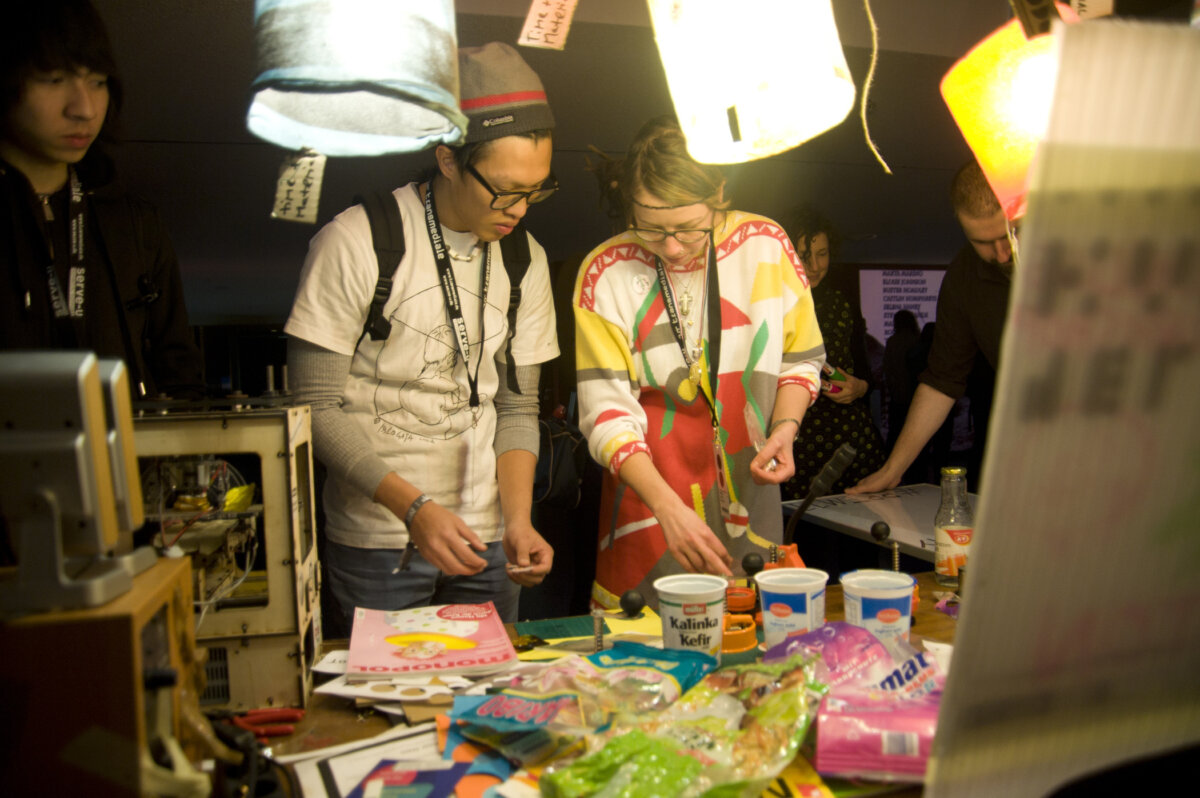
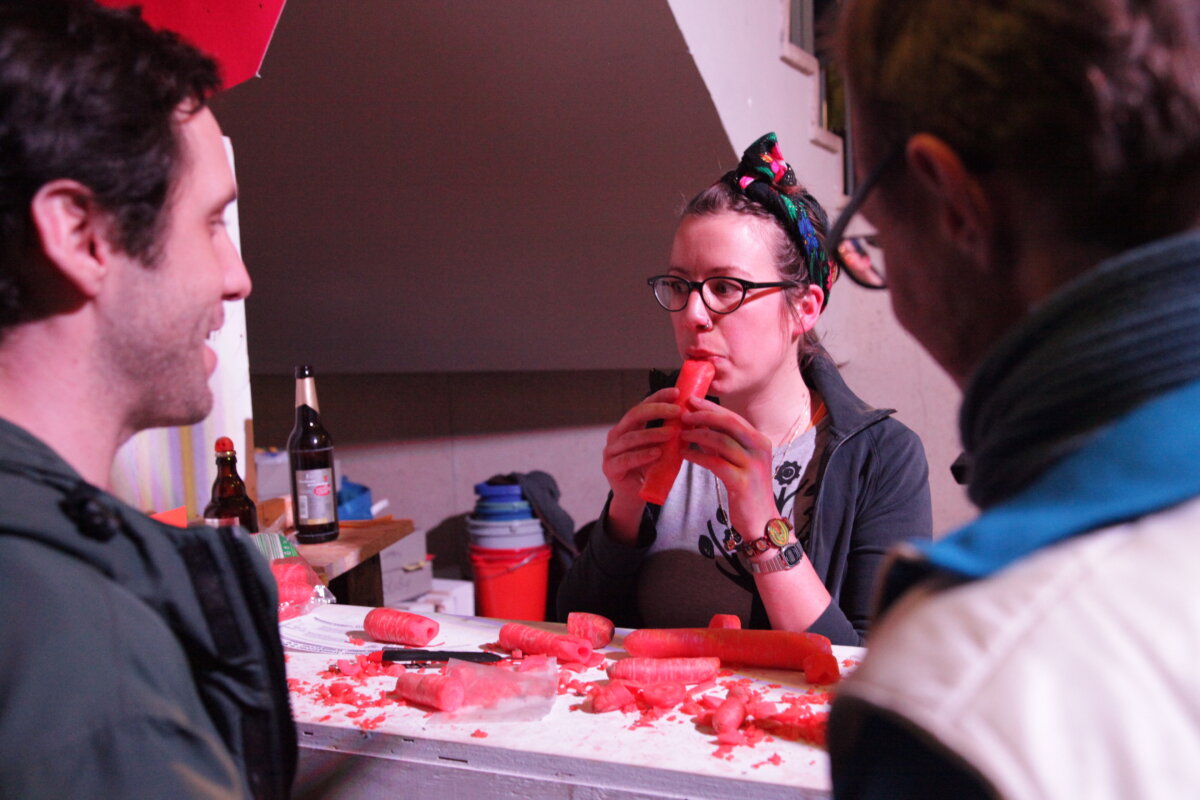
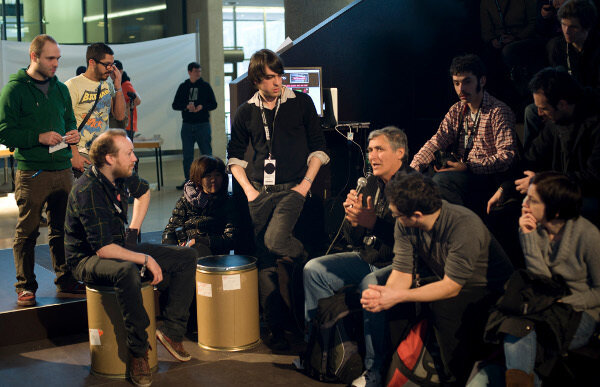
The Open Zone is made up of eight different workstations and the Open Web Award area in the foyer of the Haus der Kulturen der Welt (House of World Cultures). These are rounded out, in addition, by a total of three Talk Sessions with a wide spectrum of workshops and presentations (also on a theoretical level) in the Open Zone. An overview of the whole programme follows:
LOST IN THE OPEN? – Navigating the Open Web & Free Culture
Here, the working and living conditions of so-called Open Culture are examined by means of projects and initiatives that change daily. Visitors have the opportunity to meet some of the most well known Free Culture activists, to ask questions, listen to opinions and develop common approaches for open systems. Here the aim is also to reach a deeper understanding of the issues surrounding the ideas ‘free’ and ‘open’. The individual workshops are suitable for both artists and cultural workers who are looking for new ways of working and collaborating, and also for all interested parties including sceptics who are not fully convinced about the ‘great freedom’. For five days there is the opportunity to come into contact with all aspects of Open Culture through hands-on workshops, meeting people and developing projects. That there is a tremendous need for such new solutions is clear from just a glimpse at the breadth of the theme spectrum: from the utopias of the digital citizen to freedom of information access, to new forms of cooperation – we now have an opportunity to help shape these social changes.
RESPONSE: ACTIVITIES – Strategies of Political Participation
The Internet has evolved from the carefree online playground of the nineties to become a contested area of social and political action. In accordance with the festival theme, RESPONSE:ABILITY, a broad range of political activities is examined in this workstation. There is a particular focus on the activist potential available to each individual that can be used to make lasting changes – provided there is an awareness of their own responsibilities. In various workshops and presentations, projects and people from around the world concerned with making a difference – by giving a voice to those who would otherwise remain unheard or by working for the open web and open access to knowledge – are presented. All these initiatives demonstrate, in the end, the need to fully understand the Internet. It is more than the sum of our private social contacts and on-demand content – the Internet is our extended road, a public space whose survival we should all support.
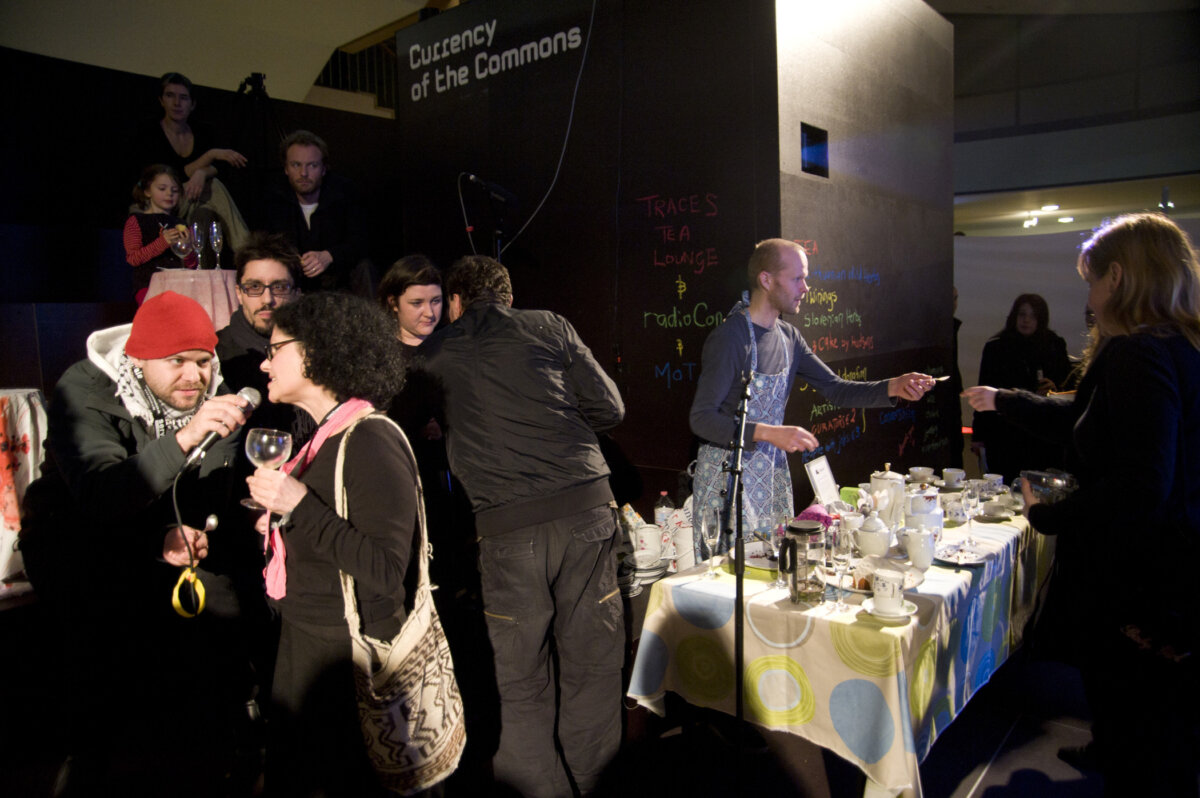
THE CURRENCY OF THE COMMONS – The Price and Value of Free Culture
Until recently, one would never have thought to connect Free Culture with money making. But ‘free’ doesn’t always mean ‘free from price’ or ‘free from worth’ – quite the opposite. However, the traditional business plan as a reference point for this sector is also very limited. How can an estimation of worth be made of someone who gives away all of their possessions in order to feel good? How can cultural value be identified and measured? And what new forms of trade and income are created by digital culture? In this workstation, temporary shops are opened and short-term value transfer systems are presented in the form of alternative banks. For the duration of the festival, visitors can, in this part of The Open Zone, meet media activists and see visions of an alternative economy successfully implemented.
Identity Bureau
Our identity is constructed as human beings that can possess one or more natural persons and control one or more artificial persons. The higher up in the class system the better the access to status variety.
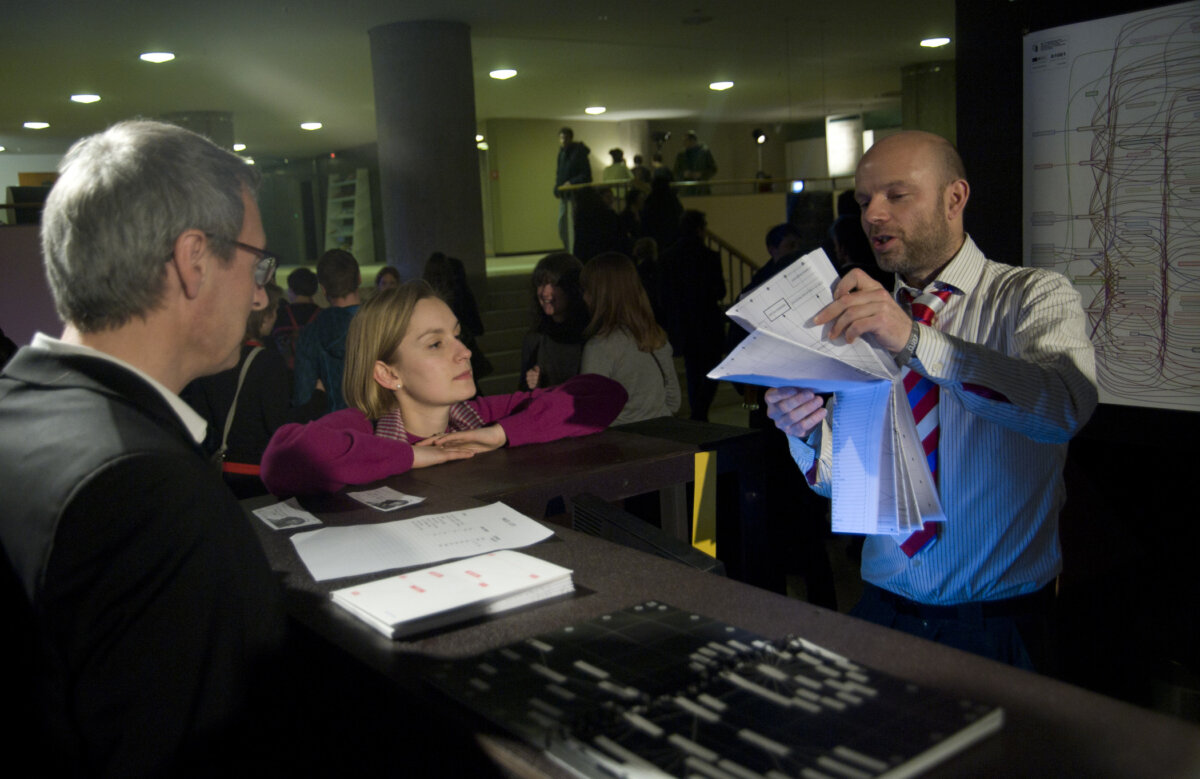
Heath Bunting's Status Project surveys these class systems of human being management and produces maps of influence and personal portraits for both comprehension and mobility. The Status Project is also producing new natural person identities.
At transmediale.11 Heath will set up an Identity Bureau where he will sell the off-the-shelf natural persons he has created, he will also advise on how to use or make one's own Identity.
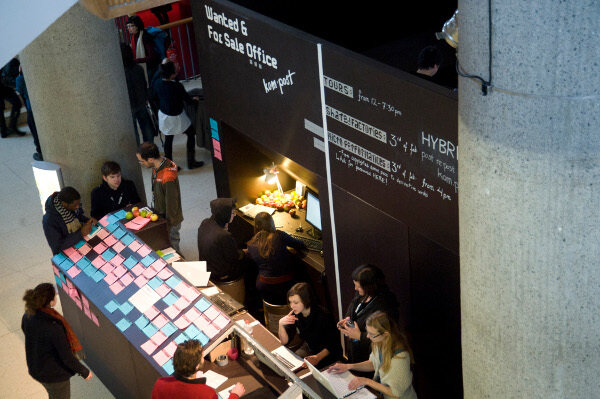
The Wanted & For Sale Office
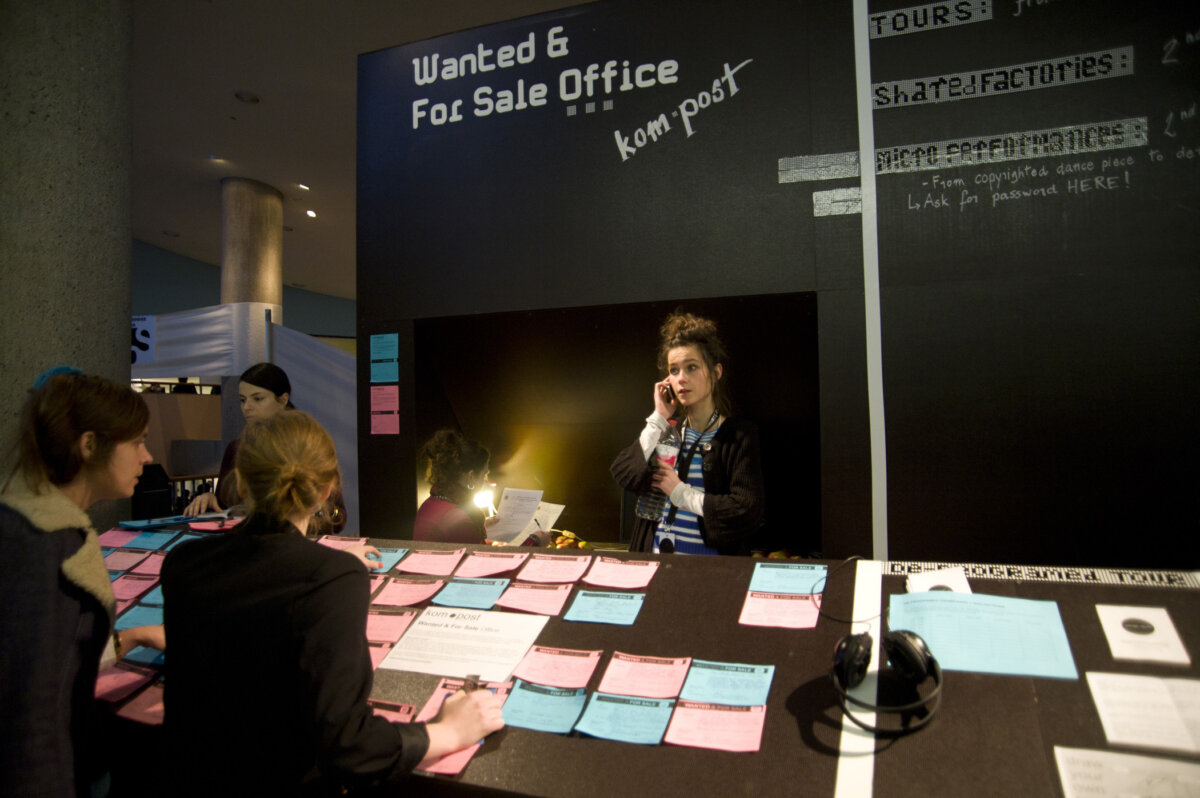
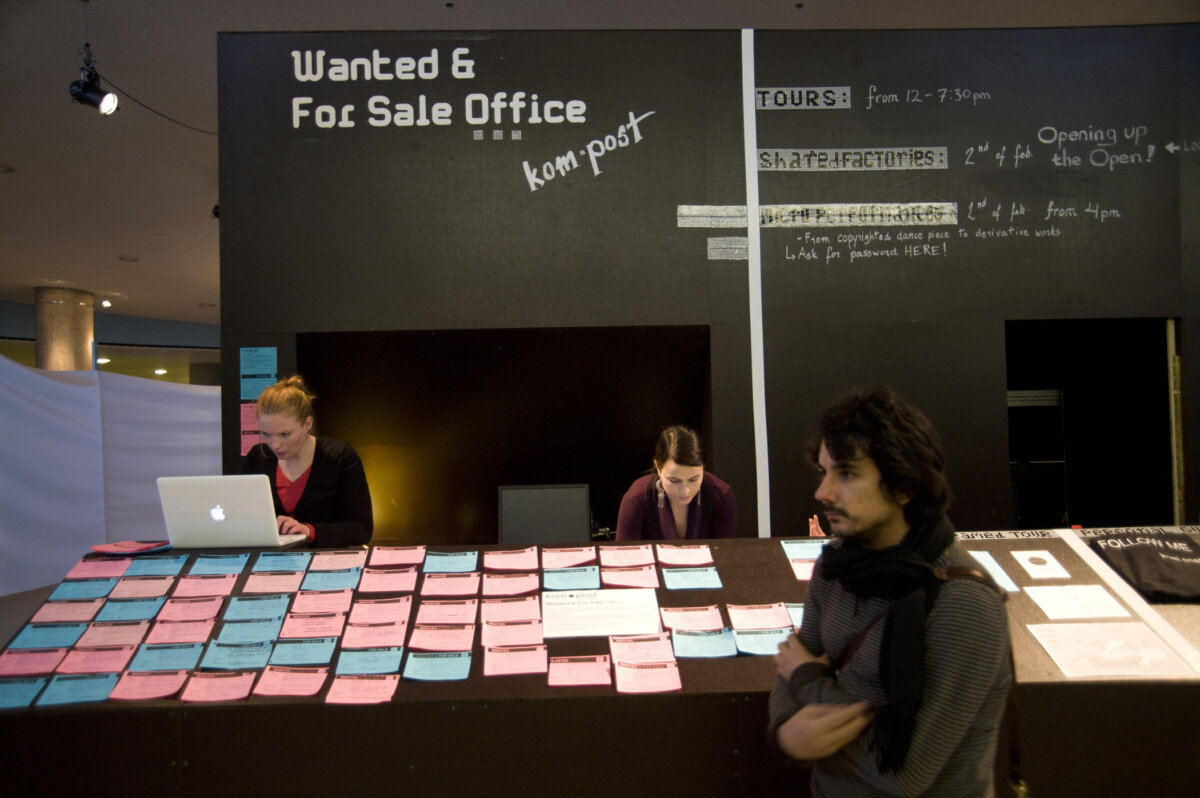
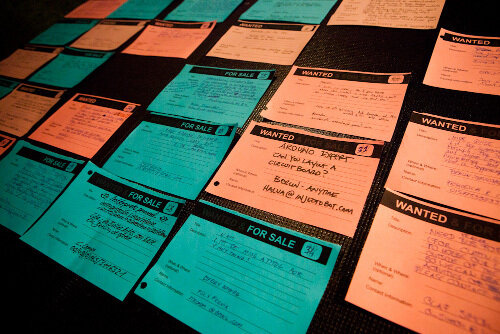
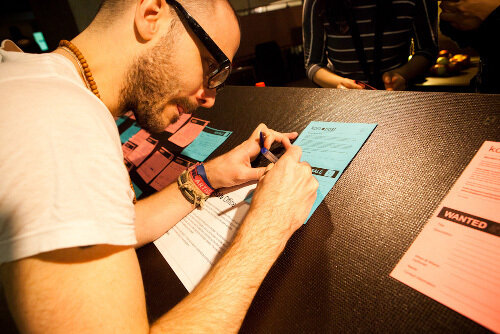
The Wanted and For Sale Office is run by the kom.post collective. Here an economy is created in the ancient sense of the word 'oikonomia'. The imposed system of monetary exchange is transformed as visitors are asked what they have to give and what they want. Everyone builds this new system, exchanging skills and finding new solutions to problems. Each request and offer is displayed in the Office so that exchange partners can be found and so the Office becomes a living artwork by each participating individual.
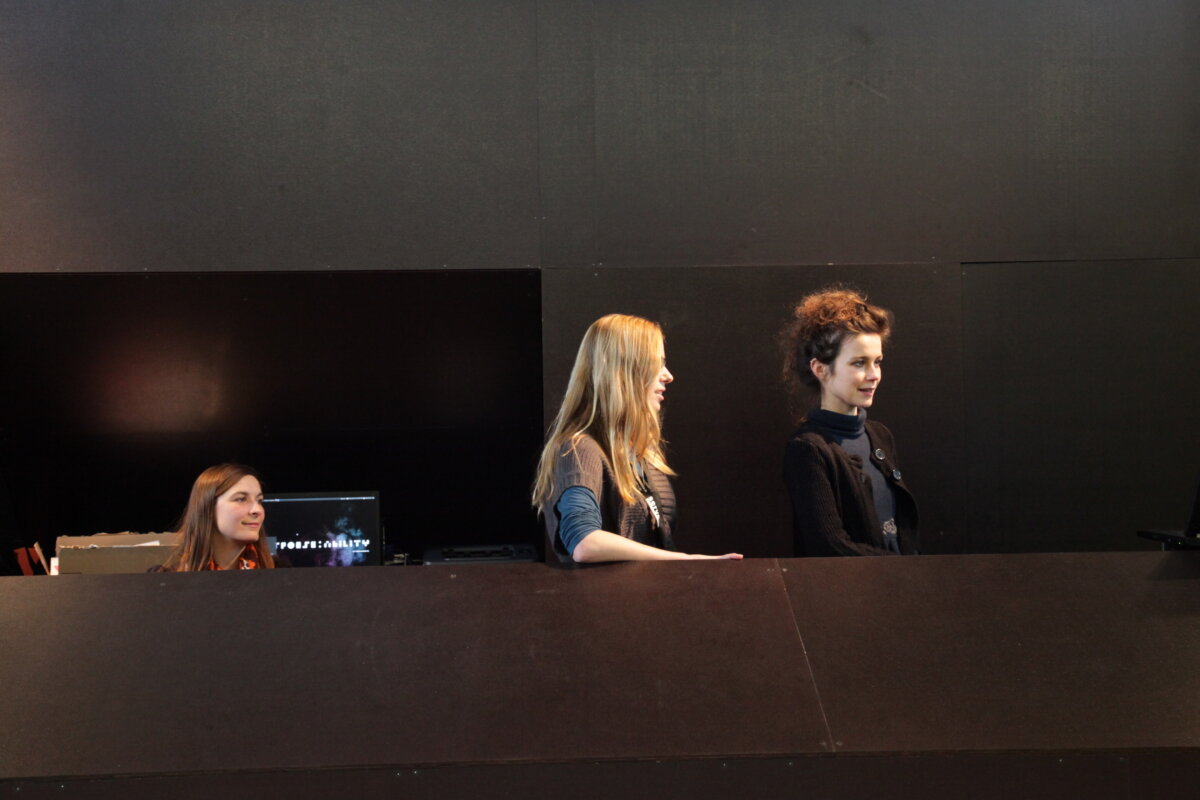
Tours and guides can also be found at the Wanted & For Sale Office, these guides rework the expected situation and share responsibility with their audiences. Visitors can participate in personal guided tours given by members of the collective and tailored for each spectator. Visitors can use audio tours to navigate the festival, or can make audio tours for other people to use. Personalised booklets providing festival information can be made to suit one's interests and can be rewritten and altered for others to share. The kom.post collective will also punctuate festival activities with mini performances and micro conferences.
interACTicons
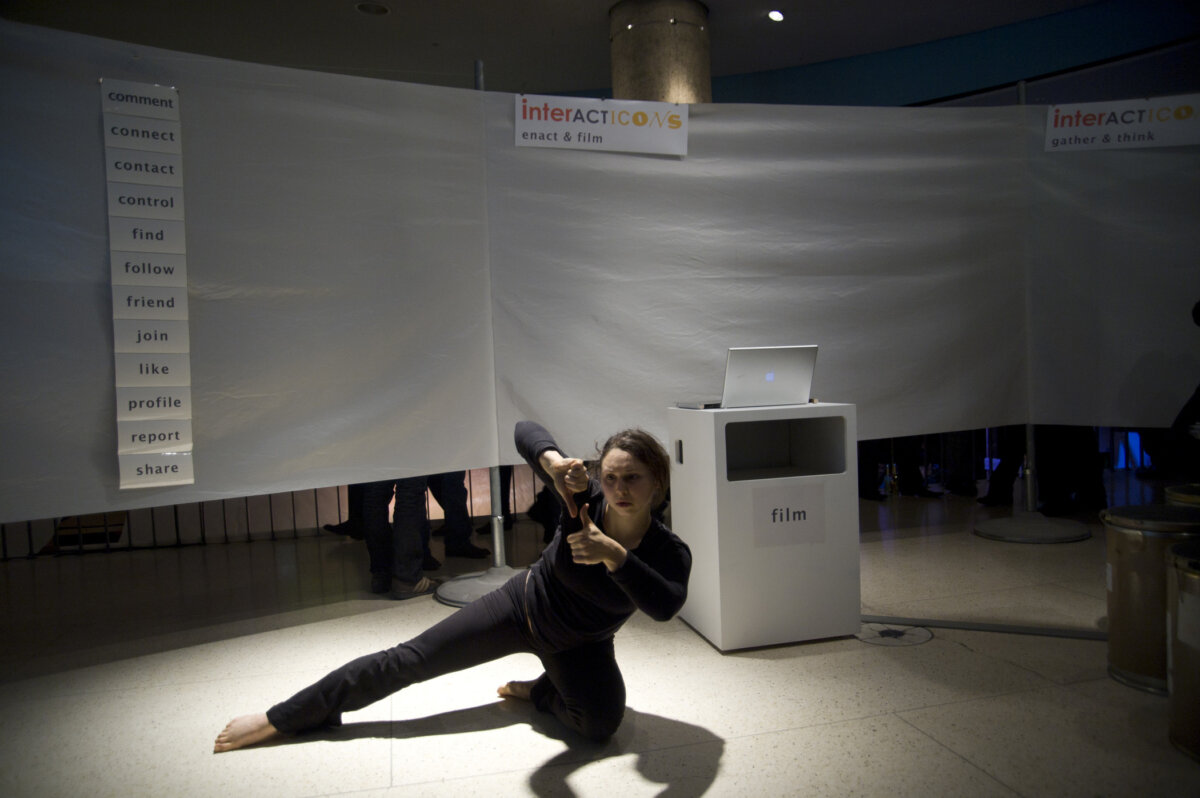
What if all communication and social interactions online would suddenly be limited to emoticons? Or rather, as in the case of interACTicons, to JPEGs, GIF-animations and videos, representing the interactions we carry out online. What if text would suddenly become undecipherable, as too many algorithms cancel out each other’s choice of uncensored words. And, on top of it, our restrained actions online would reflect back to what we know and are able to carry out offline… A vision of the future? Waking up to Kafka's Internet? Sound familiar?
interACTicons is a philosophical, participatory and theatrical investigation into the depth of the Internet as well as of its surface – of our activities on the Social Web; it is a project consisting of three parts: an online archive, a workshop and a live performance on location at transmediale.11.
Prior to the festival, the Online-Action-Library will invite the public to help shape the visualisation of our online habits. In the interACTicons Workshop we will experience these ideas hands-on. The participatory performance interACTicons, Live! will show where we all are at the moment.
Open Design City
Workstation with Open Design City (de), Jay Cousins (uk), Christopher Doering (de), GRLG (de), Trial & Error Kulturlabor (de) and You.
The Open Design City in Berlin is a collaboration space in which new relationships and projects are formed between its citizens. It is a space that takes principles derived from the Free Software and Open Source movements and applies them to Design. These Open Design principles lead to the sharing of tools, knowledge and skills, so that anyone can get involved if they have the time and commitment.
Jay Cousins and Christopher Doering, founders and citizens of Open Design City, take up residence in the Open Zone foyer of the Haus der Kulturen for the duration of the transmediale.11 festival. They bring their tools and equipment for all to share in their "Make Your Own Market" stalls that explore the principles of Open Design and new methods of monetisation and reward. They provide a space for interaction between the monetary system and Free Culture by giving festival visitors the chance to learn skills, and a platform to make and sell or exchange their own products and services.
Visitors are encouraged to share their own skills with others and to take part in open workshops ranging from screen printing to plastic making and 3D printing to sewing and upcycling. Specialised equipment such as a CNC cutter and 3D printer are free for all visitors to use. Materials will be provided but visitors are encouraged to bring items to upcycle, customise and exchange.
Special guests of the Open Design City: Graffiti Research Lab Germany with their SVG2BVG project! SVG2BVG uses custom computer vision software to detect graffiti tags, sends the ensuing shape to a diy laser cutter, and then outputs the tag as a stencil in realtime. The stencils are conveniently sized for the television screens in the Berlin U-Bahn system, allowing you to create cheap, non-permanent, light-based graffiti in the comfort of your own transit system.
Trial & Error Kulturlabor is a Berlin based, non profit organization, working with crafts, D.I.Y. culture, arts and media, towards a bright sustainable future.
Immediated Autodocumentary
with Gabriel Shalom (us) and Patrizia Kommerell (de) from KS12
During transmediale.11, KS12 are making a video about the future of art. Festival visitors, artists and speakers are invited to contribute their opinions, critiques and visions. The video will be edited as fast as possible and the rough cut will be screened on Sunday. This is a collaborative storytelling project, and in some ways, it's a prototype of the future of art.
Immediation = immediate mediation; instant transfer of experience into media, enabling self-reflection and perspective shift. Autodocumentary: auto as in autodidactic + documentary. Autodocumentaries are made by the people they are about. Our immediated autodocumentary process has iterated out of works created for Pictoplasma 2009 (Poems for Pictopia), Social Media Week 2010 (Delivered in Beta), DMY Maker Lab 2010 (Chasing the Buffalo) and the Sibos 2010 financial conference (The Future of Money).