Akademie der Künste
The exhibition Smile Machines presented works which reflect on the relationship between art, humour and technology and which expose the power of the media by derision and critique.
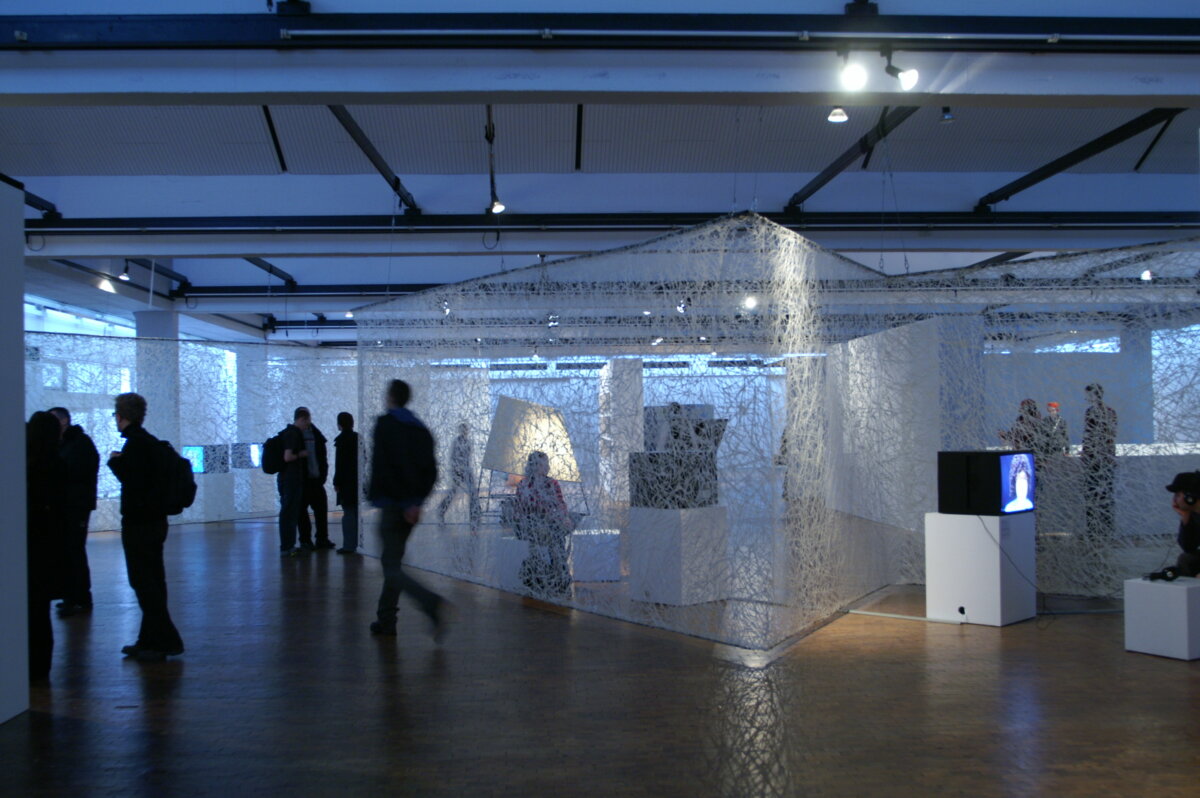
The exhibition looks at SMILE MACHINES from the last four decades and includes robots that seek to communicate with the visitors and fail to live up to the promises of an idealised, functionalist technology. It shows installation and performance pieces which break into the routines of cultural and political life and thus question the surfaces of our mass-mediated reality. The exhibition plunges the visitors into a maze of simulation, repetition, absurdity, and at times painful irony, testing given assumptions and teasing the desire for the impossible.
SMILE MACHINES make us look at reality in a different way. They can be images that offer an unexpected view of the world, stories that highlight the ruptures of history, or machines that reveal the inbuilt dysfunctionalities and failures of technology. SMILE MACHINES are cunning mechanisms for distancing ourselves from what seems natural and unavoidable – from the automatisms of social rules and rituals, through the paranoia-driven control culture, to the assumed progress of our technological society on its way into a world of total entertainment. SMILE MACHINES celebrate the transgressive power of humour.
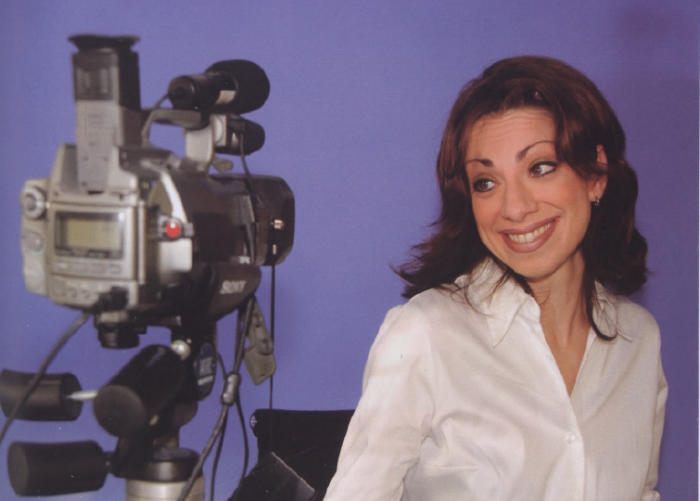
Six actresses were asked to hold a smile in front of the camera as long as they possibly could. The smile of each was observed and registered by an emotion detection system, and whenever the reading indicated a loss of cheerfulness, an alarm went off, to urge the experimental subject to take her responsibility more seriously. The real emotional discomfort of the participants only comes across in the breaks, which were necessary to allow them a chance to relax their strained facial features. Möllers playback points to the forced cheerfulness of the entertainment industry, which continues to put pressure on women - much more persistently than on men - to present themselves in a good mood, as discussion moderators or newscasters. With this imitation of the omnipresent media representations on the blue box Möller makes it all the more evident how inhuman the professional keep smiling attitude really is. The work is based on research in the field of emotion detection carried out at the Machine Perception Laboratories of the University of California in San Diego.
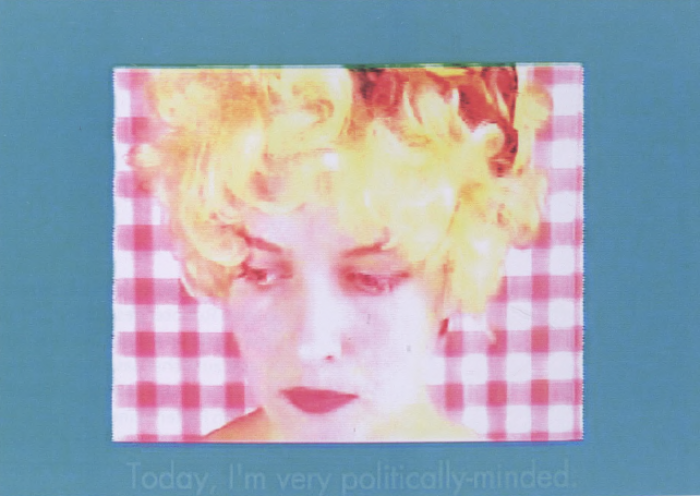
With bare shoulders and wearing a peroxide wig, Valérie Pavia stands in front of the camera and describes a random selection of experiences in a laconic monotone. In her monologue Pavia talks about Ibis Hotels, Spinoza, bearded men, Switzerland, BHV department stores and so on. Holding forth in this seemingly spontaneous way, she lays down certain rules, based on her observations of daily life, the incidental and the absurd. For instance - men with beards smell of peanuts, TV salesmen are difficult to get hold of between the hours of twelve and two, and more than three nights spent at an Ibis Hotel make you aggressive. The absurd script hovers somewhere in the region between reality, fiction and autobiography, so creating something non-actual and overblown, a kind of counterworld. The impression of an overdone self-portrait is further enhanced by Pavia's neo-Expressionist, even Pop-like way of handling visual and audio materials. Overexposed photographs and a snazzy selection of colours for the picture frames lend further support to her ironic strategy of subversion by overstatement. Her sometimes intimate stories, assumed naivety and coquetry of manner (supported by typical feminine attributes, like red shoes with high heels) add to the finely tuned irony of the work.
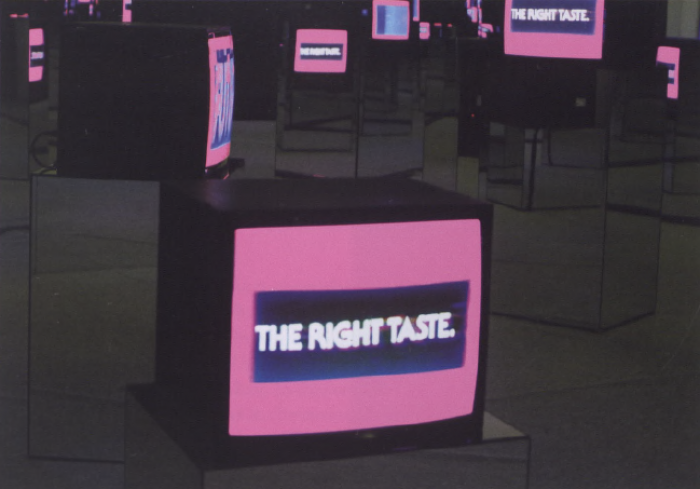
The installation Slogans is an ironic play by Muntadas on the manipulation of daily life by the media, pointing to the empty promises of the glittering world of advertising. Visitors enter a darkened room, in which there are nine monitors set up, their images endlessly repeating themselves on the mirrored walls. Underscored by an insinuating Easy Listening soundtrack, the monitors show in alternation slogans such as Talk is cheap or Pleasure by design. Taken altogether, these are isolated fragments from commercial advertising, colourful digitalised fragments, the display of which dissolves in the subsequent zoom into an abstract image. The production is a play on the subtle advertising strategies to be met with in public spaces, and in view of the aesthetic similarity of its mode of representation it adds up to a critical statement - though an ambivalent relation between seduction and distanced observation is still deliberately maintained. What Muntadas has undertaken is a visual deconstruction of the advertising slogan, the informative content of which is unmasked as meaningless. It is an invitation to read between the lines, and so question the seductive mechanics of advertising.
featured artworks
Maja Bajevic (BA/FR), Back in Black, 2003
Maurice Benayoun (FR), Emotion Vending Machine, 2006
Tamy Ben-Tor (IL/US), Hitler-The Horror and the Horrah, 2003
Dara Birnbaum (US), Technology/Transformation: Wonder Woman, 1978-1979
Ximena Cuevas (MX), Antes de la Television (Before Television), 1983-1999
Paul Demarinis (US), Grind Snaxe Blind Apes, 1997
Robert Filliou (FR), And so on, end so soon, done 3 times, 1977
Robert Filliou (FR), This flag is meant to straddle national order lines, 1974
Jean-Pierre Gauthier (CA), Remue-Ménage, 2000-2006
Stéphanie Gilot (CA), Video Game - World 2, 2004-2006
Jodi (NL), Untitled, 2005
Kim Beom (KR), Untitled (News), 2002
Les Levine (US), I am an artist, 1975
George Maciunas (LT/US), Flux-Smile Machine, 1971
Annette Messager (FR), Ma collection de Proverbes, 1974
Agnes Meyer-Bran Dis (DE), SGM-EISBERG-SONDE / SGM-ICEBERG-PROBE, 2005
Eva Meyer-Keller (DE), Death is Certain, 2004
Christian Möller (DE/US), Cheese, 2003
Antoni Muntadas (ES), Slogans, 1987
Nam June Paik (KR/US), Der Denker - TV RODIN, 1978
Valérie Pavia (FR), C'est bien la Société, 1999
Simon Penny (AU/US), Petit Mal, 1989-2005
Jim Pomeroy (US), Apollo Jest U.A., 1979
Michael Snow (CA), That/Cela/Dat, 2001
The Yes Men (US), Dow Does The Right Thing, 2002-2005
Übermorgen (AU/CH), Bureaucrazy, 2005
William Wegman (US), Selected works, 1970-1978
Norman White (CA), The Helpless Robot, 1987-1996
All of the information on the artists and artworks in the exhibition can be found in the exhibition catalogue.