As part of the final edition of the remote. response. request. III. programme, transmediale film curator Ben Evans James has written Indeterminate Distances: An editor’s guide for falling into the image; an accompaniment to filmmaker Chloé Galibert-Laîné’s new commission.
SECTION 1: Ingest
Editor: This film could go any which way.
The rushes speak to possibilities.
2 hours, 2 minutes and 2 seconds 176,000 frames 935,786,389,504 bytes or 4,400 feet of filmstock in old money.
Film: I am engineered.
Made from layers of coloured silver halides suspended upon acetate. Of photons converted to electrons converted to voltage.
I am material; a force that bears down on you 24 times per second.
Editor: I contain this chaos; I bring procedure.
Working in sections of footage; I move through time methodically.
Film: J - K - L L - K - JJ - L - JJJ - LL - L - K LLL - K J - L - K - JJ - K - J L - K - JJ - L - JJJ - L - L - K - JJ - K I - O
Keyboard shortcuts s-h-u-t-t-l-e through my images.
Intoxicating. These rushes speak of possibilities. Beware. These rushes speak of possibilities.
Editor: I contain this chaos; Categorising footage by strict criteria: by camera, location, time of day or subject.
A search for coordinates to map these images.
Film: No maps exist for these territories!
Editor: Like free falls into the void.1 The image calls.
I will keep looking at you.
SECTION 2: Selects
Editor: Cut. Splice. Ripple. Roll. Stretch.
Material tools plied within the immaterial world of the digital edit suite.
I excavate
d o w n
and open o u t from the image.
Relating; fusing; rupturing.
The eye sorts; re-exposing each cinematic frame to its possibilities. Things or thoughts, I once heard, advance from the middle.2
Film: Cut. Splice. Ripple. Roll. Stretch.
I move at 24 frames per second.
Keep up!
Editor: I distill meaning.
00h:04m:19s:03f moves to
00h:11m:04s:11f which cuts down
01h:23m:12s:21f by the period
00h:00m:01s:11f
Editing is the occupation of the image. Occupy this image.
Film: Yan, tan, tether, mether, pip; azer, sezar, akker, conter, dix.
Creating stories and myths as old as time, Your occupation of my image is temporary; for I am this story; but I’m also the other one.
Editor: Wait, was this story already existing or did I just make it up?
Film: Speculation now flourishes, my images flow with rhythm, like lyrics from a song.
The first verse is busy, crowded with words. Billions of words. Followed quickly by silence. An image that screams with no voice.
S n Snd. Sy n S u d. Sync Sound.
Clap for the camera.
Editor: This is a zone of activity.
One where characters, locations and events trace a path along the horizon-line of the edit sequence.
In this zone, no singular image embodies an idea by itself.
In this zone, each image becomes through what is placed on either side of it (the cut); or in synchronicity with it (the blend).
Through these cuts and across their blends, linear time unbecomes. Remade by sequential and synchronous files and frames of footage that are displaced to make this new time; film time.
Film: This story advances from left to right; but is amplified through its upward strokes
Left, right, up, down.
Editor: Left, right, up, down; How long must I keep looking at you?
Your viscous image, now thick with resistance. Uncooperative, unmalleable. It seems the more I work with you, the less happens; the more I realise we need to do something, but the less I understand what to do.
My head aches. I can’t care anymore. What is the weather outside; is it still sunny?
17.32 hrs Shut-down this image.
SECTION 3: The Cut
Film: What were we thinking of when we first met?
Editor: Of what was missed and scarce to begin with. Images that were nearly-there and never-there.
Film: Of what lies beyond my borders. Of loss and of longing; and boundaries that do not sit still.
Editor: My eye overrides any thoughts of loss with its lust for difference; for fluctuations in colour, light, form or texture. Of mass and form.
An ocular intimacy.
Film: The eye is where you and I meet. A site of labour that mediates between your thoughts and my material. From where we both tentatively reach forward into entanglement.
Editor: You are what I now know. I haven’t the energy except for your image. Each cut is my remark.
The story of this labour will be told.
Film: This labour combines our bodies, materials and ideas.
It is the binding formed from the intra-actions between us. A shared agenda. For beyond the agency of You vs Me, is We.
Editor: A labour of ideas that through the edit will remain entangled in space, time and matter. Moulded through the frictions, tensions, pressures, restrictions and forces between us. This film takes shape.
Film: A story engineered?
Editor Through a programmatic foundation.
Cut 51% for emotion
Cut 23% to maintain the narrative arc
Cut 10% for rhythm
Cut 7% to maintain the eye trace of the viewer
Cut 5% to recreate reality
Cut 4% to maintain the physical space in the image3
An edit formed by deductive reasoning. In the blink of an eye.
A rationalised process for the removal and disposal of footage.
For filmic continuity.
A three act structure. A hero’s journey. A witch’s hat.
I am your emissary across this narrative arc. All aboard! Exposition, Rising Action, Climax, Falling Action, Resolution.
Film: A process aimed at narrative continuity above all else; of reproducing meaning and intentionality; and that which is already known. How this edit lays waste to the image!
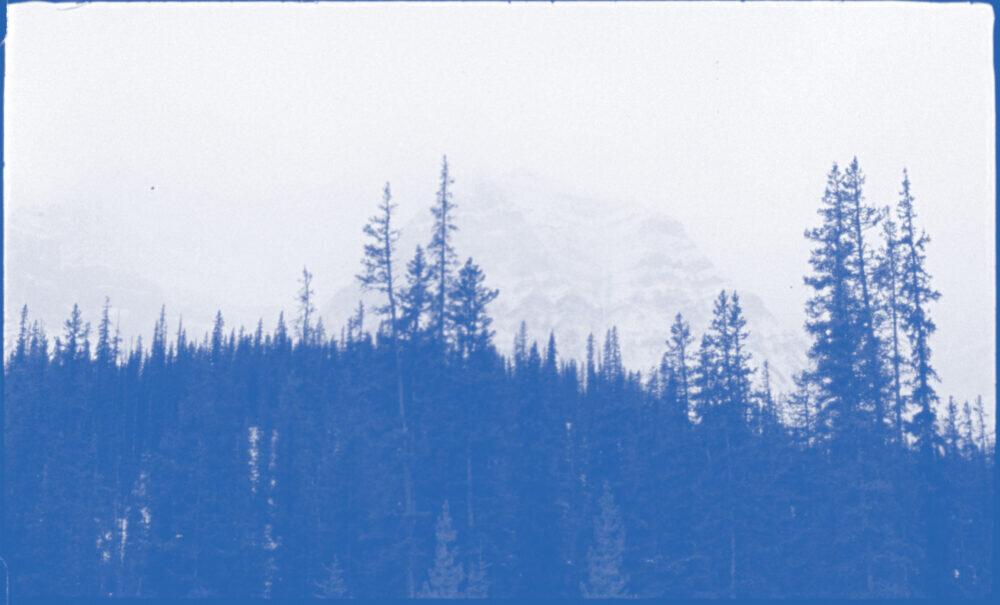
What of discontinuity? Of filmic disturbances that speak of worlds and alternate futures unbound by this present. Of finding gaps in this image that can open up the space for resistance and refusal to manifest.
What of an unstable image?
SECTION 4: Export
Editor: I may yet finish. Editing.
final_edit.mov final_edit2.mov finalfinal_edit.mov FINAL_edit.mov FINALFINALFINAL.mov
Editor: This edit will lead to an ending.
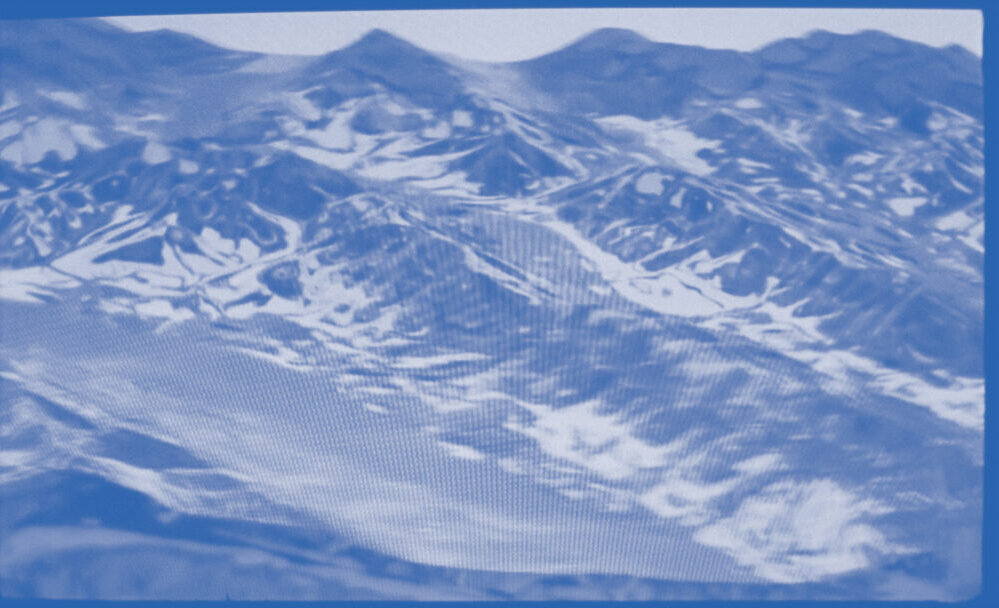
Film: This is how I exist now. But I can always exist differently.
SECTION 5: Projection
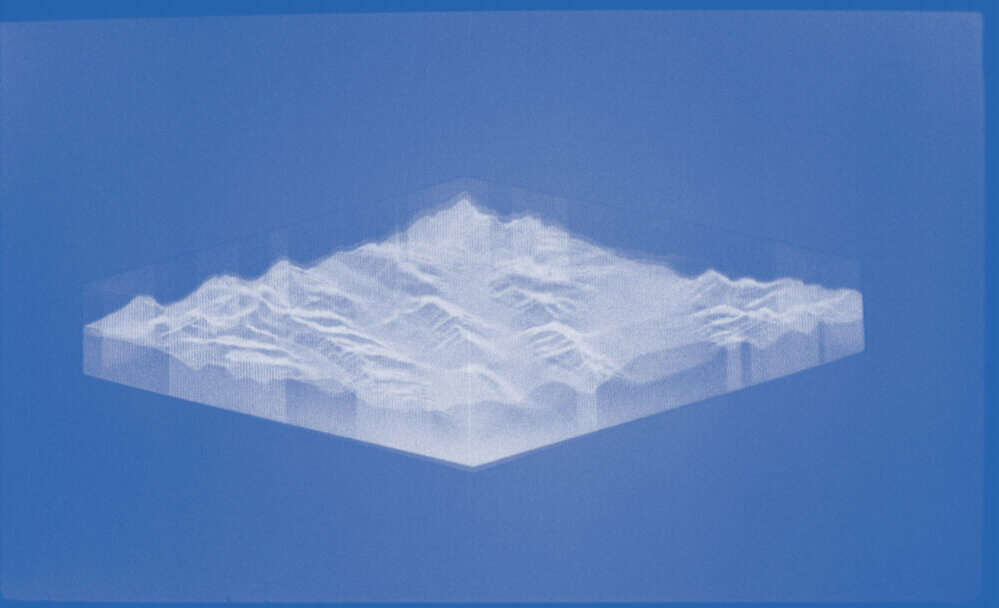
Editor: Film sees itself in the mirrored reflection of the projector’s gate.
As medium. As surface. As movement. As light. As industrial production. As artisanal production. As territory As archive. As resistance. As refusal.
SECTION 6: Exhibition
Editor: Observer. Audience. Spectator. The thoughts that once bound us together so intimately are now mediated in this place. Absorbed, deflected, deformed. Viewer. Attendant. Participant.
Film: Watcher. Looker-on. Browser. I’ve heard that a good way of understanding someone is to look at what they see.4 Witness. Movie-goer. Eye-witness.
Film: People are always looking and translating the image. Why not leave it be?
Editor: It is said that the rounded corners of your analogue image appear less bright and more organic to how we see everyday objects in the real world.
In contrast, a digital frame with a sharp edge takes more cognitive effort to understand.
Film: Those who wish to look carefully at this image should stay at the necessary distance.
Editor: The cinema addresses bodies that sit in space.
Projector > Spectator > Screen |
Film: The gallery addresses bodies that move through space. Pushing against the path of least resistance, the screen interrupts their passage; demanding new modes of gaining attention.
Editor: This is not simply a reorganisation of the edit in space. It is a translation with a new rhythm, a new memory, a new movement.
Where fiction and fact intersect across new architectures and mediums; these painted walls, vinyls, screens, speakers, projectors, spotlights, headphones, costumes, flatscreen TVs, CRTs and posters.
This mise en scene we’ve created; the foundation for a filmic world.
Film: One that exists neither completely in this world nor completely outside of it.
I am not of this reality or that one.
Editor: A world saturated by such force of imagination, it is opened, sustained and enclosed in this place; disappearing from view when the credits roll.
Film: Worlds that disappear from view once the credits roll; still leave their trace,
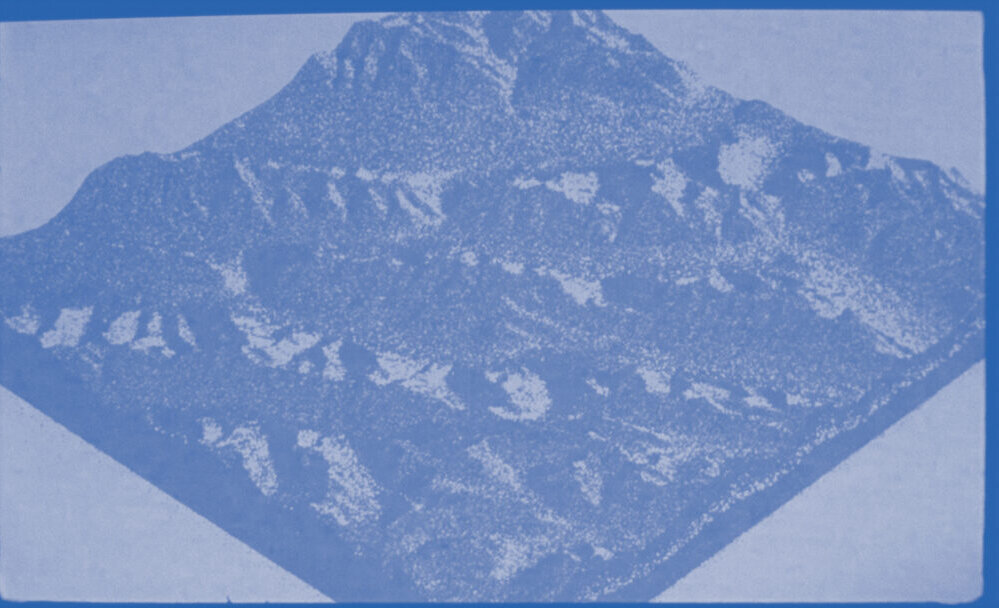
Film: Like a howl in slow motion; we’ll forge a movement up here on this screen to bring the people on this earth to their senses.
Reference List
Adachi, M. 1975. A.K.A. Serial Killer (film), Japan
Bourriaud, N., Schneider, C. and Herman, J., 2010. Postproduction. New York: Lukas & Sternberg.
Bricca, J., 2018. Documentary editing. 1st ed. New York: Routledge.
Calvino, I., 2017. The Baron in the Trees, Reprint, Massachusetts: Mariner Books
Deleuze, G., 2005. Cinema. London: Continuum.
Kapchan, D., Andueza, M. and Costa, R. 2020. Dirty ear report #3. Los Angeles: Errant Bodies Press.
McKinney, J. and Palmer, S., 2018. Scenography expanded. London: Bloomsbury Methuen Drama.
Murch, W., 2001. In the blink of an eye. Los Angeles: Silman-James Press.
Rancière, J. 2012. The Intervals of Cinema. London: Verso.
Waldron, D., 2020. New Nonfiction Film. London: Bloomsbury.
Zimmermann, P., 2019. Documentary Across Platforms: Reverse Engineering Media, Place, and Politics. Indiana: Indiana University Press.