| Tagline: | festival for art and digital culture |
|---|---|
| Venues: | silent green Kulturquartier, CANK |
| Date: | 28.01.–01.02.2026 |
| Organisation: | transmediale e.V. |
| Website: | https://transmediale.de/en/2026 |
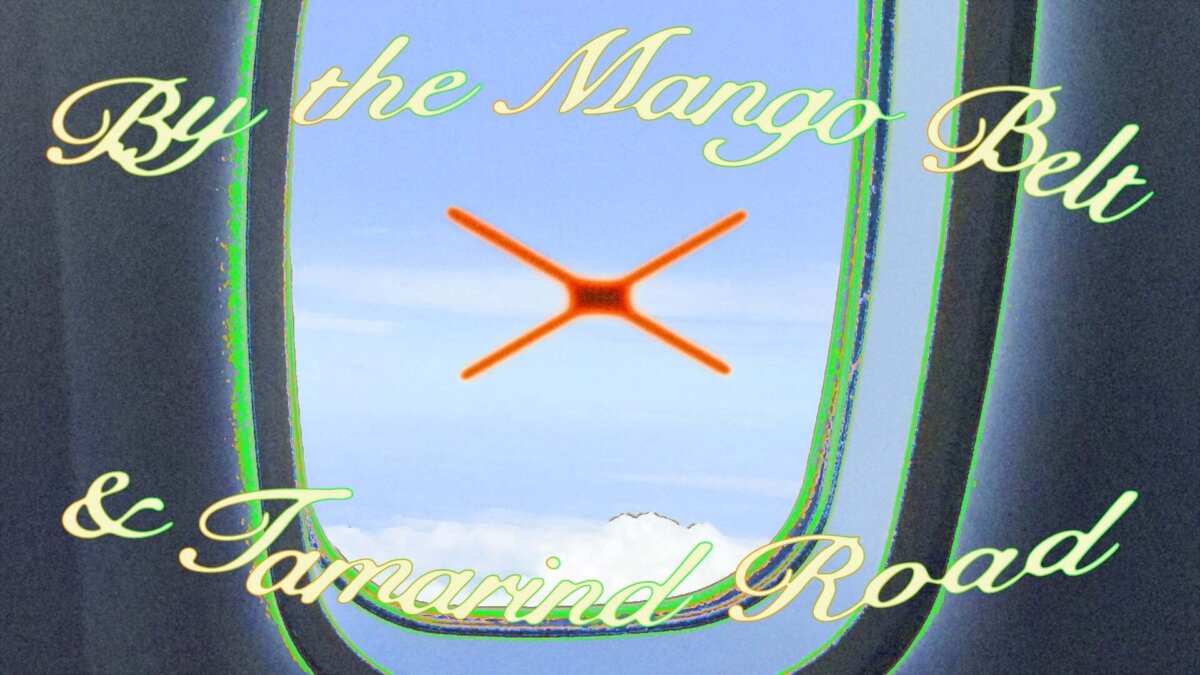
The 39th edition of transmediale looked at the re·figuration of systems, cosmologies, and technologies through the metaphorical coordinates By the Mango Belt & Tamarind Road. The festival is reimagined as a living recursive carrier net – a hammock of relational technologies in practice that stretch across latitudes, rhythms, and systems.
Understanding Compassing, Metaphoring, and Protocoling as ways to bridge a multiplicity of recipes to the root-code of our systems, the festival asked if your imagination was hungry; what were the currents on our feeds; what was at the root of our codes.
curatorial compass
By the Mango Belt & Tamarind Road lies a space·time for encounter, for trade, and for exchange. A space for communal and collective maneuvering, for navigation across shifting tides and winds. Guided by various Research Netting Groups, which form the undercurrents of the festival, distributed IRL and URL gatherings take place over the preliminary months in collaboration with local hosts – artists, technologists, collectives, and cultural spaces – across locations within the Mango Belt & Tamarind Road. Our Netting Groups cultivate holding·structures of reciprocity designed to outlive the festival itself. Their digital and performative traces will form the containers that hold space and time during the Berlin gathering. From there, these traces will circulate back across interTropical locations, braiding Berlin into a wider exchange.
Along these routes, lateral currents carry seeds, minerals, and stories in polyrhythmic patterns - braiding ecologies, rhythms, and cosmologies that cannot be contained by a single map. Drawing upon these parallel itineraries, transmediale 2026 frames the Mango Belt & Tamarind Road not as a fixed intersection, but as a roundabout to speak alongside: elastic, multiple, centrifugal. A place to return to and drift away.
While hemispherical meshworks and multipolar geopolitics are emerging, supposedly challenging universal systems, they often continue to operate under patriarchal codes and imperialist logics. Even decentralised infrastructures replicate hierarchies, extending dominance, control, and vertical power into new guises.
The imaginative coordinates by the Mango Belt & Tamarind Road call us to examine the underlying structures that sustain the constructs and conducts of our systems - both physical and imaginative: What are ways of netting otherwise? How could we re·wire the root-codes of our systems and condition us differently? What forms of infra·structuring, holding·structuring, and hanging·structuring can emerge when we step outside extractive paradigms?
Infrastructuring is not the exclusive domain of corporations and nations. Across the tropics and beyond, there are longstanding ways of holding space, stretching time, and netting together - recipes and architectures of relation that outlive standardisation and universality. To merely diversify ingredients is not enough if we keep following the same models; transmediale 2026 asks how we can instead shake recipes.
At the root of transmediale 2026 is an elastic·structure shaped by compassing, metaphoring, and protocoling.
Compassing is about re·orienting, maneuvering, and pacing our algo·rhythms. Rather than seeking fixed direction or optimisation, compassing attunes us to shifting currents and relational velocities - moving with the tides, not against them. Together with our Local Curriculum Designers (affectionately called LCDs circulating imageries), we gather in Netting Groups to attune the compass - setting directions and rhythms in Pasifika, the Swahili Coast, SEA (South East Asia) and Abya Yala. This curatorial compass is a living compass that might change form and length over time.
Metaphoring is the practice of bypassing inherited logics and re-routing our technological imaginaries through vehicles of transport: stories, metaphors, and carriers that hold knowledge across distances. To metaphor is to re-code by way of imagery and relation, opening portals between systems that rarely speak.
Protocoling refers to translating situated practices into technological protocols. It is about developing pocket infrastructures, holding·structures, and hanging·structures - small yet resilient architectures that enable collective use, reciprocity, and ongoing relation. In Berlin, these protocols take shape as installations, sonic experiments, and multi-specific assemblies, resonating with the Netting Groups’ ongoing processes.
Together, these gestures compose an elastic structure: one that stretches across places and tempos, holds multiplicity without collapse, and makes space for technologies to be re·wired by the rhythms of relation rather than the logics of extraction.
~ Neema Githere and Juan Pablo García Sossa ~
Structured around Low Tide and High Tide moments, the High Tide programming engaged larger audiences through performances, lectures, conversations, and concerts, while Low Tide featured more intimate, ongoing experiences such as film screenings, durational sonic events, workshops, and ritualistic interventions. Artists and participants contributed to both High Tide and Low Tide formats, highlighting different aspects of their work and creating varied modes of encounter with their practices.
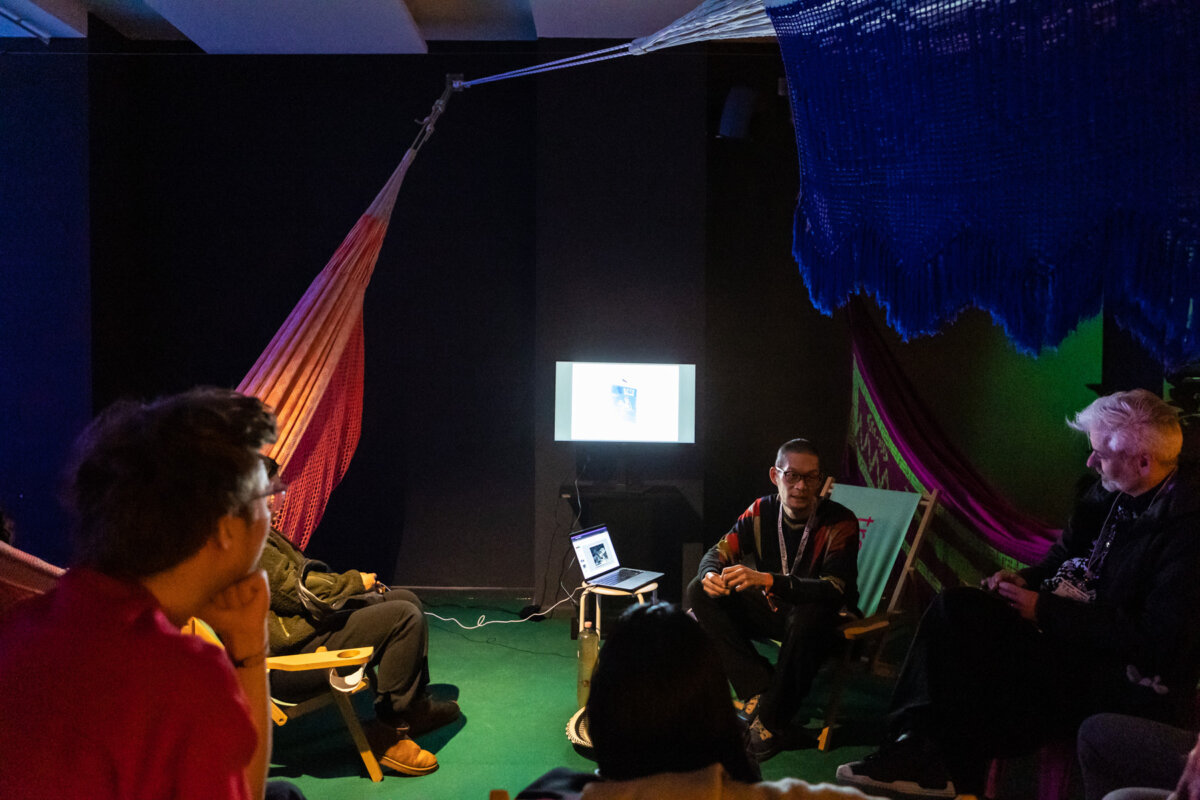
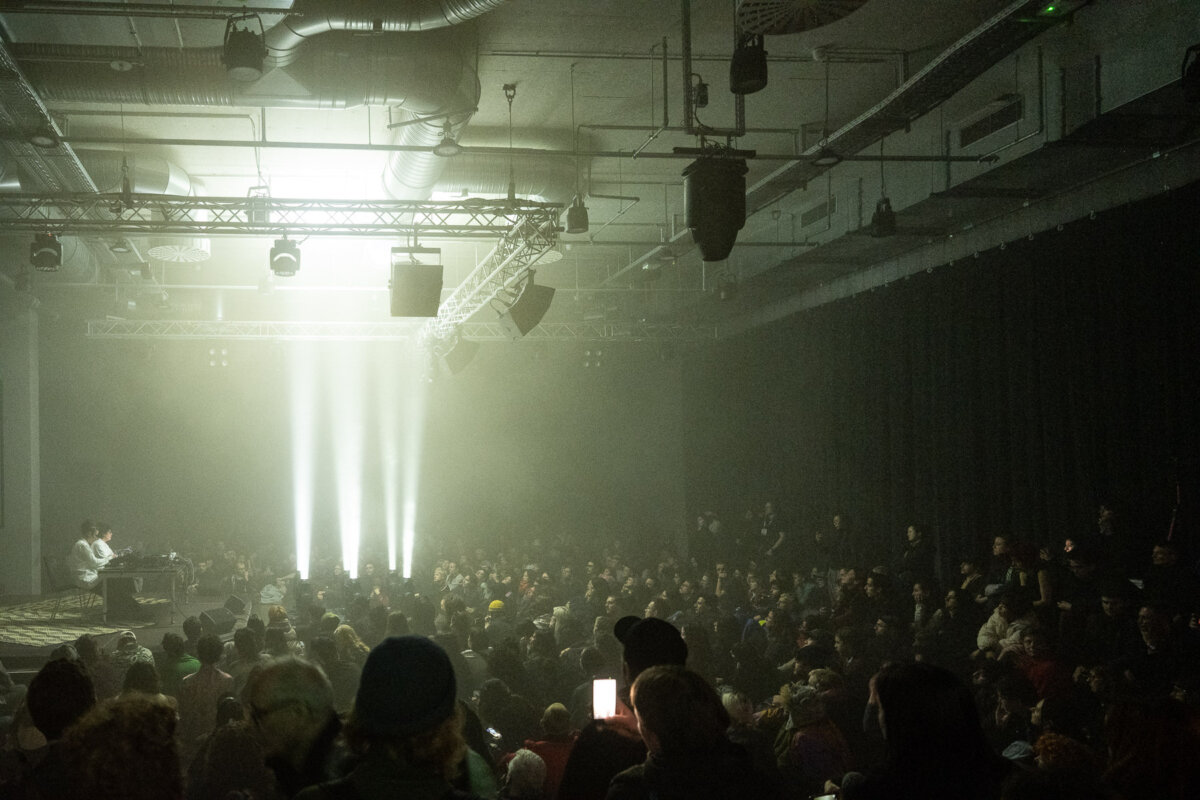
The festival venues silent green and CANK featured a series of installations and temporary relational architectures conceived as conversational platforms, creating environments that spark dialogue, engagement, and shared experience. Shifting from a speaker–audience spatial format, the temporary architectures created spaces where visitors can become passengers, contributors, and co•navigators, paying attention to the embodied conditions in which other technological imaginaries can surface.

At the heart – and moving through the undercurrents – of the relational, process-based approach to the 2026 festival were the Netting Groups: a series of gatherings co-hosted with regional partners and coordinated by local curriculum designers (LCDs), focusing on lateral exchange across community networks around the imaginative coordinates By the Mango Belt & Tamarind Road.
team
Filippo Gianetta managing director, Magdalena Ritter senior advisor, Anky Heidenreich festival coordination, Anna-Lena Panter programme coordination, public relations, residencies, Lucas Matray fundraising coordination, studio management, Wakaba Kimura administration and finance, Bárbara Acevedo Strange graphic design, Marine Kervizic programme management, Neža Grum programme management, Christina Demetriou communications management, Sylvie Rohrbaugh communications assistance, Ana Ferrand Mediavilla communications assistance, Sylvia Rybak website and archival management
curatorial team: Neema Githere, Juan Pablo García sossa
transmediale advisory board Nora Al-Badri, Asia Bazdyrieva, Gabriele Horn, Jussi Parikka
supporters
main funders: Kulturstiftung des Bundes, Der Beauftragte der Bundesregierung für Kultur und Medien
additional funding: Berlin Senat, Bundeszentrale für politische Bildung
partners: CTM, silent green, CANK, Embassy of Canada in Berlin, Winchester School of Art, University of Potsdam, University of Applied Sciences Potsdam, Weibel Institute for Digital Cultures, Universität der Künste Berlin, Akademie Schloss Solitude, TBA21, Hervisions, NERO Books, Schering Stiftung, HAU
supporters: Arts Council Korea, Pro Helvetia Swiss Arts Council, Goethe Institut, DIRAC Ministry of External Relations Chile, Ministry of Culture Taiwan, Österreichisches Kulturforum, Institut für Auslandbeziehungen, Mellon Foundation, Stager, In-Berlin, Brauhaus Neulich, Lemonaid
media partners: arte, Berlin Art Link, Berliner Fenster, Le Monde diplomatique, Springerin, York Kinogruppe

- Aarati Akkapeddi
- Afrotronix
- April Soetarman
- Arc Durukan
- Arkadiy Kukarkin
- Aunty Rayzor
- Berenice Flores
- Brooklyn Pakhati
- Cade Diehm
- Camila Lombana Diaz
- Catherine Annabella Lie
- Catu Diosis
- Chia Amisola
- Christopher Dake-Outhet
- Clementaum
- Connie
- Daniel Cid
- Dengue Dengue Dengue
- Diamin
- DJ Love
- Djamila Grandits
- Elli
- Elvira Espejo Ayca
- Eren İleri
- Eva Leitolf
- Fateh Deen
- Federico Pérez Villoro
- Gabriella Torres-Ferrer
- Giulia Cordin
- Gladys Kalichini
- Gosia Lehmann
- Guely Morató Loredo
- Hanaby
- Harshini J. Karunaratne
- Hernán Rodríguez
- Hiba Ali
- Hoo Fan Chon
- Huang Po-Chih
- Interspecifics
- Isola Tong
- Jay Mitta
- Jazmin Jones
- Jeisson Drenth
- Jepchumba
- Jess Rowley
- Johnson & Jeison
- Juan Covelli
- Juan Fortun
- Juan Pablo García Sossa
- Karl Mayala Bizet
- Karlo Sono
- Kasra Jalilipour
- Kathleen Bomani
- Katja Davar
- Keiria Shishay
- Kidus Hailesilassie
- Klimentina Mileneva
- KMRU
- Làmp Faal Kala
- Lara Tabet
- Laura Huertas Millán
- Lee Tzu Tung (李紫 彤)
- Leonel Vásquez
- Lucas LaRochelle
- Lynda Irai
- Maahleek
- Manthia Diawara
- Mareike Schwarz
- Maya Wegerif
- Merv Espina
- Microhm
- Miguel Buenrostro
- Miss Tacacá
- mobilegirl
- Montika Kham-on
- Nat Skoczylas
- Nathalie Muchamad
- nènè myriam konaté
- Ning
- Nursalim Yadi Anugerah
- Olivia M. Ross
- Patience Katushabe
- Patrick Duggan
- Petna Ndaliko Katondolo
- Ping
- Ran Zhang
- Reiner Mühlhoff
- Rochelle Webster Nembhard
- Saba Arat
- Sarah (George) Wilhelmy
- Sarah Friend
- Sarah Grant
- Saul Williams
- Scott Benesiinaabandan
- Shaheer Tarar
- Simon Speiser
- Su Yu Hsin
- tarxun
- Tatyana Zambrano
- Teresa Castro
- Tianzhuo Chen
- Tsige Tafesse
- Vica Pacheco
- Wairimũ Nduba
- Wok the Rock
- wordsofAzia
- Yadira Sanchez
- Yao Rose
- Yoon Ra
- Zufu