| Tagline: | des internationalen forums des jungen films |
|---|---|
| Venues: | MedienOperative |
| Date: | 10.02 – 21.02.1989 |
| Organisation: | MedienOperative |
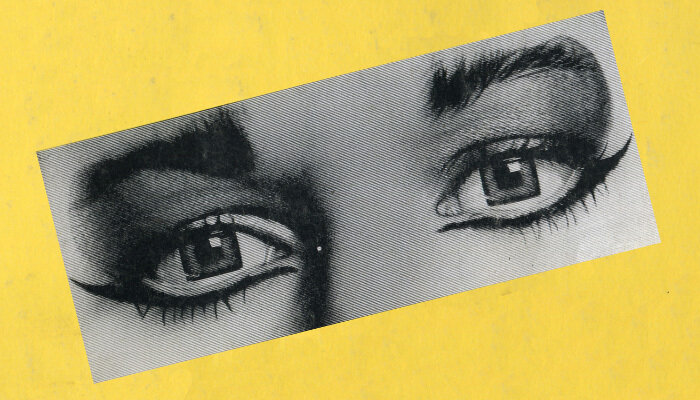
We have everything in our hands: camera, animation, digital trickery. The desire to experiment and the desire for reality.
In only its second year, the VideoFest has become the largest European video festival. Video is a young art form; from the beginning, it has been a reaction to the “brave new world” of the highly technical mass societies with all their computers, nuclear power stations, destroyed landscapes, and lonely individuals. Thus, video is not film; it remains bulky, playful and vulnerable. And it is left outside from “high“ culture. With the expansive programme of VideoFest '89, we are presented with videos that rub against each other, complement each other and provoke contradiction: from unusual beginners' works and the pinnacle of high-tech art, "dirty little" reports from social hotspots and artfully designed documentaries, fast-paced image/sound experiments and some tapes on the borders of the visual.
festival catalogue preface from the artistic director
Some people still haven't understood what video actually is, while others have never tried to throw their prejudices overboard. Video: a culture for a small minority... apparently!
A look abroad, a look at this catalog impressively proves the opposite. VideoFest '89 received over 500 applications from 28 countries on all continents, 123 from 24 countries were selected; around a hundred tapes are running as part of the info series. Realised this year for the second time, the VideoFest has become the largest permanent European video festival – in terms of audience numbers, it was already so in 1988.
Video is varied: We show unusual beginners' works as well as the pinnacle of high-tech art; we show "dirty little" reports from social hotspots as well as artfully designed documentaries; show silly feature films, political and those with innovative video-aesthetic forms. Fast-paced image/sound experiments can be found alongside visual meditations, (partly political) anti-video clips turn against conventional visual culture like some tapes on the borders of the visual.
The program blocks are not put together at random, but are categorised and structured within themselves: The videos should rub against each other, complement each other and provoke contradiction.
In special programs, we present international institutions that promote video culture (“Inforeihe”) and in country programs, we show highlights of how video is used in Brazil, France, Great Britain, Italy and the USA – without wanting to offer a representative picture.
We offer special features: Videos and workshop discussions about the difficulties of depicting theatre and art; impressions of the cultural perestroika in the USSR; videos from the GDR; strike videos by Berlin students – to name just a few of the focal points.
Of particular importance to us is the show organised in collaboration with “Zitty” by Skip Blumberg (USA), probably the funniest and most original documentarist in the world, who will be our guest at, create an installation for the VideoFest and hold a workshop (current information on the workshop from 7.2. via the MediaOperative).
Attention: The retrospective already starts on February 7th!
Video installations by other international artists can be found in our rooms and in the gallery Vinzens Sala, Potsdamer Str. 97 (diagonally opposite): amusing and meaningful.
Quite a lot on offer. The catalog provides more detailed information on this, making the diversity and highlights just as tangible as the avant-garde special features – of the medium and of our program. This elaborate catalog is, despite our tight budget, free of charge: a one-off campaign. As an advertisement and as a tribute to video – because video has what film has not been able to do for a long time: To break the boundaries of all cinematic genres through richness of expression – and to tell of realities that are not worthy of attention for others due to a lack of commercial exploitation opportunities.
(Micky Kwella, artistic director)
festival catalogue preface from medienoperative director
Video is young, was from the beginning a reaction to the “brave new world” of the high-tech mass society with all its computers, nuclear power plants, destroyed landscapes and lonely individuals. Giving those affected a voice and the lonely a dream – art, agitation and education were closely linked. Video has been around for 20 years as a cultural form, and it has been a collective medium from the very beginning.
We have everything in our hands: camera, animation, digital trickery. The desire to experiment and the desire for reality – these are the maxims of a video generation in the age of permanent technical innovation.
That is why video cannot be film, remains unwieldy, playful and vulnerable. And remains outside the door of “high” culture. Video producers often have to combine with television in order to gain financial leeway. The classic channels of film funding remain largely closed to us – we are already too narrow for filmmakers when it comes to cultural identity or the European alternative.
Other countries are ahead of us: in England with Channel Four, in France with regional media centers, in Italy, Spain with the more open access to television stations. Are we waiting for the cultural channel here? Are we waiting for a new understanding of video to penetrate every last corner of bureaucratic funding bodies? Or are we creating a festival that represents the diversity and potency of this new culture internationally?
There is no question that we have used all our energy to realize this festival: instead of money, a lot of voluntary work and imagination, additional services from sponsors and supporters. Without them, it would not have been possible to welcome guests from Denmark, France, Great Britain and the USA. We used 120,000 DM; the grant from the senator amounted to 15,000 DM: despite good will, there is simply no "pot" for video culture!
A cultural policy question as to whether this city wants to retain this festival... in reality just a rhetorical question.
(Hartmut Horst, MedienOperative)
The programme of the VideoFest ’89 is structured in different sections: the Sonderprogramm focuses on the production of different countries together with the Inforeihe presenting institutions of video culture, the Hauptprogramm on international videos, and Nightflight – presenting videos at the limit of the conventional. Specially this year, the Focus on Skip Blumberg brings workshops, screenings, and a video installation – which joins the other international artists’ works during the festival. In collaboration with the Arsenal Institut for Film and Video Art, their programme will be included at the VideoFest’s screenings.
The festival catalogue includes information of all film and video works shown in the course of the VideoFest '89. It provides insight in the program of a festival, which as early as in its second year since its founding, developed to the "biggest, constant European video festival" (Micky Kwella, artistic director).
team
Micky Kwella Artistic Director and Program Manager, Knut Gerwers Assistant, Hartmut Horst Business Management, Silke Ude Assistant, Rudolf Frieling Communications, Wolfgang Seidel EDP, Ute Geßner Tape Storage, Clemens Koch, Friedemann Schmidt, Petra Weisweiler, Lilian Schnidrig Office, Matthias Behrens, Matthias Kirschke, Gert Rahn Technical Support, Knut Gerwers, Clemens Koch, Gert Rahn Screening, Rudolf Frieling Installation Management, VideoVox und Sony Equipment Micky Kwella Artistic Director and Program Manager, Knut Gerwers Assistant, Hartmut Horst Business Management, Silke Ude Assistant, Rudolf Frieling Communications, Wolfgang Seidel EDP, Ute Geßner Tape Storage, Clemens Koch, Friedemann Schmidt, Petra Weisweiler, Lilian Schnidrig Office, Matthias Behrens, Matthias Kirschke, Gert Rahn Technical Support, Knut Gerwers, Clemens Koch, Gert Rahn Screening, Rudolf Frieling Installation Management, VideoVox und Sony Equipment
supporters
Filmbeauftragten des Berliner Senats, Auswärtige Amt
Special thanks to the institutions & companies: JVC Professional, Mitsubishi Electric Europe GmbH, Onasch Filmgeräte GmbH, Panda Soft/special thanks to Franz König, Amerika Haus, British Council, Institut Français Berlin, Spanisches Generalkonsulat, Yugoslav Airlines, Das Auswärtige Amt, Senat für kulturelle Angelegenheiten, Der Filmbeauftragte, Zitty - Stadtmagazin, Druckhaus Schlaeger Peine