in/compatible aesthetics:
Panel with Camille Paloque-Berges (fr), Olia Lialina (ru), Dragan Espenschied (de), Florian Cramer (de/nl)
Moderated by Rosa Menkman (nl)
Over the last decade, the history of the web and all its “common” qualities – or digital folklore – has become a growing field of study. The role of the “user” giving form to his medium (its materials, customs, ideologies and aesthetic structures, which are closely connected to visual, textual and audio cultures) has become key to this research. Moreover, these coarse or unrefined DIY-fabrications have become (re-)appraised treasures or relics of amateur culture. This panel will reflect on different on/offline (dead and alive) DIY-networks focusing on their vulgar vernaculars, ideologies and customs, and on how we came to appraise them.
Camille Paloque-Berges
Questioning the compatibility of tradition, heritage and the vernacular in Internet culture
I will ask if and how the notion of heritage, which tends toward institution, tradition, and monumentalization and univocal communication, and the notion of vernacular, which tends to everyday invention and dialogic communication are compatible in the context of network culture. By focusing on examples of amateur archival initiatives comprising a series of network user behavior such as nostalgia, fan creativity or Internet art, I will try to answer by analyzing how Internet memory is not only passed along or even sometimes excavated by media archeologists but built into network communication devices that experiment and help develop the Internet itself. Hopefully it will help modify the way we envision heritage in a networked digital environment.
(Image: Rosa Menkman)
...Panel with Camille Paloque-Berges (fr), Olia Lialina (ru), Dragan Espenschied (de), Florian Cramer (de/nl)
Moderated by Rosa Menkman (nl)
Über die letzten zehn Jahre hat sich die Geschichte des Internets und all seine „alltäglichen“ Eigenschaften – auch digitale Folklore genannt – zu einem wachsenden Forschungsgebiet entwickelt. Im Mittelpunkt dieser Auseinandersetzungen steht die Rolle der „User“, denn sie geben dem Medium seine Form (und somit dessen Materialien, Gebräuche, Ideologien und ästhetische Strukturen, die eng mit der Bild-, Text- und Audiokultur verbunden sind). Außerdem sind diese rauen, ungeschliffenen DIY-Fabrikationen mittlerweile zu gern gesehenen Schätzen oder Relikten der Amateurkultur geworden. In diesem Panel wird es um verschiedene (tote und lebendige) DIY-Netzwerke aus dem On- und Offline-Bereich gehen und zwar insbesondere um deren Alltagssprachen, Ideologien und Gebräuche und die Überlegung, warum wir sie jetzt so schätzen.
Camille Paloque-Berges
Questioning the compatibility of tradition, heritage and the vernacular in Internet culture
I will ask if and how the notion of heritage, which tends toward institution, tradition, and monumentalization and univocal communication, and the notion of vernacular, which tends to everyday invention and dialogic communication are compatible in the context of network culture. By focusing on examples of amateur archival initiatives comprising a series of network user behavior such as nostalgia, fan creativity or Internet art, I will try to answer by analyzing how Internet memory is not only passed along or even sometimes excavated by media archeologists but built into network communication devices that experiment and help develop the Internet itself. Hopefully it will help modify the way we envision heritage in a networked digital environment.
(Image: Rosa Menkman)
Related Media
 Introduction - Unstable and Vernacular: Vulgar and Trivial Articulations of Networked Communication
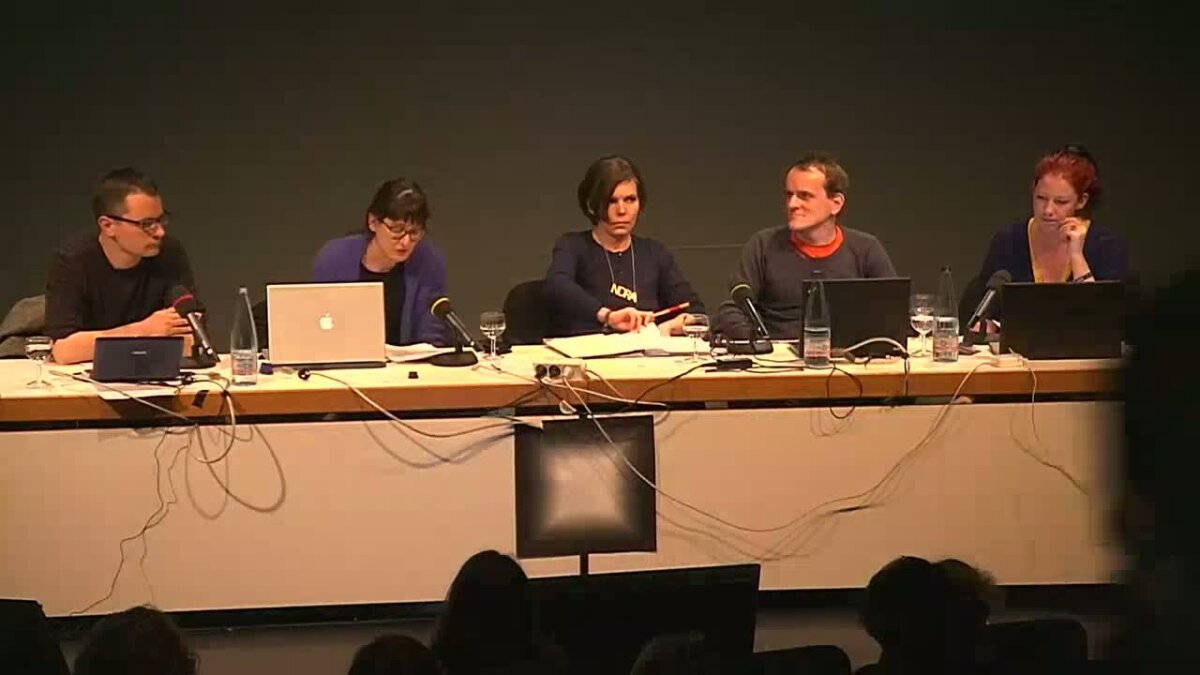 Presentation Camille Paloque-Berges - Unstable and Vernacular: Vulgar and Trivial Articulations of Networked Communication
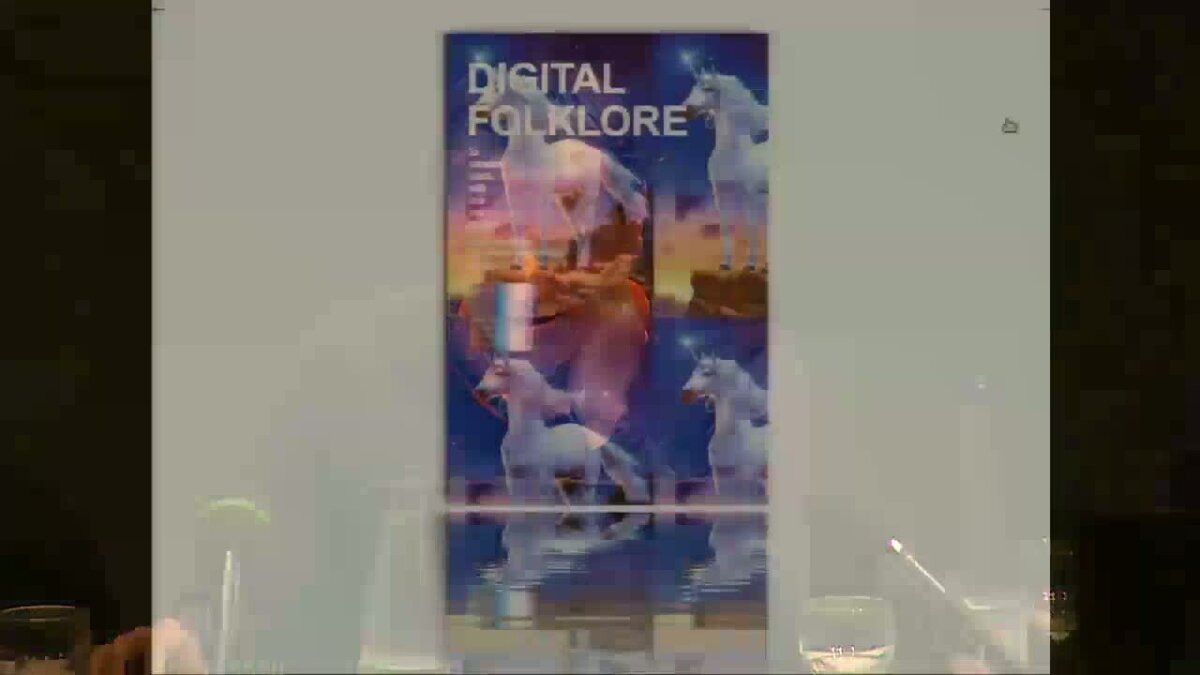 Presentation O. Lialina & D. Espenschied - Unstable and Vernacular: Vulgar and Trivial Articulations of Networked Communication
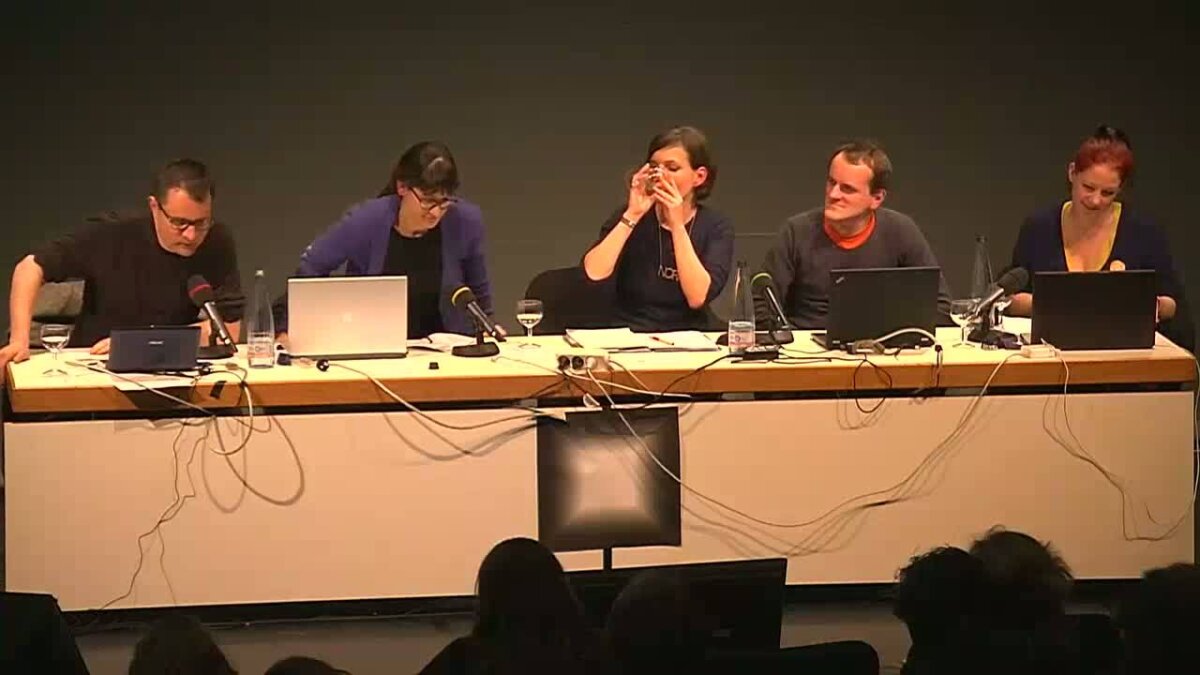 Presentation Florian Cramer - Unstable and Vernacular: Vulgar and Trivial Articulations of Networked Communication
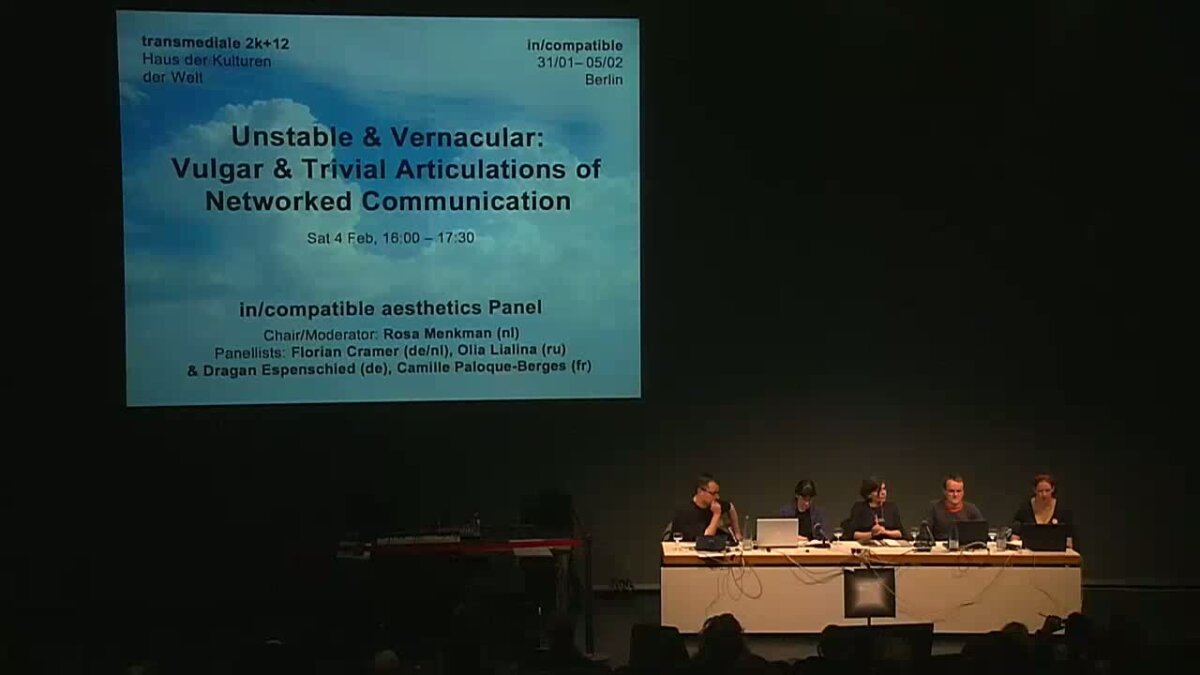 Discussion - Unstable and Vernacular: Vulgar and Trivial Articulations of Networked Communication
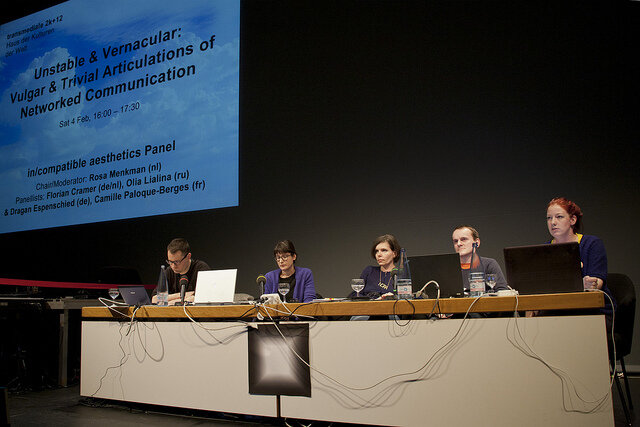 Florian Cramer, Camille Paloque-Berges, Olia Lialina, Dragan Espenschied, and Rosa Menkman (left to right) at "Unstable and Vernacular: Vulgar and Trivial Articulations of Networked Communication"