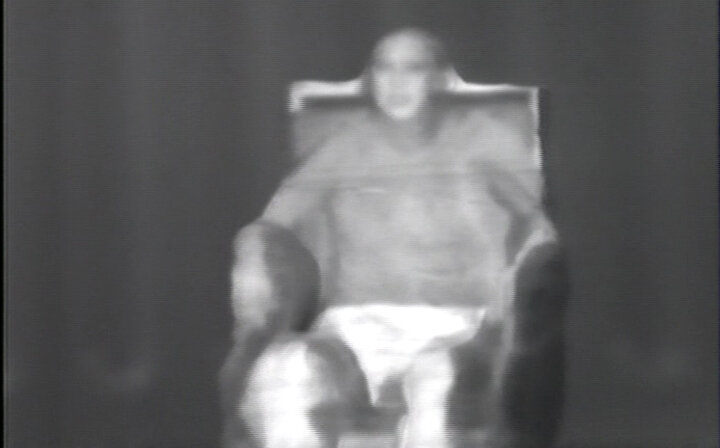
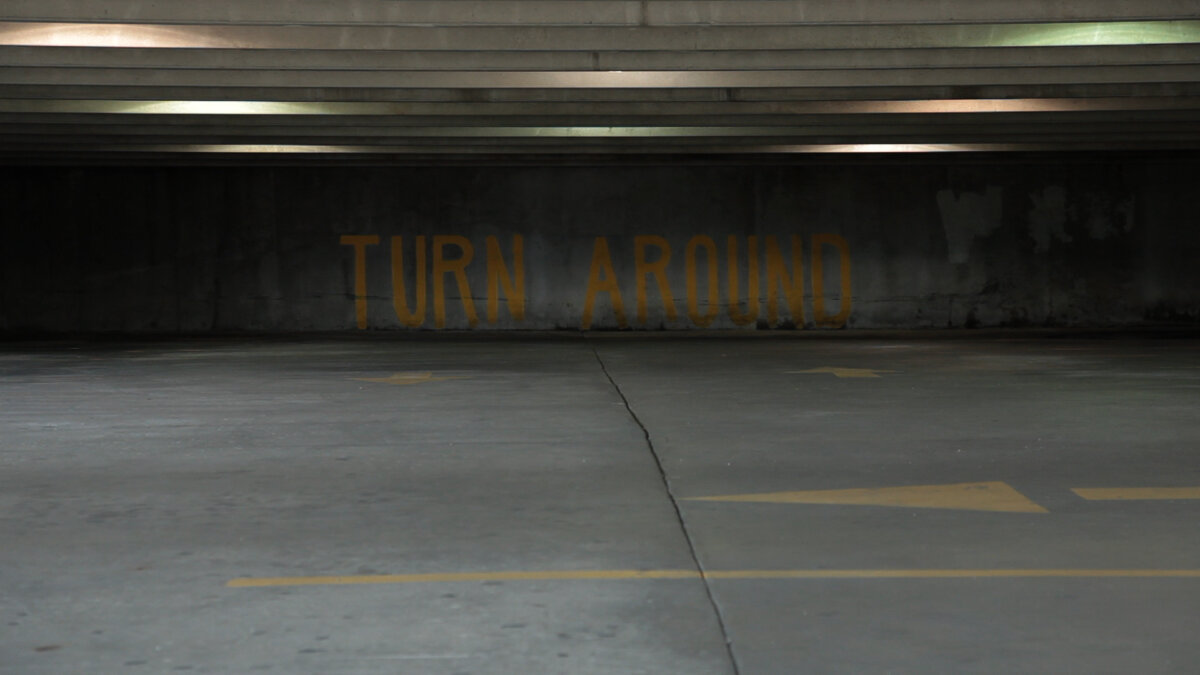
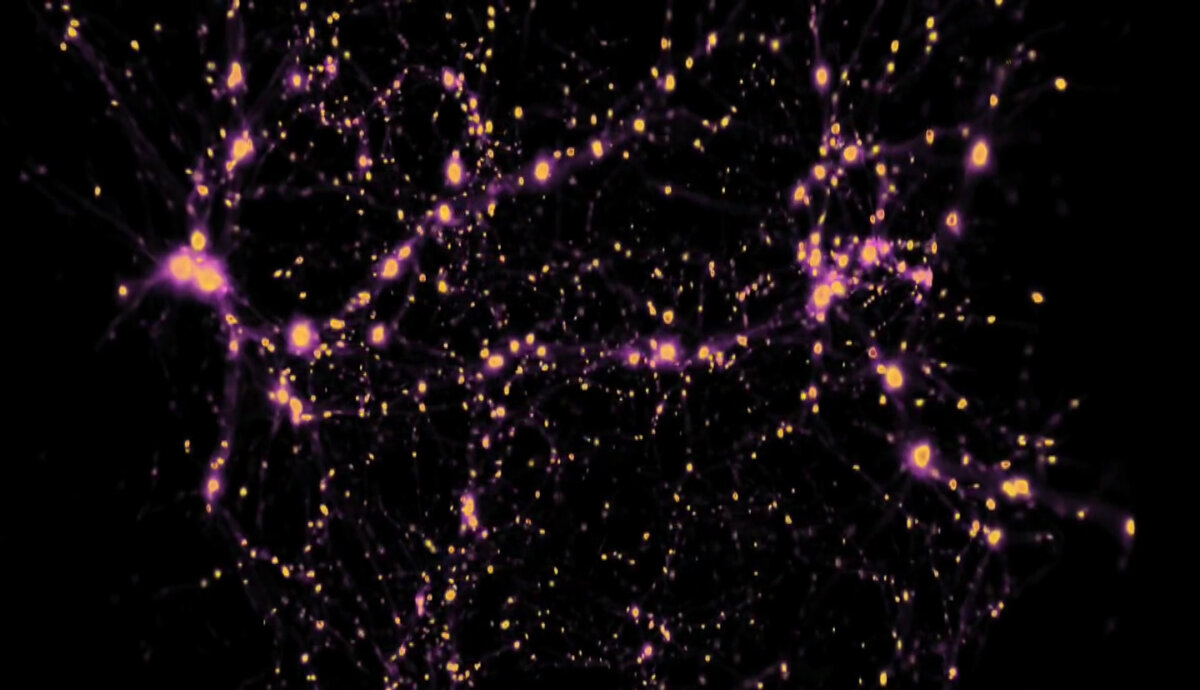
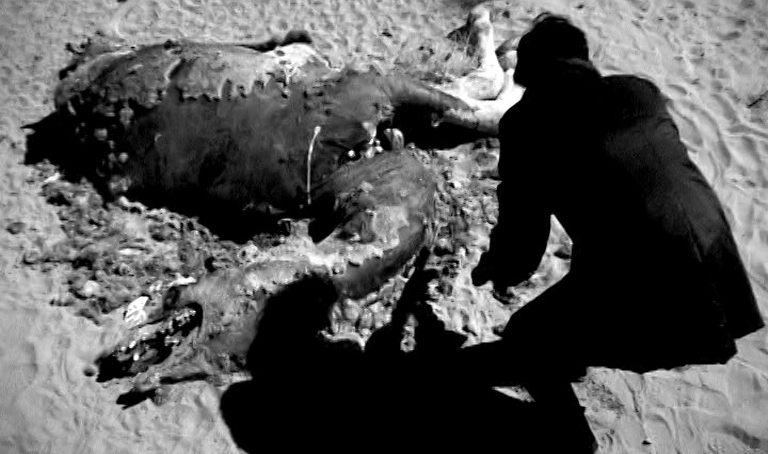
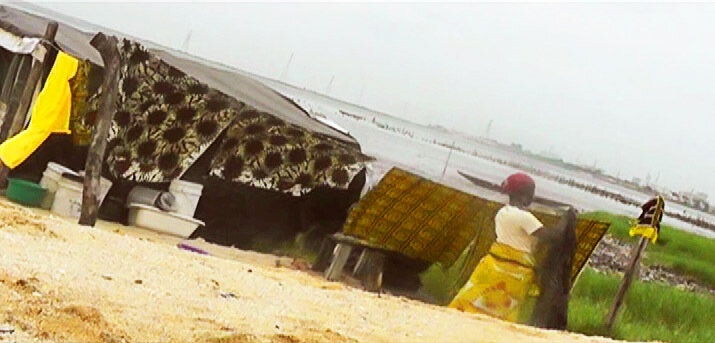
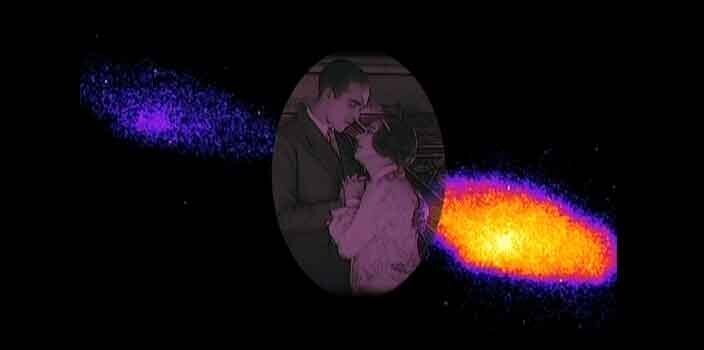
Nothing seems more difficult than the medial communication of reality. All communication is based on a particular view of the world, a pooling and contextualization of knowledge. Beyond that, it must also follow the transmitting technologies’ own laws, on top of everything else. At the Shrink’s (A Fake Hologram) makes use of an extremely simple form of three-dimensionality applied in the past by museums: The artist projects her self-portrait on a sculpture, analogous to the theory of projection from psychology. What is perhaps the most formative and problematic form of knowledge transfer is the theme of 7 Questions about Bicycles. A boy questions his parents and evokes explanations that sound as logical as they are wrong. In Remote, unease with the deceptive certitude of external reality manifests itself. Central to science fiction the question of communication of machines appears in Call to a Dark Image as a dialogue between a computer and “dark matter.” Wake interweaves its own language of symbols of Indian mythology with images from a journey through time into the human future. Insideout collects manifestations of extremely personal clips from YouTube: romantic dramas, fantasies of suicide; nothing seems too private to be shared worldwide. In contrast, Lagos Island appears like a counterpoint to the program. The fragile existence of refugees living on the beach is filmed by a camera rotating on its own axis—a connection between Direct Cinema and Structural Film that creates a totally different perception of reality.
At the Shrink's (A Fake Hologram), Laurie Anderson, nl 1977, 4 min
7 Questions About Bicycles, Gary Kibbins, ca 2009, 14 min
Remote, Jesse McLean, us 2011, 11 min
Call to a Dark Image, Andy Weir, uk 2012, 4 min
Wake, Mochu, in 2008, 14 min
Insideout, Tonje Alice Madsen, dk 2010, 25 min
Lagos Island, Karimah Ashadu, ng 2012, 5 min
Nichts scheint schwieriger zu sein als die mediale Vermittlung von Wirklichkeit. Jede Kommunikation basiert auf einem bestimmten Weltbild, einer Bündelung und Kontextualisierung von Wissen, und darüber hinaus gehorchen die sie übertragenden Technologien auch noch ihren eigenen Gesetzen. At the Shrink's (A Fake Hologram) verwendet eine extrem einfache, früher in Museen angewendete Form der Dreidimensionalität: Die Künstlerin projiziert ihr Selbstbild auf eine Skulptur, analog zur Theorie der Projektion aus der Psychologie. Die vielleicht prägendste und problematischste Form der Wissensvermittlung thematisiert 7 Questions About Bicycles. Die Fragen eines Jungen an seine Eltern evozieren Erklärungen, die genauso logisch klingen, wie sie falsch sind. Unbehagen an der äußeren Wirklichkeit und ihrer trügerischen Sicherheit manifestiert sich in Remote. Die für Science-Fiction zentrale Frage der Kommunikation der Maschinen erscheint in Call to a Dark Image als Dialog eines Computers mit „dunkler Materie“. Wake verwebt die ganz eigene Symbolsprache indischer Mythologie mit Bildern einer Zeitreise in die Zukunft des Menschen. Extrem persönliche Manifestationen aus YouTube sammelt Insideout: Beziehungsdramen, Selbstmordphantasien, nichts scheint zu privat zu sein, als dass es nicht weltweit verbreitet werden könnte. Wie ein Kontrapunkt des Programms dagegen mutet Lagos Island an. Die zerbrechliche Existenz von am Strand lebenden Flüchtlingen wird mit einer um ihre eigene Achse rotierenden Kamera aufgenommen – eine Verbindung aus Direct Cinema und Strukturellem Film, die eine ganz andere Wahrnehmung von Wirklichkeit schafft.
At the Shrink's (A Fake Hologram), Laurie Anderson, nl 1977, 4 min
7 Questions About Bicycles, Gary Kibbins, ca 2009, 14 min
Remote, Jesse McLean, us 2011, 11 min
Call to a Dark Image, Andy Weir, uk 2012, 4 min
Wake, Mochu, in 2008, 14 min
Insideout, Tonje Alice Madsen, dk 2010, 25 min
Lagos Island, Karimah Ashadu, ng 2012, 5 min