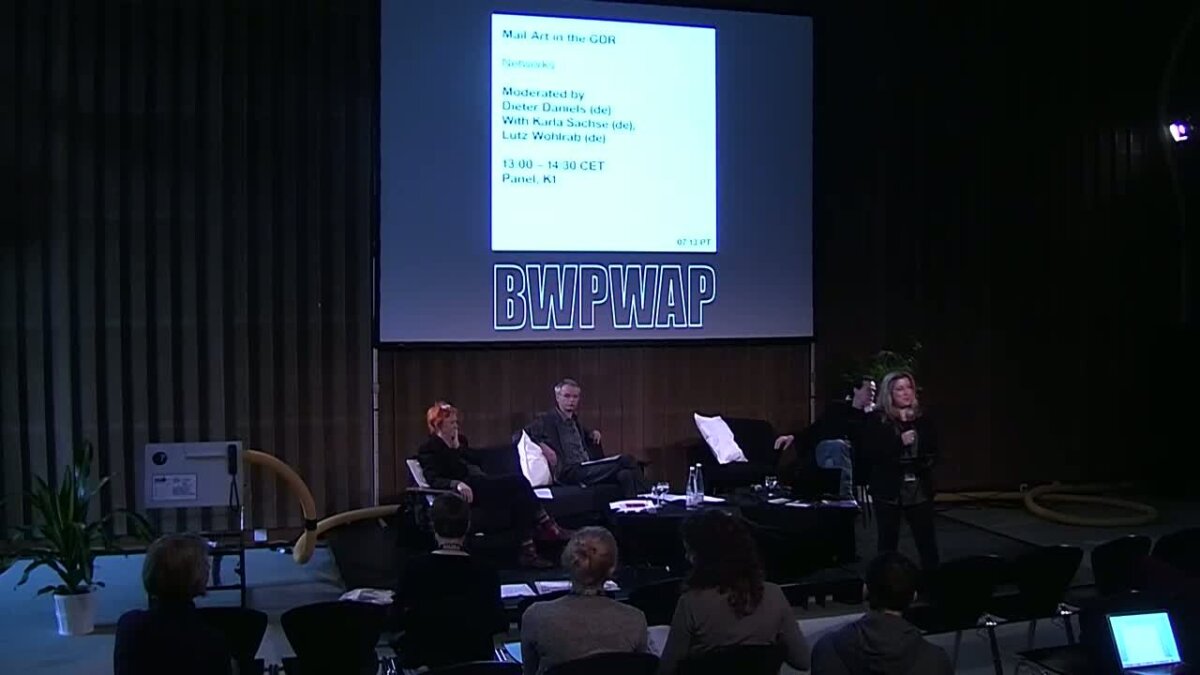
Networking as a direct mode of interchange and communication was a substantial foundation of Mail Art in the GDR, a wide-ranging aesthetic movement reaching its zenith in the 1980s. Artistic activity became visible not only in the tremendous number of postcards, envelopes and artist stamps created and sent out by network members, but also in the net of collaboration itself which, of course, grew through the international postal system. Mail Artists, engaged in a domestic as well as international network, used the postal service as a narrow path of connection to the world and also—in a playful but quite risky way—to uncover contradictions and disproportions pervading daily life. For Mail Activists in former East Germany, it was not without danger to interact with the Mail Art network. Since the Ministry for State Security (“Stasi”) controlled all domestic post, and international post even more closely, Mail Art was criminalized. Each critical statement was declared a hostile act against the state. The Stasi’s carefully planned actions to discomfort participants and the punishment of imprisonment transformed the Mail Art scene into an underground movement.
This panel describes a few of the daring projects: from the activities of Robert Rehfeldt (the first and most well-known Mail Artist of the GDR), to the political aesthetical statements of networking activists who didn’t reduce their efforts to undermine governmental restrictions and even the seemingly indestructible Wall.
...Netzwerken als direkte Form des Austauschs und der Kommunikation war Ausgangspunkt der Mail Art in der ehemaligen DDR, eine weitläufige ästhetische Bewegung, die ihren Höhepunkt in den 1980er Jahren erreichte. Ihre künstlerische Aktivität manifestierte sich in einer Großzahl Postkarten, Umschläge und von den Mitgliedern gestalteten und versendeten Briefmarken, aber auch in dem im internationalen Postsystem wachsenden Netzwerk selbst. Die in nationalen und internationalen Netzwerken engagierten Künstler nutzten den Postdienst als – wenn auch lose – Verbindung zur Welt und machten auf spielerische und gleichzeitig riskante Weise auf die den Alltag durchdringenden Widersprüche und Missstände aufmerksam. Die Verbindung zum Mail-Art-Netzwerk war für die Aktivisten gefährlich. Das Ministerium für Staatssicherheit kontrollierte die nationale Post, noch penibler überprüfte es die internationale, Mail Art wurde kriminalisiert. Jede kritische Aussage wurde zum feindlichen Akt gegen den Staat erklärt. Die von der Stasi sorgfältig geplanten Aktionen zur Verunsicherung der Szene und Gefängnisstrafen machten die Mail Art zu einer Untergrundbewegung.
Dieses Panel stellt mutige Projekte von damals vor: die Aktivitäten des ersten und bekanntesten Mail Artist der DDR, Robert Rehfeldt, und politisch-ästhetische Positionen anderer Netzkünstler, die stets Restriktionen zu untergraben versuchten und an der scheinbar unzerstörbaren Mauer rüttelten.