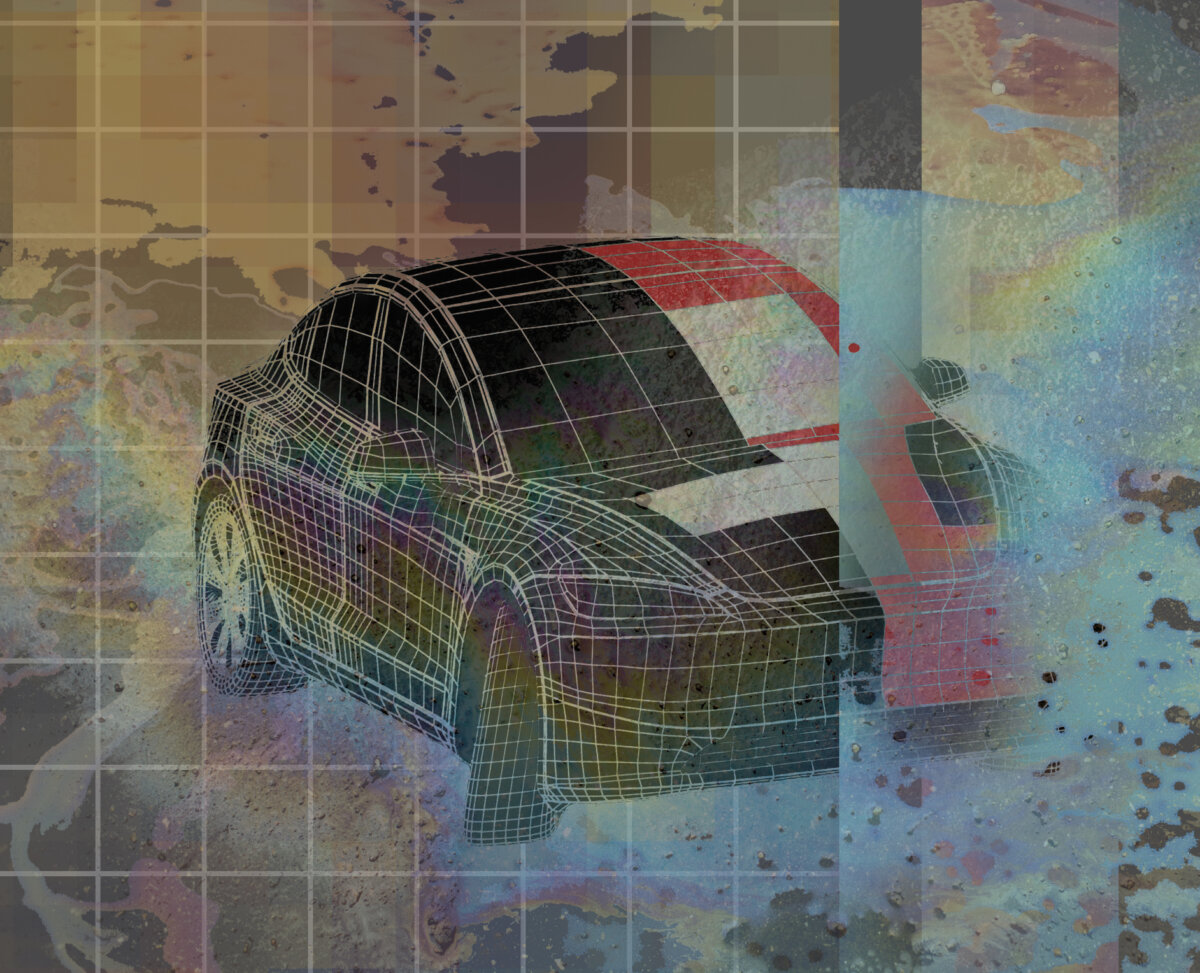
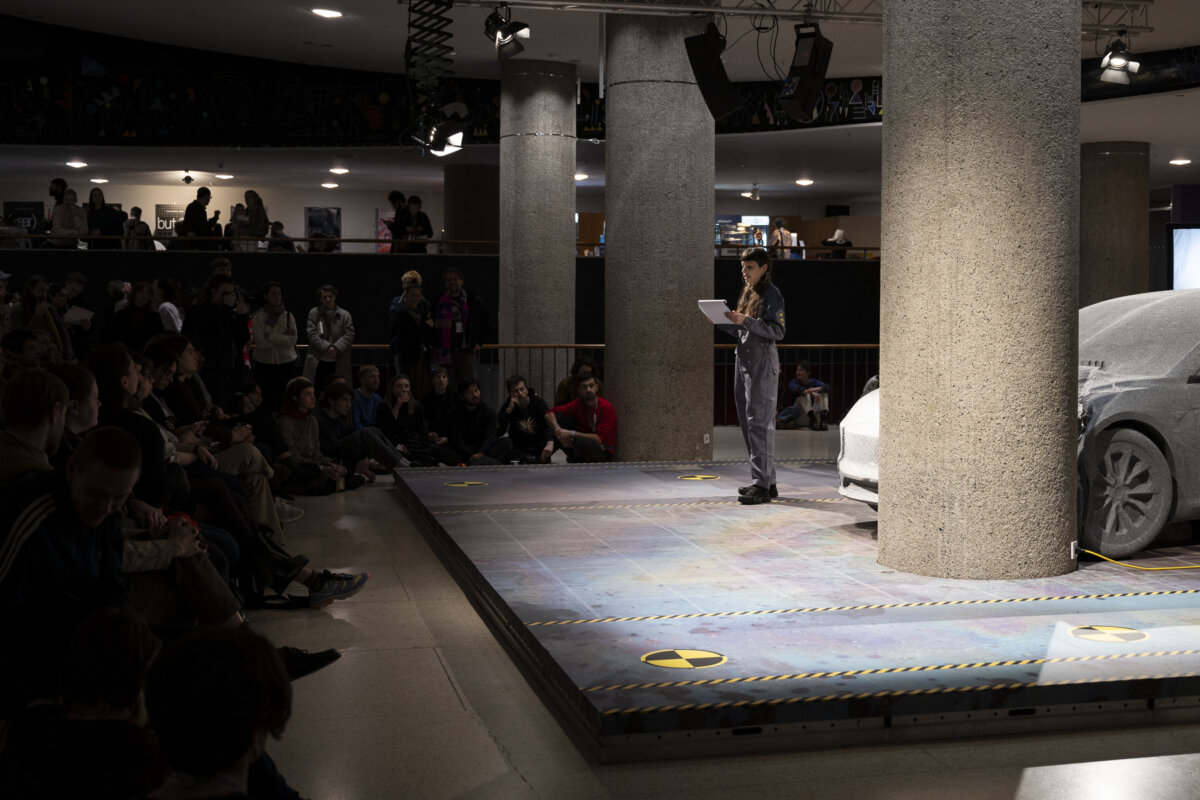
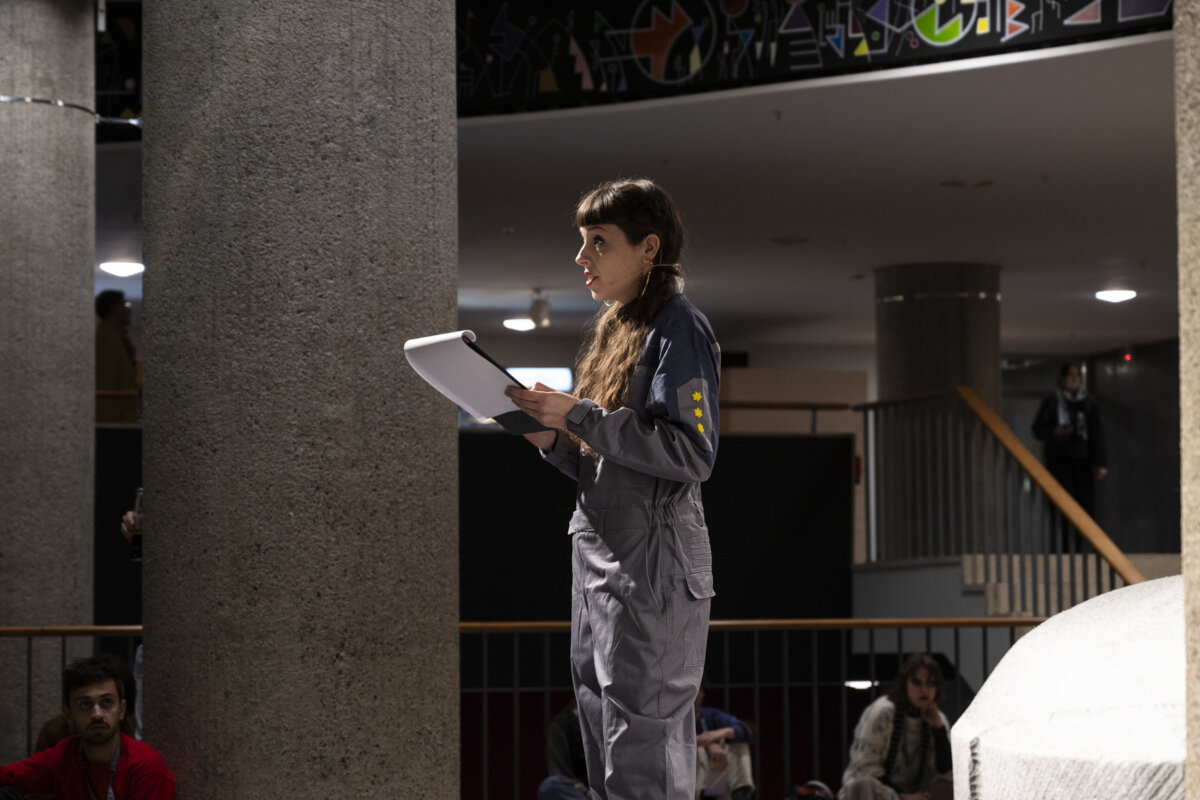
Influenced by the difficulties autonomous vehicles face in detecting the flashing lights of emergency vehicles, Felicity Hammond’s Dark Adaptation probes the limits of how autonomous vehicles ‘see’. Set in a crash-test centre of the future, Hammond’s installation and accompanying performance depict an evolutionary regression of the autonomous vehicle: one in which its sensors are hacked to collide with the fleshy rhythms of data that emerge from the human body.
We are in a car crash test centre, sited on an inactive on-shore oil rig facility. Petrol cars are no longer being manufactured and many crude oil extraction sites are in decommission. Autopilot features have sophisticated over the years with the last known traffic accident occurring over a decade ago.
The site has been taken on as testing ground for enacting and exploiting the process of dark adaptation, a series of actions that aim to “reintroduce” the crash, returning to a world where control can be lost, and the body can become fragile once again. It has been determined that image-making is a key tool in this process. The image of the crash has to be fed back into the car’s learning system as new data, polluting its own sense of reality.
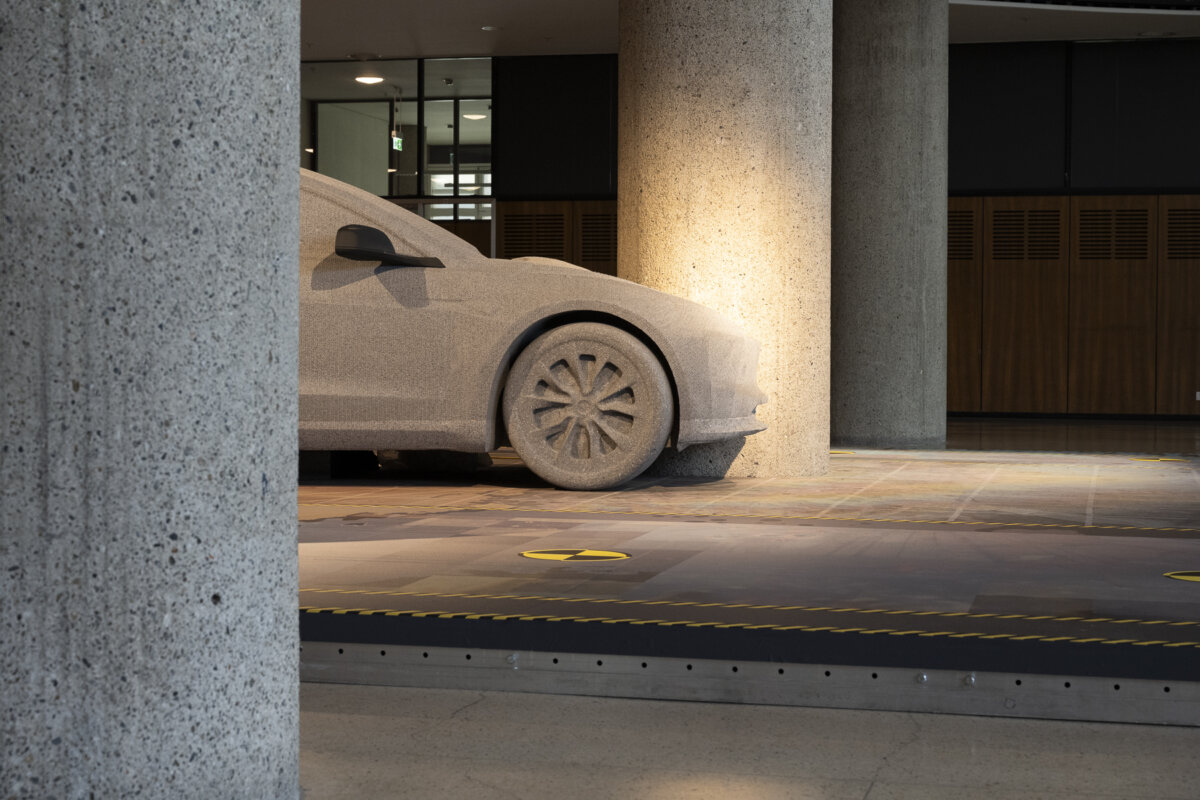
Since no autonomous vehicle is capable of crashing, a replica has to be created.