Deera World explores the Deera, also known regionally as the Dera, Dira, or Baati, as a potent technology of Swahili femme subversion. Along the Swahili Sea (Indian Ocean) coast of East Africa, textiles function as communicative systems, encoding and transmitting knowledge. The Khanga, with its declarative slogans and overt codes, is widely recognized for broadcasting blessings, proverbs, rebukes, gossip, and political rhetoric. In contrast, the Deera operates differently. Its apparent simplicity, a loose, flowing garment, conceals a tactical intelligence for maneuvering through gendered architectures of power. The modest silhouette allows its wearer to navigate interior and exterior worlds with strategic ambiguity, performing respectability while discreetly masking desire, agency, and dissent. While the Khanga speaks loudly, the Deera operates in whispers. Under patriarchal surveillance, it becomes a tool for navigating and negotiating the moral and political economies seeking to police women’s bodies, movements, and motives.
The garment circulates through an informal economy of relationships. Nearly half of all Deeras are gifted, borrowed, drifting between households rather than purchased. You drop by a girlfriend’s house on the way from an errand or a job interview, slip out of the constraints of the outside world, take off your bra, and are handed a Deera. It's a gesture of grounding, an invitation into another tempo. You might leave wearing it, wrapped in shared comfort. The garment may never return and this is understood. Each Deera carries traces of its circulation: the soft persistence of bukhoor, oud settling into cotton, the intimacy of daily life. This informal circulation, drifting from hand to hand across domestic spaces, is a non-extractive network of femme solidarity, protection and shared resources.
Deera World translates this social intelligence into a sculptural vending apparatus that releases this season’s Deeras, folded into compact packaging suited for easy circulation. Deeras themselves shift with global and tropical currents, appearing each season in new colours, motifs, sometimes even absorbing globalised symbols such as Louis Vuitton monograms or the Apple logo. Here, the Deera is positioned within the tidal, atmospheric, and social movements of the Indian Ocean world, resonating with the intertropical currents explored in By the Mango Belt and Tamarind Road. These rhythms shape the garment ecologies through which Deeras appear, circulate, and accrue meaning. Inserted into a mechanised distribution system, the work both mirrors and subverts commercial logic, reframing circulation not as extraction, but as an ongoing choreography of care. It positions the Deera as a cunning and subversive tool of concealment for navigating patriarchal scrutiny, a technology of resistance that survives by moving across bodies and spaces with stealth. Deera World foregrounds how gendered communities have long developed their own systems of care and camouflage, operating beneath, and against, dominant structures of power.
Related Media
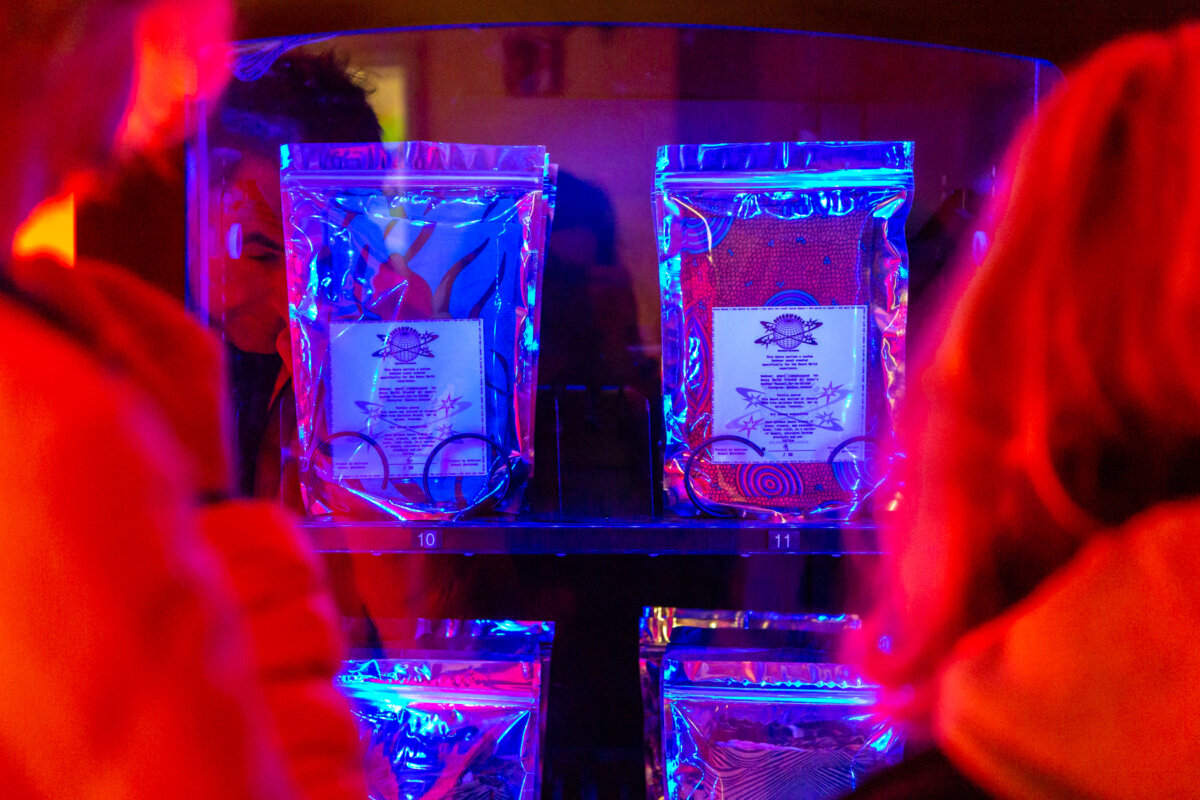 Kathleen Bomani, Deera World, Interactive Installation at transmediale 2026
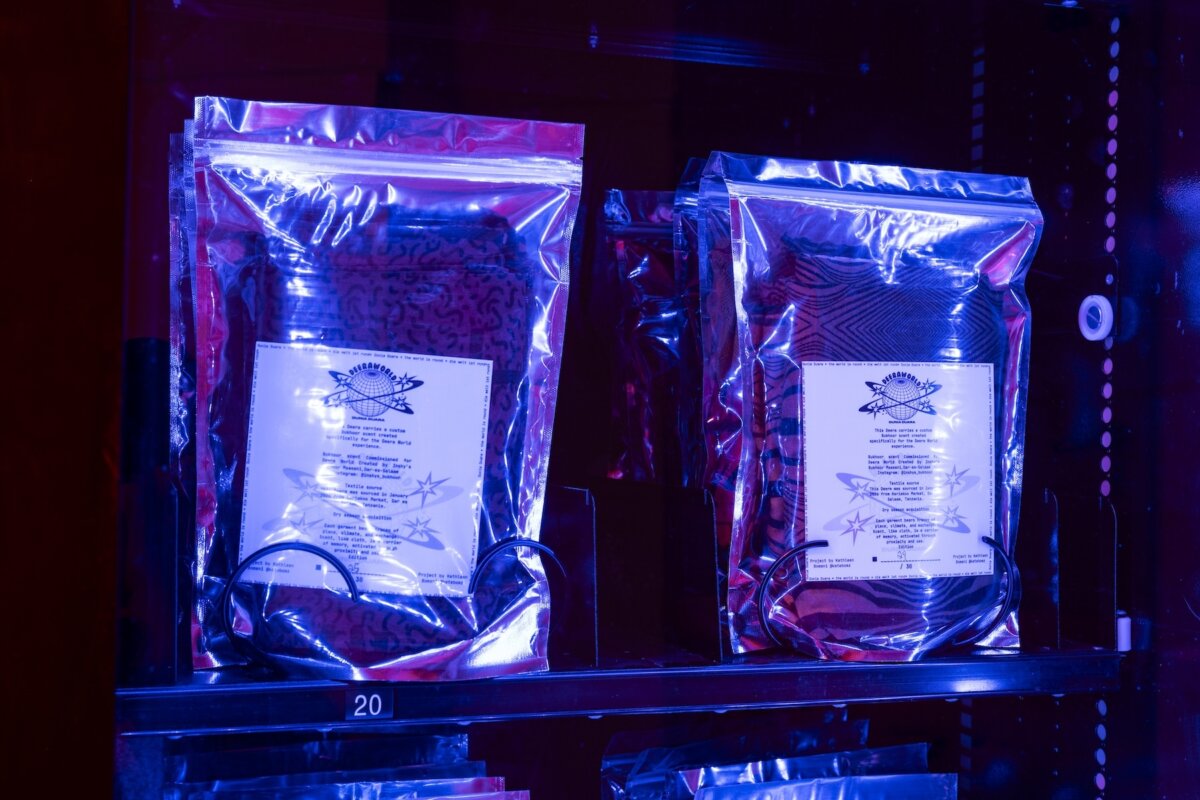 Kathleen Bomani, Deera World, Interactive Installation at transmediale 2026
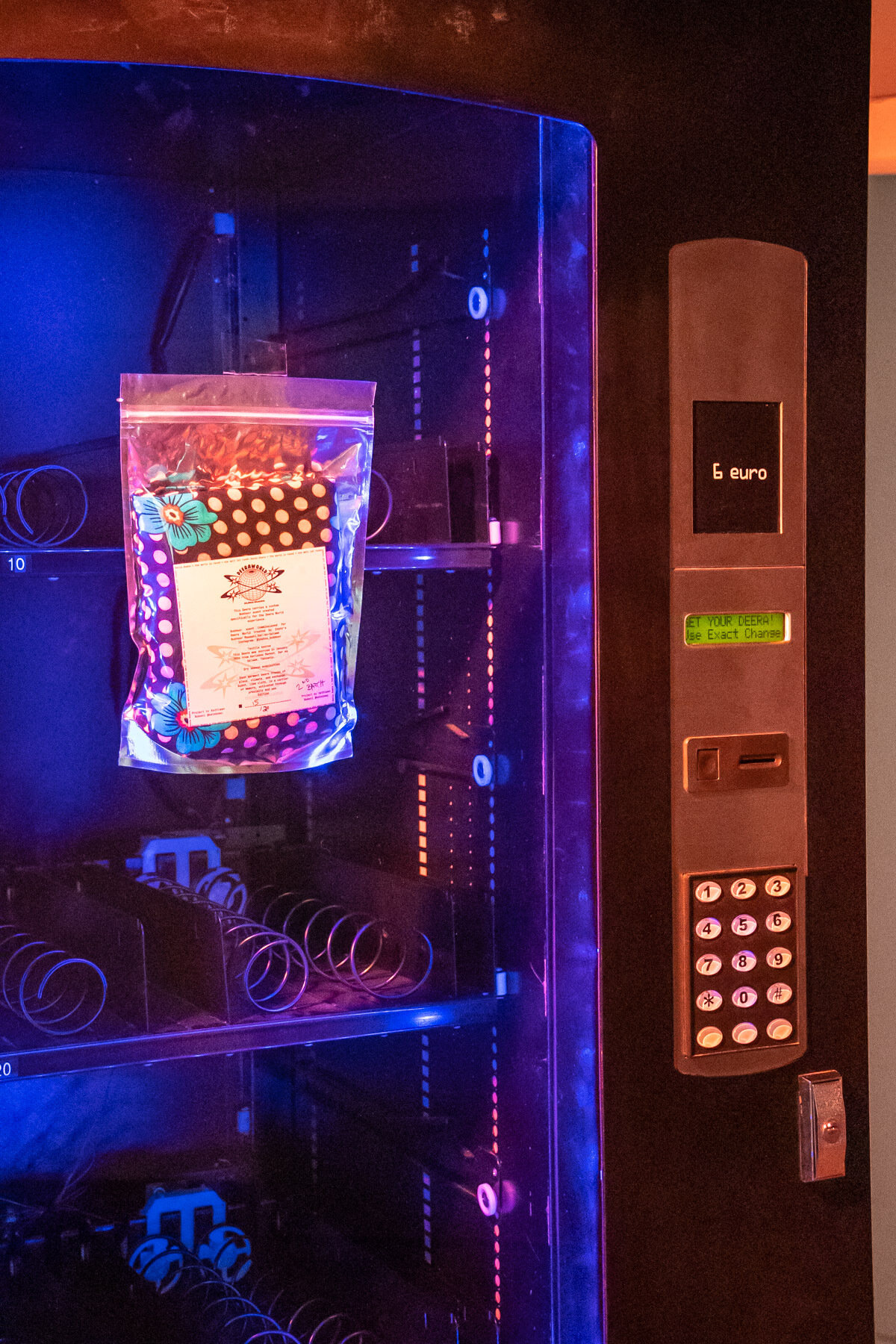 Kathleen Bomani, Deera World, Interactive Installation at transmediale 2026
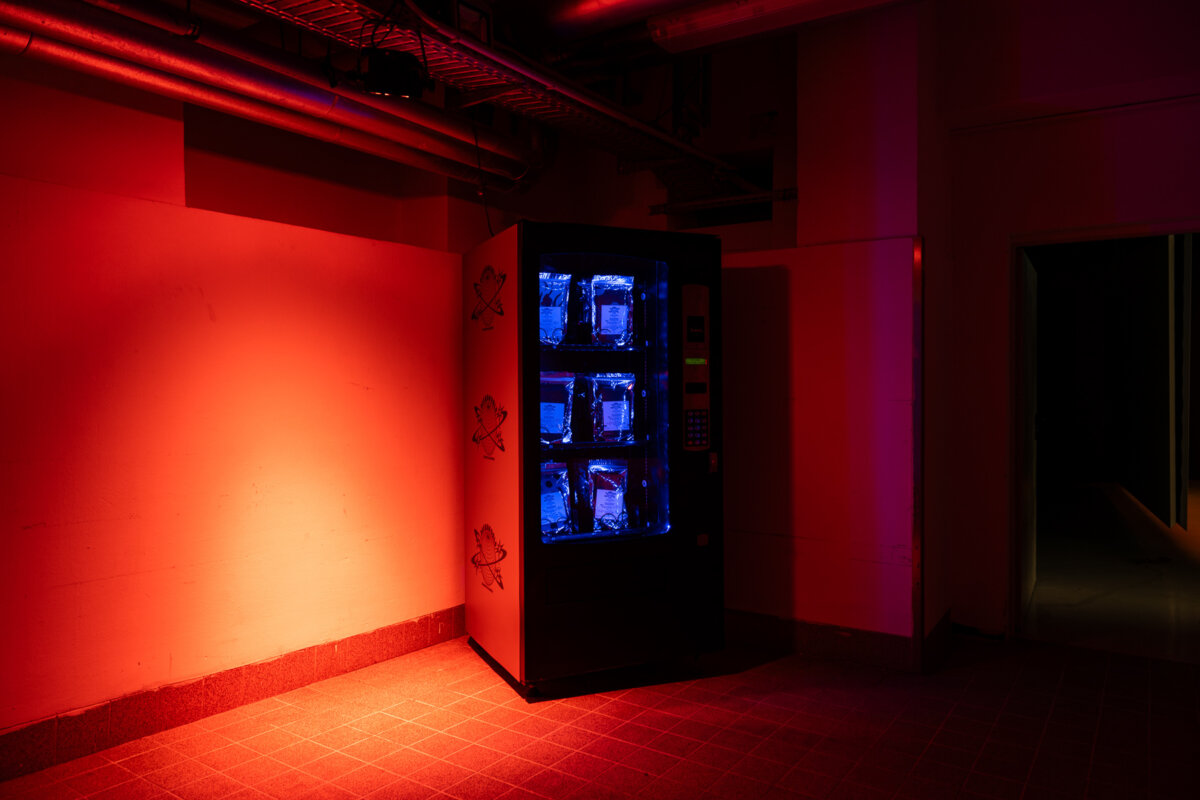 Kathleen Bomani , Deera World, transmediale Opening Night, installation view, 2026