| Tagline: | Festival für Kunst und digitale Kultur |
|---|---|
| Venues: | Haus der Kulturen der Welt (HKW) |
| Date: | 29.01 – 02.02.2014 |
| Organisation: | Kulturprojekte Berlin GmbH |
| Website: | – |
The revolution is over. Welcome to the afterglow.
Zwischen Hightech-Glanz, Elektroschrottplätzen, Big Data-Firmen und Überwachungssystemen: Unter dem Titel afterglow erkundete die 27. transmediale, wie in der postdigitalen Gegenwart einstige Schätze des mediatisierten Lebens zu Müll werden. Trash oder Treasure? Internationale Denker und Kulturproduzenten beschäftigten sich mit dem gegenwärtigen ambivalenten Zustand der digitalen Kultur, in dem Medientechnologien sowohl Alltag als auch physische und immaterielle Abfallprodukte geworden sind.
transmediale 2014 begriff den afterglow des Digitalen als Chance, drängende aktuelle Themen zu behandeln und neue spekulative Praktiken zu entwickeln.
Festivalthema
The digital revolution was a dinner party but its afterglow is not. Die utopischen Versprechen hochauflösender audiovisueller Daten, elektronischer Echtzeit-Kommunikation und unendlicher Speichermöglichkeiten sind ins Wanken geraten. Noch immer locken diese Phänomene mit der Hochglanz-Ästhetik des Digitalen. Doch in einer Welt, in der „Big Data“ auch der „Big Brother“ massenhafter Überwachung ist und „Clouds“ aus Metallen und Mineralien, also echtem Erdmaterial, gemacht sind, zeigen sie ihr wahres Gesicht. Unsere postdigitale Kultur ist keineswegs immateriell und neutral – Technologie ist heute tief in geophysischen und geopolitischen Sphären eingebettet. Die materielle Dimension des Digitalen manifestiert sich auf Elektromüllhalden, in Minen, Massendigitalisierungsprojekten und Sicherheitsfirmen.
Unter dem Leitmotiv Afterglow untersuchte die transmediale 2014 den Moment zwischen „trash“ und „treasure“, zwischen Schrott und Schatz. Was digitale Kultur ist, ist längst nicht mehr eindeutig. Was von der digitalen Revolution bleibt, ist eine paradoxe Nostalgie für futuristische High-Tech-Versprechen, die sich in Wohlgefallen aufgelöst haben. Doch dieser Moment birgt auch Chancen, er lässt Spielraum für das Erproben spekulativer Theorie und Praxis. Vielleicht bieten Exzess, Overflow, Datenmüll und Elektroschrott, die Überbleibsel der digitalen Revolution, einen fruchtbaren Boden
Vorwort zum Festivalkatalog
Into the afterglow
With the definitive arrival of the digital society into the mainstream of public debate, it is not the glossy surface of the latest consumer gadget that cries for the most attention. The impact of digital technology has instead become relevant only after the fact, through burning social issues that are now intrinsically linked to it. Privacy, data, surveillance: ask what digital culture means to the person on the street today and you are as likely to get an answer related to these key post-digital topics as you are to hear about connection, interactivity or participation. transmediale 2014 proposes ‘afterglow’ as a diagnosis of the current status of postdigital culture. afterglow conjures up the ambivalent state of the digital where what seems to remain from the digital revolution is a paradoxical nostalgia for the futuristic high-tech it once promised us, but that is now crumbling in our hands. In the afterglow, high-definition audiovisuals, real-time communication and infinite storage are just some of the once utopian promises of digital culture that are now widely disseminated. However, their tarnished appeal cannot be denied in a world where ‘big data’ is also the ‘big brother’ of mass surveillance and where the ‘cloud’ is made of the metals and minerals of the scarred earth on which data centres are built. Far from immaterial and harmless, our post-digital culture is now one where digital technologies are deeply embedded in the geophysical and geopolitical. As masses of data and electronic hardware pile up, the digital world seems to turn from treasure into trash.
Instead of withdrawing into cultural conservatism during this postdigital moment, we ask if there are means for cultural renewal in the excess, overflow and waste products of the digital afterglow. During the festival week and the extensive partner programme, artists, hackers and researchers will take up this challenge, into and beyond the afterglow, combining different topics, formats and methodologies from art, science and popular culture. This transversal approach is what makes transmediale unique in the field of culture festivals and this is luckily recognised by a number of important supporters and partner organisations. We would like to thank our principle funders the German Federal Cultural Foundation whose support allows the festival and its different programme strands the necessary room to develop over the year. We are also grateful for the support of and collaboration with the main venue, Haus der Kulturen der Welt, which has become another cornerstone of the festival. Other supporters are tied to specific festival sections and here we are once again grateful to the Federal Agency for Civic Education for their essential support of our conference programme and to the Medienboard Berlin-Brandenburg for their contribution to our marketing efforts and for continuing to recognise the importance of transmediale in Berlin. A distinctive approach in the transmediale 2014 programme is a concentration of new and commissioned works, a strategy backed by several of our most valued partner organisations including the Schering Stiftung and the Canada Council for the Arts, who supported the final outcome of two different artist in residence programmes that transmediale has run over the past year. Additional collaboration projects contribute to this approach with the help of partner organisations including Art Hack Day, Balassi Institut – Collegium Hungaricum Berlin (.CHB), the Goethe-Institute, SUPERMARKT, LEAP, the Berlin University of the Arts, Winchester School of Art, the Embassy of Canada in Berlin and the whole network of venues taking part in the transmediale and CTM Festival Vorspiel pre-festival programme. The festival is a great collaborative effort and I would like to personally thank everybody in our enduring festival team, as well as our technical support, serve-u, and administrative body, Kulturprojekte Berlin. Let the moment of afterglow slowly sink in over the course of these pages as we introduce and contextualise the main topics, projects and participants of transmediale 2014.
The revolution is over. Welcome to the afterglow.
Kristoffer Gansing, artistic director, transmediale.
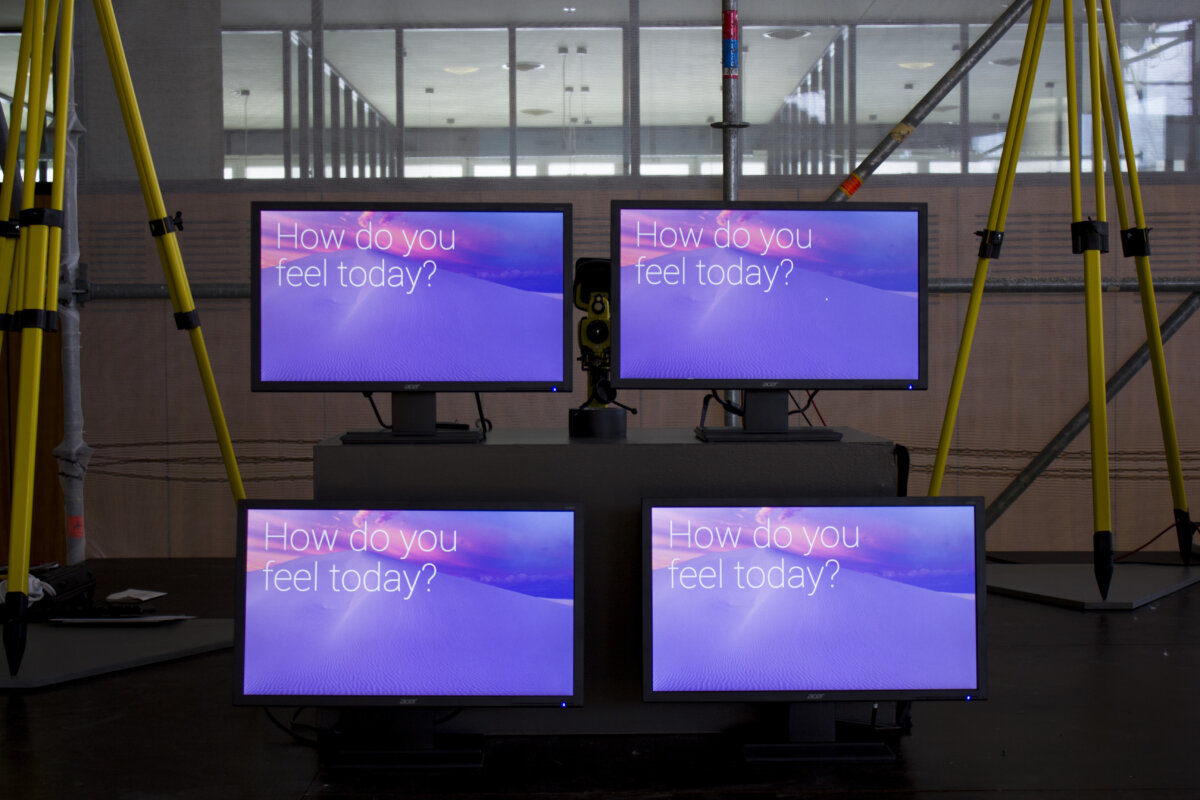
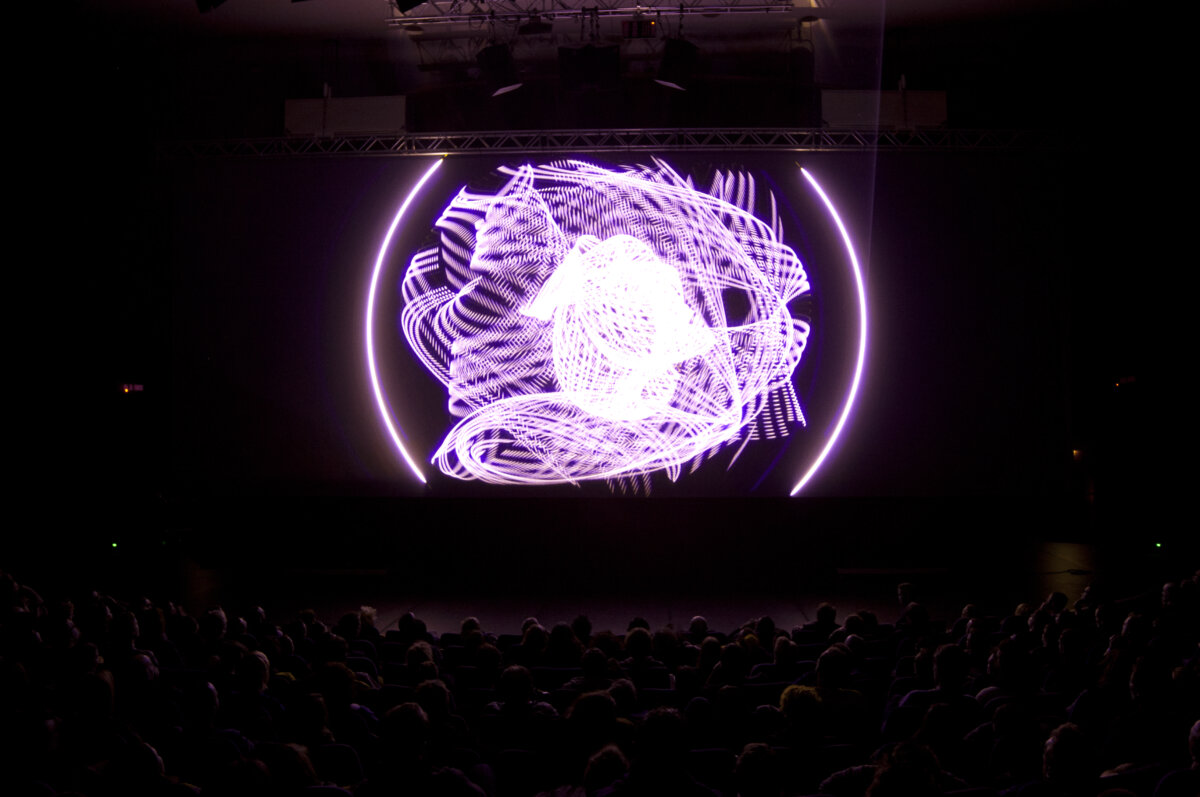
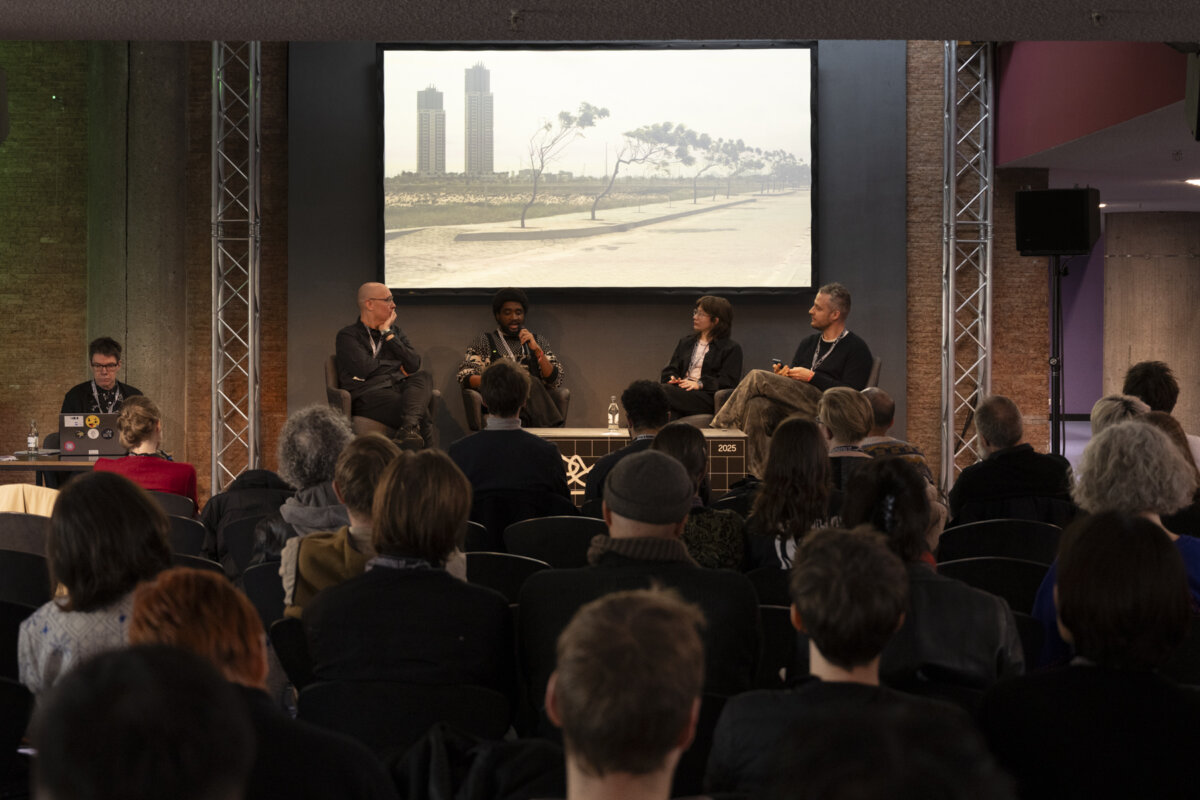
transmediale 2014 adopts the afterglow of the digital revolution as a starting point to deal with some of the burning issues of today and to invent new speculative practices. The conference and the film & video programmes focus on subjects such as the internet, surveillance, and Big Data as well as electronic, digital and analogue trash. For the exhibition, in a curatorial and organisational collaboration between transmediale and LEAP (Lab for Electronic Arts and Performance), the festival has invited Art Hack Day as a grassroots event/exhibit format/community for artists whose medium is tech and hackers whose medium is art.
Die zweite Ausgabe des transmediale/magazine beinhaltet Hintergrundinformationen, Interviews und visuelle Eindrücke über das Festival 2014 und dessen Thema "afterglow".
Post-digital Research spricht die chaotischen und paradoxen Bedingungen von Kunst und Medien nach der technologischen Revolution an.Post-digital Research reflektiert kritisch den Begriff des "Post-digitalen".
Team
Kristoffer Gansing Artistic Director, Markus Huber Festival Manager Tatiana Bazzichelli Program Curator, Marcel Schwierin Program Curator, Inga Seidler Project Manager, Daniela Silvestrin Project Manager; Christl Baur, Linnea Kotiniemi, Elena Mantoni, Konstantinos Stergiopoulos, Vena Ward, Mariana Ziku Program Assistants; Sibylle Kerlisch Production Manager, Phillip Sünderhauf Technical Director, Katharina Gratzl-Karnitschnig Administrative Manager & Finance, Susanne Bernstein Administrative Assistance & Fundraising, Christine Bernauer Guest Management, Sanga Lenz Guest Services, Filippo Gianetta Marketing & Communications, Lina Zuppke Editorial Coordinator, Tabea Hamperl Press Manager, Anja Faltin Infocounter Management; Emma Hovi, Lena Diekmann Press & Communications
transmediale/reSource Tatiana Bazzichelli Curator & Program Developer, Daniela Silvestrin Project Management, Spyros Acheimastos Assistant
transmediale/archive Baruch Gottlieb Research
Technical Support serve-u Phillip Sünderhauf, Andreas Buchholz, Marc Klische
Festivaldesign The Laboratory of Manuel Bürger Manuel Bürger, Timm Häneke, Caroline Wolewinski
Festivalarchitekture raumlaborberlin Andrea Hofmann, Markus Bader with Claire Mothais, Winnie Westerlund
Website Development einskommanull Sebastian Göbel, Laura Oldenbourg, Michael Scharnagl
Beirat Alex Adriaansens, Marie-Luise Angerer, Inke Arns, Dieter Daniels, Jan Edler, Micz Flor
Support
gefördert durch: Kulturstiftung des Bundes, Medienboard Berlin Brandenburg, Bundeszentrale für politische Bildung
Partnern: CTM Festival, Winchester Scholl of Art, Aarhus University, Lab for Electronic Arts and Performance, Schizophrenia Taiwan 2.0, Schering Stiftung, Leuphana, ZK/U, Embassy of Canada, Canada Council for the Arts, Art Hack Day, Balassi Institut – Collegium Hungaricum Berlin (.CHB), the Goethe-Institute, SUPERMARKT, LEAP, UdK Berlin
Sponsoren: serve-u technical support, Audi, Barefoot Wine
Medienpartnern: arte future, arte creative, radioeins, Motherboard, Berliner Fenster, neural, DE:BUG, die tageszeitung, Digicult, der Freitag
Support: Werkleitz Gesellschaft e.V., IN-Berlin, Embassy of Sweden, Danish Arts Council, Italienisches Kulturinstitut Berlin, Institut Francis Berlin, Spanische Botschaft, Botschaft des Königsreichs der Niederlande, U.S. Embassy Berlin, Tasmanian Regional Arts Fund, Mondrian Fonds, Friedrich-Ebert Stiftung, Goethe Institut, Z/KU (Zentrum für Kunst und Urbanistik), Pontificia Universidade Católica de São Paulo, Beuth Hochschule für Technik Berlin, Flora Power Mate Urban Drink, Topcon Europe Positioning B.V., SICHERT: Der Partner, MaketechXlab and MaketechXHotspot, Japanese Agency for Cultural Affairs, NHK International Inc., Japan Media Arts Festival, NewHive, IFTTT, MailChimp, Kitchensurfing, EPSRC Engineering and Physical Sciences Research Council, Queen Mary University of London, TEKA GmbH, Geier-Tronic Videotechnik GmbH, Pro qm thematische Buchhandlung, Motto Berlin, Buchhandlung Moritzplatz, Ocelot, not just another bookstore Berlin