We’re back, and hope that you’ve had a good start into the new year! The festival is just three weeks away, and we’re excited to continue sharing programme news. Don’t forget your festival passes !
The festival programme is structured around Low Tide and High Tide moments. High Tide programming engages larger audiences through performances, lectures, conversations, and concerts, while Low Tide features more intimate, ongoing experiences such as film screenings, durational sonic events, workshops, and ritualistic interventions. Artists and participants will contribute to both High Tide and Low Tide formats, highlighting different aspects of their work and creating varied modes of encounter with their practices.

By the Mango Belt & Tamarind Road will present the film Afterlives (2025), by Montika Kham-on . The film imagines a post-tropical future where light carries memory, where it bends and fractures, holding histories too delicate to survive unspoken. On an iodine planet, a dream engineer summons visions of her grandfather’s struggle against the cruel weather of Isaan, a region in northeastern Thailand, the migrations it forced, the lives it scattered. In this luminous archive, Ongkan Chaeng Nam [ลิลิตโองการแช่งน้ํา ], once a royal curse, resurfaces as the voice of ordinary people, threading together trauma and hope, myth and memory. Montika will also take part in a conversation about her work during the festival.
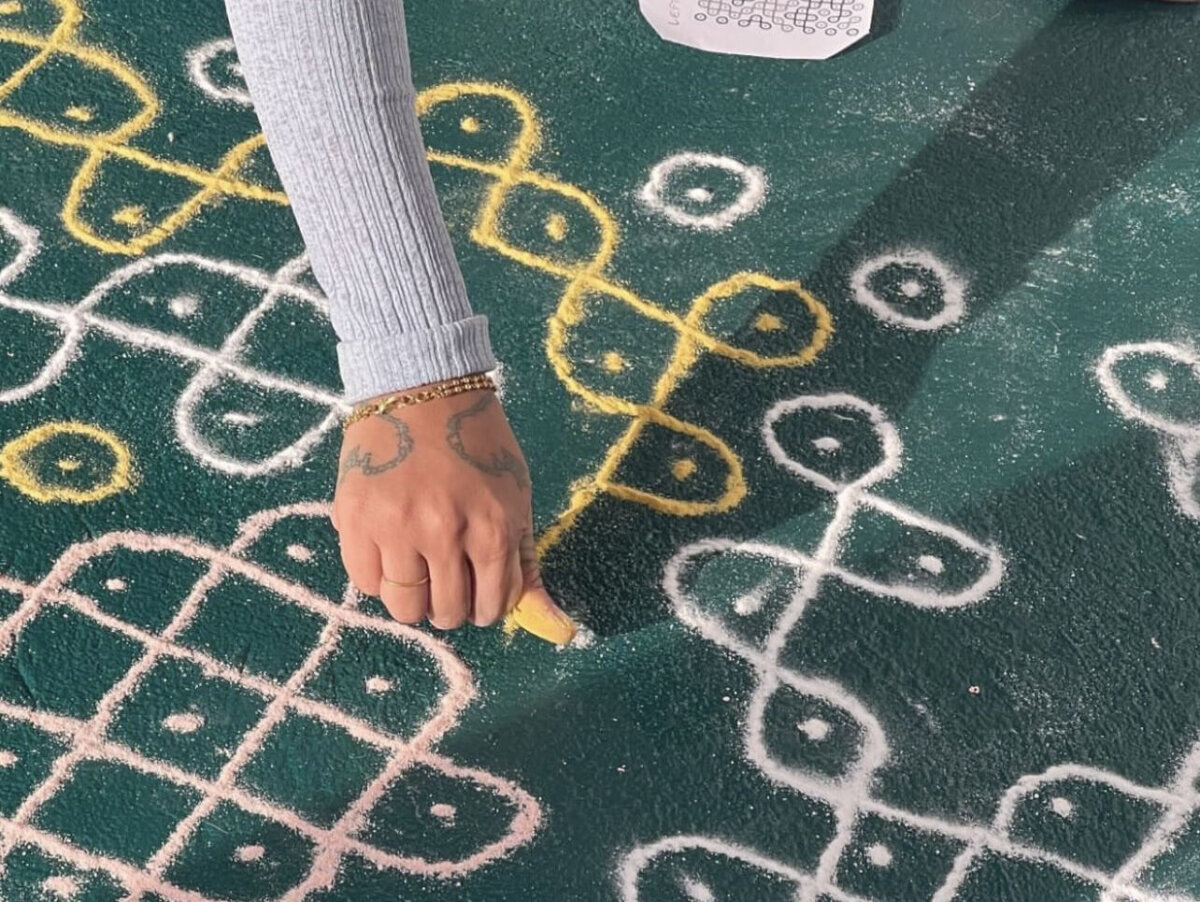
Aarati Akkapeddi ’s installation Kolams translates text into Kolam designs – traditional South Indian floor drawings of mathematically intricate, continuous lines. The work transforms letters into binary codes that generate colorful Kolams, intertwining computation with matrilineal memory, mourning three generations of women in the artist’s family. For By the Mango Belt & Tamarind Road, these Kolams will be drawn on the ground with rice flour and turmeric, containing encrypted messages that visitors can decode and also create themselves via kolam.codes .
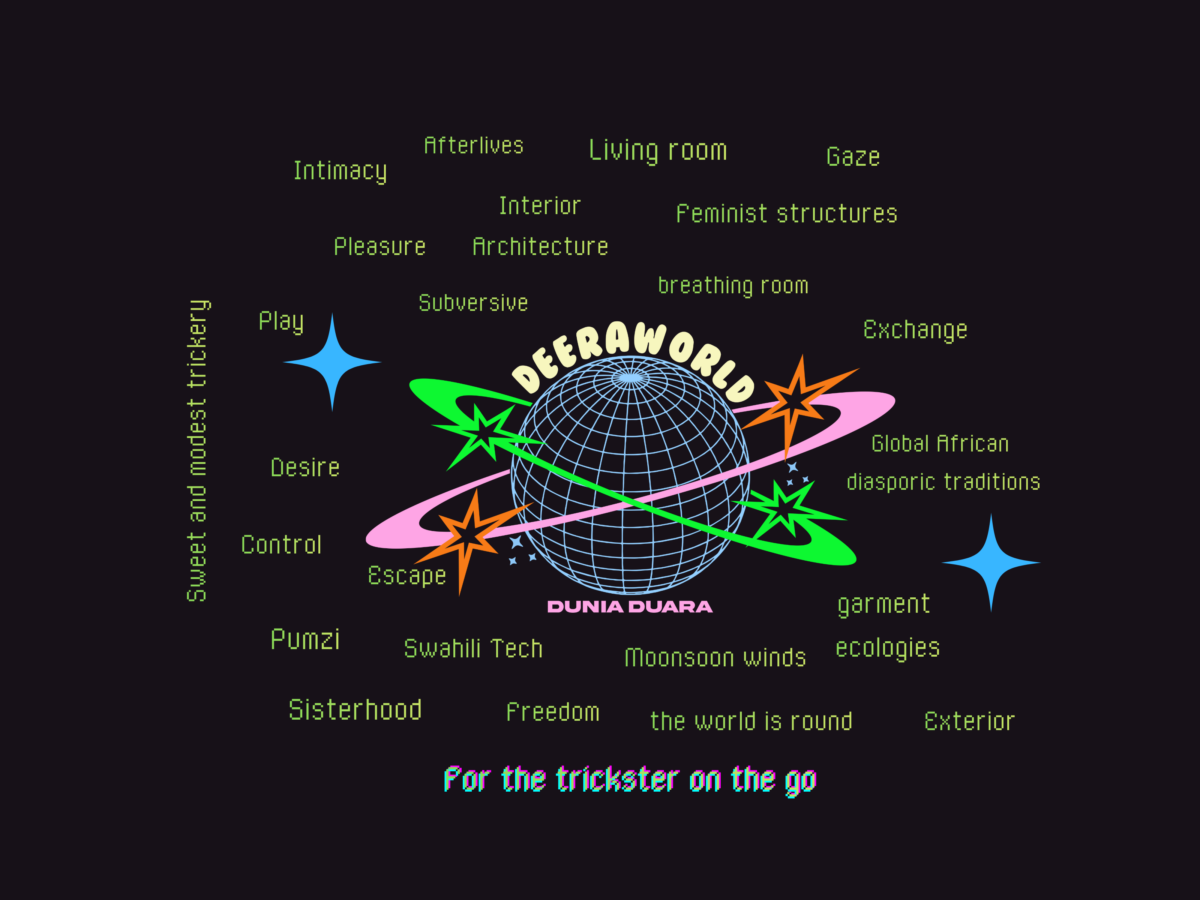
Blurring hi-fi and low-fi, circuitry and craft, Kathleen Bomani ’s installation Deera World draws inspiration from the Deera – a long, loose-fitting, flowing garment worn along the Swahili coast and across East Africa – as a quiet technology of femme subversion. Circulating through informal economies of relationships and exchange along the Swahili Sea, textiles operate as communicative systems encoding and transmitting knowledge and desire within modest silhouettes that move strategically between interior and exterior worlds. Under patriarchal surveillance, the Deera becomes camouflage: performing respectability while protecting agency.
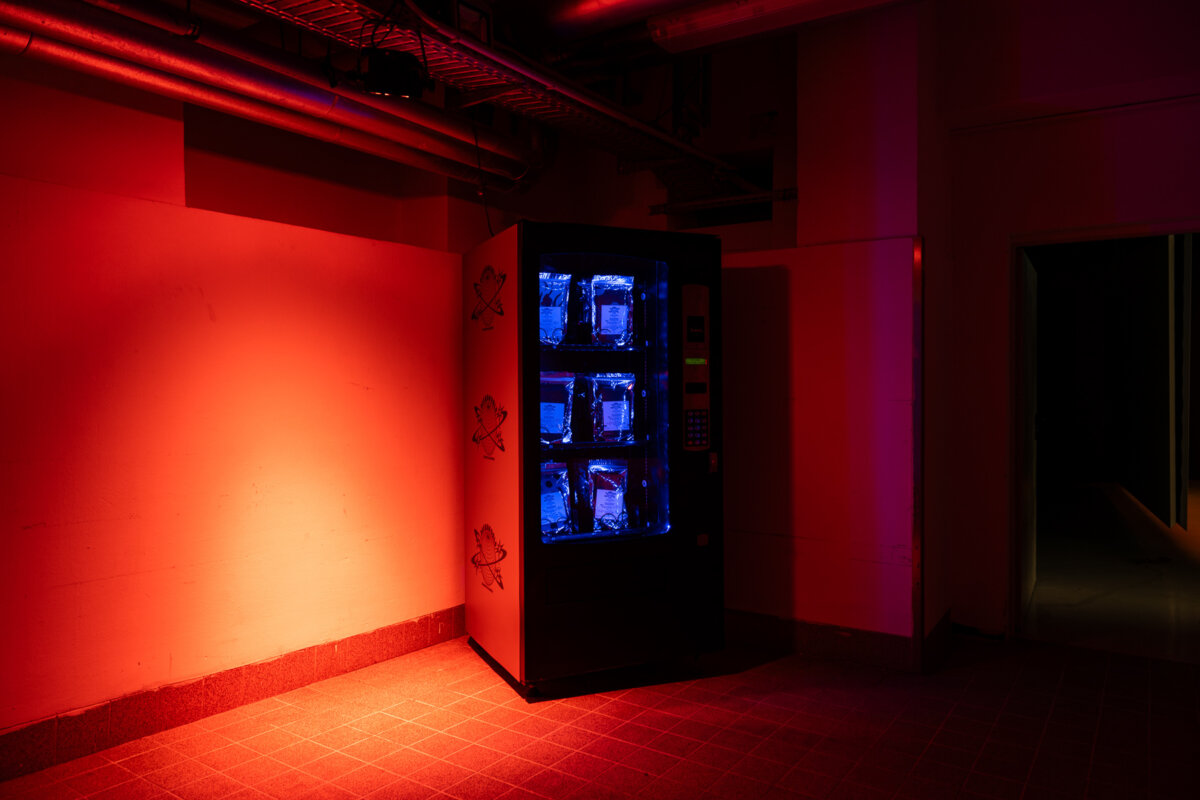
Presented in a sculptural vending machine apparatus, Deera World releases compact Deeras designed for stealthy circulation across bodies and spaces.