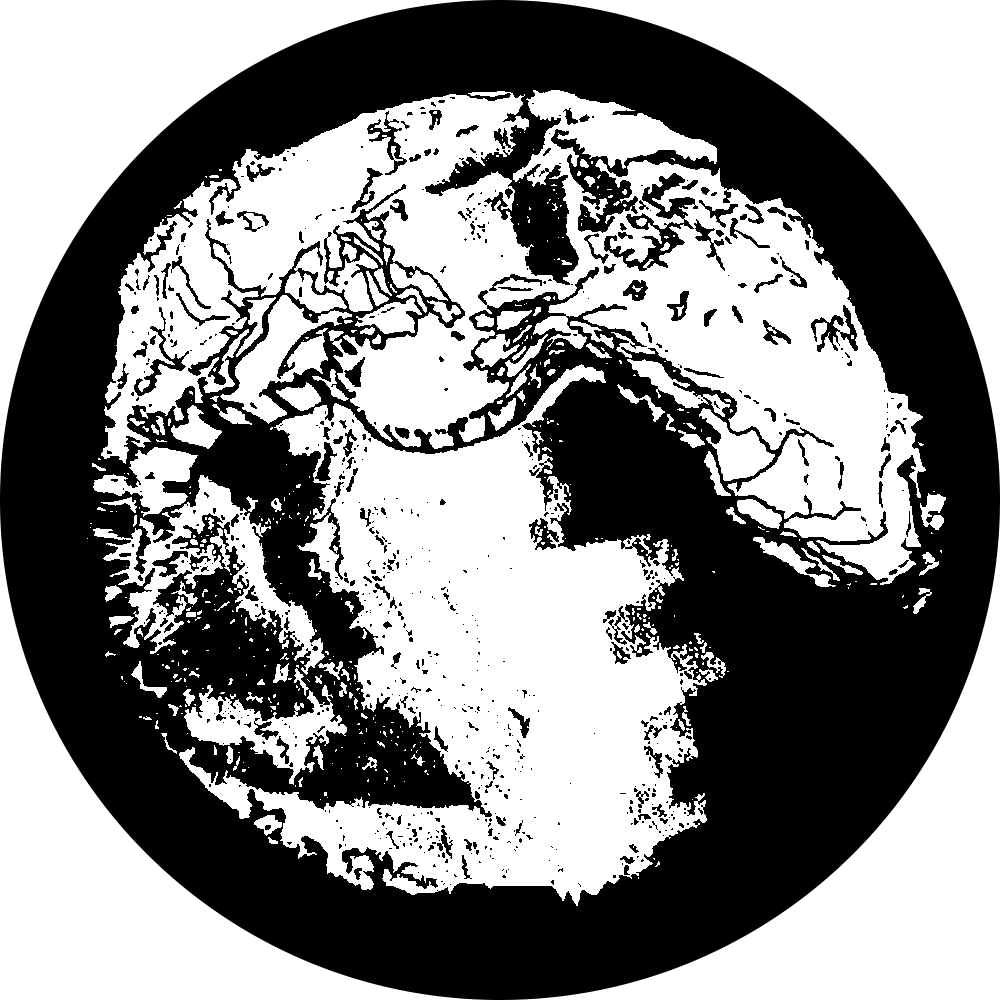
This text, Depths and Densities, constitutes the report of a workshop of the same name that Femke Snelting, Helen Pritchard and Jara Rocha conducted during transmediale 2019 as part of their long-term project *Possible Bodies*. Possible Bodies, a disobedient action-research project, works with “the body” as a complex, concrete, and at the same time fictional entity. Moreover, its participants analyze it in the context of technological infrastructures and techniques such as tracking, modelling, and scanning. In text report, Jara Rocha compiles voices and quotes from the experiences of the workshop: a trans*feminist experiment in which open-source applications for geo-modeling were collectively examined, especially in relation to various regimes in which geo-modeling operates—regime examples are truth, representation, language, or political ideology. Referencing the aim of the workshop, to disrupt and redirect the extractivist tendency of tools for earth surveyance and calculation, the report is written in the form of a “bug report.”
Possible Bodies is an ongoing collaborative research on the technical and lively tensions between so-called bodies and volumetric practices.1 The inquiry is ready to emerge at any possible intersection that lies between two vectors. One vector is constituted by physical bodies that might be somatic or not, human or not, isolated or not, named or not. The other vector is tensed by the calculation the volume bodies occupy with their very presence in space, being virtual—made of bits—or physical—made of atoms.
The project aims at problematizing the concrete and fictional entities that “bodies” are, in the context of 3D tracking, modelling, rendering, calibrating, and scanning operations towards them. Such operations have perhaps grown in sophistication and speed within the digital realm, but are certainly not new. The particular contemporary topology of volumetrics draws from intricate genealogies of many knowledge clusters of modernity (perspective setting procedures, occupation measuring techniques, scale calibration tools, average volume normalizing, position prediction methods). Protocols and paradigms proliferating and circulating confirm the limitations of how, when, where, and why bodies could or should be considered and measured. In other words, there is a continuum that facilitates the smooth flow of very specific volumetrics (and not others) from architecture to border surveillance—passing through the spectacularization of sports, biomedical practices—to the juridical, the military, and the pornographic. The technoscientific conditions for the smoothness of this flow constitute the rigidity of mere probable trajectories along the continuum of volumetrics and restrict the wild twists and surprising hacks needed to jump from the probable to the possible!
Of course scale affects the mathematics of presence very strongly. Take the scale leap from individual somatic corpo-realities (of, say, zoologically recognized organisms) towards the so-called body of earth. Quite a jump evidences how the infrastructural complex of geo-operations such as mining and the measuring of soil depends on software tool siblings such as those used in the biomedical realm (like tomography), but adapted to a different field for geological data handling, interpretation and 3D-visualization. Such tools power both bio-medical imaging and techno-colonial subsurface exploration and keep corpuses of knowledge persistently affecting each other. In Possible Bodies there is an interest in attending to how these parallel technical developments contribute to a crystallization and standardization of such operations.
Under the guise of a one-afternoon workshop at transmediale 2019, Possible Bodies invited a group to collectively study open-source tools for geo-modelling while attending to the different regimes—of truth, of representation, of language or of political ideology—they operate within. It attempted to read those tools and a selection of texts in relation to one another, with the plan of injecting some resistant vocabularies, misuses and/or f(r)ictions that could affect the extractivist bias embedded in the computation of earth’s depths and densities. The workshop was a trans*feminist 2 experiment and proposed to compile a “bug report” 3 as an act of affirmative responsibility taking for this turbocapitalist momentum.
It was a hands-on situation that took the Gplates software platform as a case study. Gplates is an interactive plate-tectonics visualization program and an open-source application software that visually reconstructs very complex datasets of use for the geophysicist community. 4 This platform was chosen as the affected, affective, and perhaps effective infrastructure to converge around—and attend to—for the workshop, while triangulating its visions of the Earth with software technology and bits of critical theory.
The Depths and Densities workshop was populated by a mix of known companions and just-met participants (in total, a convergence of circa 30 voices), each bringing her own particular intensities regarding the tools, the theories, the vocabularies, and the urgencies placed upon the table. The discussions were recorded on the spot and transcribed later. This publication cuts through a thick mass of written notes, transcriptions, and excerpted theoretical texts, sedimented along five vectorial provocations: on the standardisation of time, on software vocabularies, on the activation of geontologies, on the computation of velocities, and on the techniques of 3D visualizations. Each vectorial provocation was taken up by a sub-group of participants, who assumed the task of opening up a piece of the Gplates whole (such as a technical feature, a forum, a tutorial, an interface etc.) and tensioning it with some text matter from a reader pre-cooked by Helen Pritchard, Femke Snelting, and myself. The platform worked as a catalyst for our conversations and hence its community of developers would eventually become deferred interlocutors of a report.
The following cut was made to share a sample of that afternoon’s eclectic dialogues in what could be transferred as a polyphonic bugged report. All text injections (in italics, on the right side) are quotes taken from the workshop’s reader. All pieces following one already quoted belong to the same author, until next quote in italics appears. All voices on the left emerged along the workshop’s discussion, which was transcribed by Fanny Wendt Höjer.
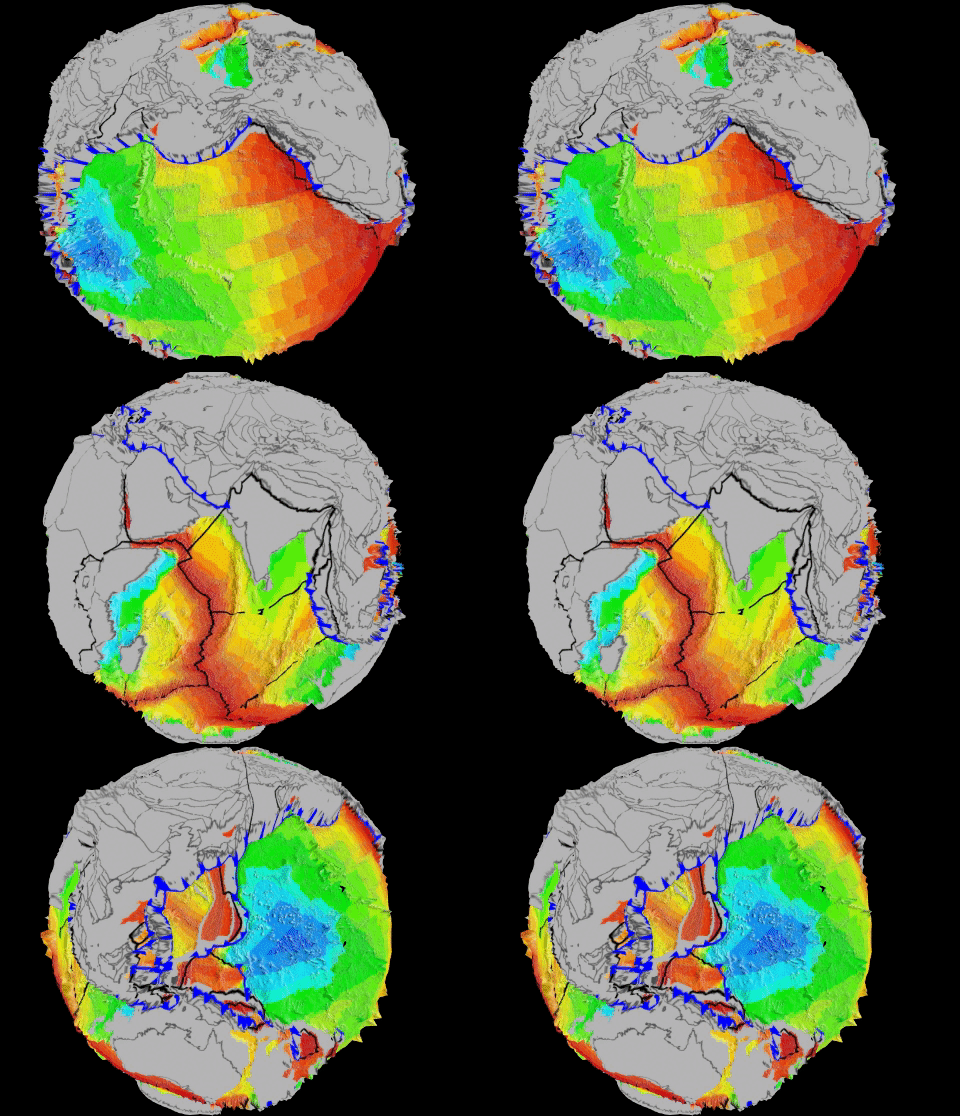
First vectorial provocation, on standardized time
if multiple timescales are sedimented in contemporary software environments used by geophysics, can fossil fuel extractivist practices be understood as time-travelling practices?
in these troubling times, there is an urgency to trouble time, to shake it to its core, and to produce collective imaginaries that undo pervasive conceptions of temporality5
this urgency is both new and not new
how is the end of time imagined, in a modelling sense?
we see discretely plotted colours
time isn’t what it used to be
does the body of earth exist in the same timescale you do?
or try and witness the whens otherwise
time tends to be limited to (and influenced by) the observer’s perception but what are the material and semiotic conditions for another kind of time perception?
sedimented time and coexistence at ecologies of nothingness (aka voids)
voids are features that occur commonly in near-surface geophysical imaging. (…) However, voids are often misidentified. Some voids are missed, and other anomalous features are misinterpreted as voids, when in fact they are not. Compare them with real voids, and we determinate the differences based on incomplete data6
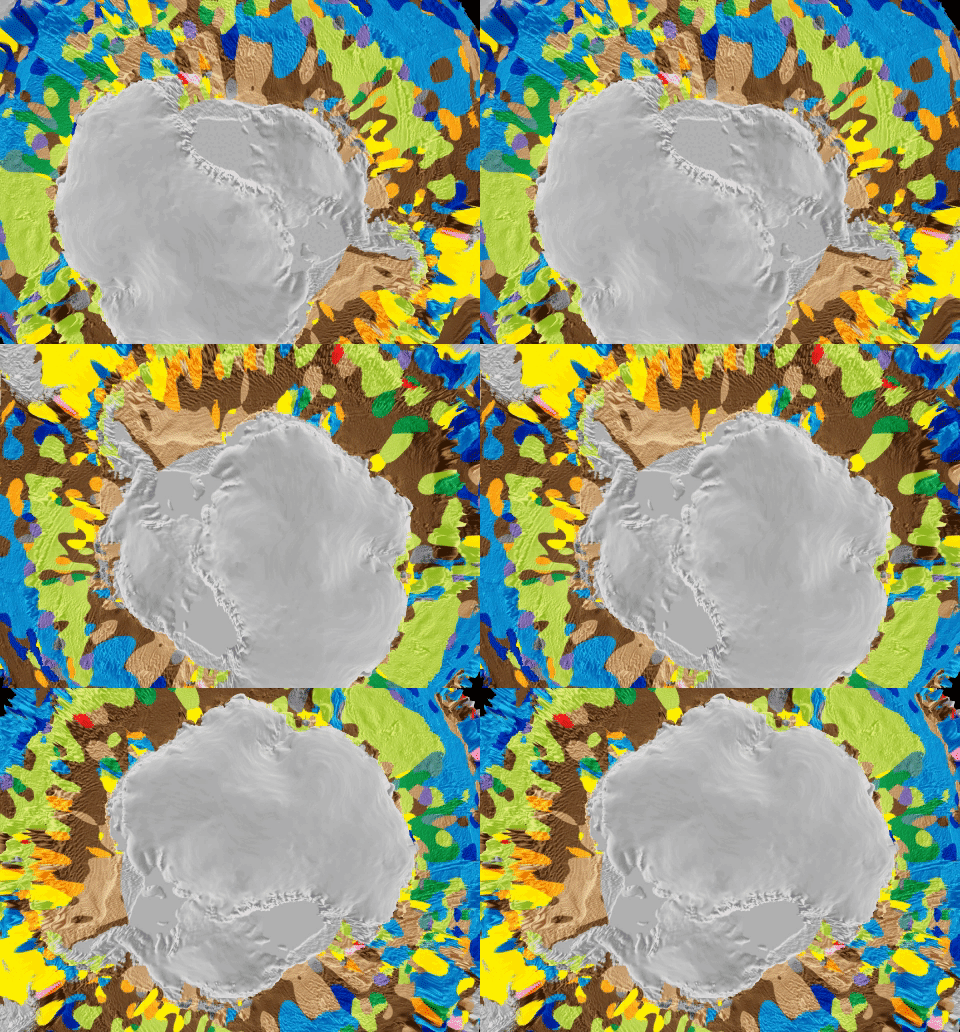
Second vectorial provocation, on software vocabularies
forging a differently fuelled language of geology must provide a lexicon with which to attend the geotraumas
the endurance of a stony patience that doesn’t forget love7
user engagement with the earth through a 3D visualization software is based on metaphors like handling or grabbing
in the lexicon of geology that takes possession of people and places, delimiting the organization of existence, the refusal of such captivity makes a commons in the measure and pitch of the world, not the exclusive universality of the humanist subject
you can still grab the earth: at Gplates a stable static earth is available for grabbing
a refusal to be delimited is found in the matter of the world and a home in its maroonage; “they wander as if they have no century, as if they can bound time… compasses whose directions tilt, skid off known maps”
also, the use of the verb “to grab” brings with it the history and practice of “land grabbing”, land abuse and arbitrary actions of ownership and appropriation with correlated both dispossession by the taking of land, and environmental damage
but what if the earth grabs back?
there is a kind of reason that we will no longer accept
tilting the axis of engagement within a geological optic and intimacy, the inhuman can be claimed as a different kind of resource than in its propertied colonial form—a gravitational form so extravagant, it defies gravity
if all the semantic network of Gplates is based on handling and grabbing as a key gestures in relation to the body of earth, a loss of agency and extractivist assumption slip in too smoothly, and too fast
forging a new language of geology must provide a lexicon with which to take apart the Anthropocene, a poetry to refashion a new epoch, a new geology that attends the the racialization of matter
most software platforms allow for no resistance, for no possible unavailability
the praxis of that aesthetic locates an insurgent geology
middle click and drag ¡la tierra para quien la trabaja! 8
reconstituted in terms of agency for the present, for the end of this world and the possibility of others, because the world is already turning
and what if the earth grabs back
the ghosts of geology rise
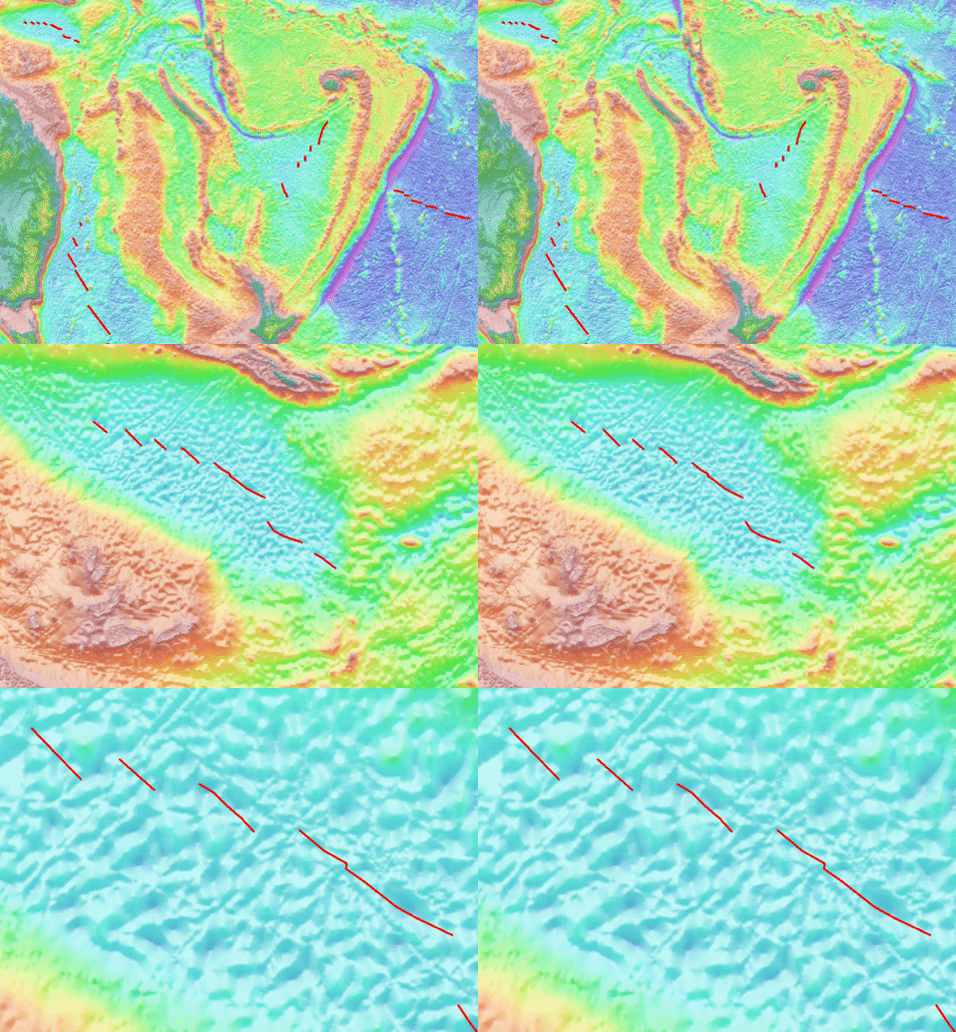
Third vectorial provocation, on the activation of geontologies
we are all talking over each other like tectonic plates and strata
a time of the geos, of soulessness9
looking at what geology is implies a reconsideration of assumptions of what life is
the anthropos as just one element in the larger set of not merely animal life but all Life as opposed to the state of original and radical Nonlife
minerals rocks plates
the vital in relation to the inert, the extinct in relation to the barren
cannot be separated from time
it is also clear that late liberal strategies for governing difference and markets also only work insofar as these distinctions are maintained
but where is the legend we could not read it
Life (Life{birth, growth, reproduction}v. Death) v. Nonlife
why this suspension subversion of the living
why this suspension subversion of the living
it is hardly an uncontroversial concept
otherwise the future will keep being missing but wait, the past is also missing the line goes back to 172 million years but earth is 4,5 billion years
the way data gets laid over particular shapes, how that comes to kind of operationalize particular makings and matterings of the world,10
a color-coded chronology is that tone the year of emergence or is it duration of collapse of merging
so kind of thinking through the technical and political questions of what is depth and what is density, how they shift depending on the situation they’re operationalized within
a gradient of abstraction is being dangerously portrayed
the differences perhaps of the densities in geophysics to the densities in something like biomedical scanning, even though both might have tomographic processes
what is the skin of a body its density how is it colored?
density is not a fixed thing
but why?
we’re interested in exploring these open questions; how these matter, and how they matter in relation to things like surfaces and their topologies, where there might be densities of power
a chroma chart would be appreciated
there’s a kind of thickness in imaginaries of depth: the kind of unknown or unreachable, the removed or the unremovable. But also the kind of dark and morally crooked in bodies, in earth and in desires
like absolute dating of rocks you’re alive, I’m alive/let’s go
but other imaginations of depths in relation to both the earth or the so-called body, or the body of the earth. In particular, the thinking with the kind of writing from geo-philosophy and feminist technoscience, which might suggest that we might tilt the axis of engagement
peel earth’s skin the mantle
i think that’s at heart of the Possible Bodies project as well, this tilting of access to a different kind of optic
and peel it back where 4D is time and meets 5D uncertainty
to a different kind of intimacy
it does not peel back enough
think about the inhuman of earth surfaces, of tectonic plates, of geological strata; they might have another possibility than the proprietal colonial form, which often is the way it gets rendered within things like the modelling tools for say the extraction of fossil fuels or natural gas
Geontologies: the need of all bug reports
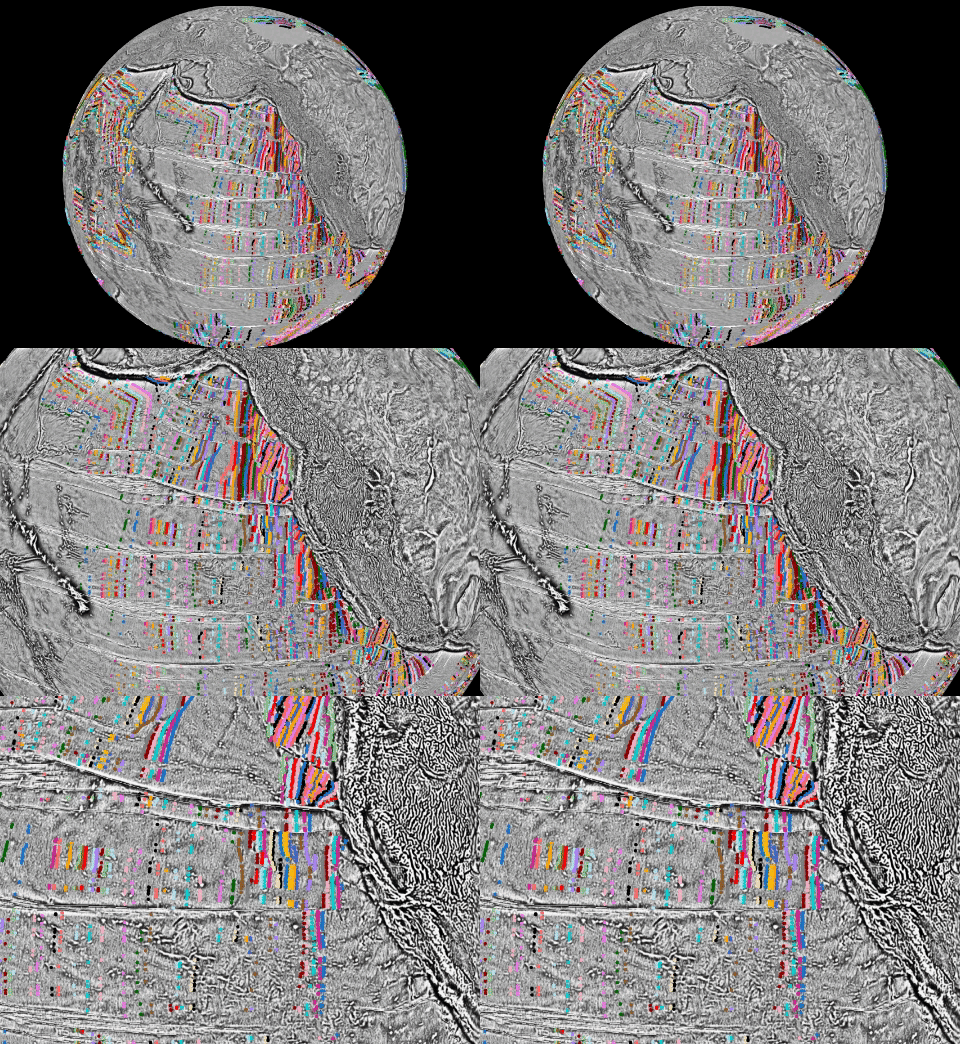
Fourth vectorial provocation, on computing velocities
that is too linear this is too straight
data has different densities and intensities and the effects and affects of the single timeline make themselves visible
when specific intra-active technologies violently rendered real bodies, they wondered about the see-through space-times that were left in the dark11
leaving grey areas that show no data coverage
the crisis of presence that emerged with the computational turn was shaped by the technocolonialism of turbocapitalism!
where is that information what is this superfiction
convoked from the dark inner space-times of the earth, the flesh and the cosmos, particular [amodern] renderings evidence that real bodies do not exist before being separated, cut and isolated.
whole parts of grey earth like you are making a cake you can put toppings on
grey means there is nothing such as a body of earth it is almost a void
they read, listened and gossiped with awkwardness, intensity and urgency
earth used as a template for almost always fractured data
listen: there is a shaking surface, a cosmological inventory, hot breath in the ear
zoom in this shaking surface and always find some cracks
the tool keeps wanting it to be presented as a whole the oneness of earthness as in the oneness of humanness
there is a persistently imposing paradigm of wholeness and a pretension of full resolution but a body becomes any body only if the whole thing collapses
but when
[the soil] is no longer (or never was) the exclusive realm of technocrats or geophysics experts
swipe it fast so much time in one swipe
it is almost rude
these are your new devices, dim and glossy
take your time scroll scroll scroll deeper
where poetic renderings start to (re)generate (just) social imaginations
theres thens truths
let’s collectively resonate against technologies
counting backwards and year zero does not stay
grab that time and
perhaps if you upgrade the software you can get extra time
that bring in transfeminist queer futures
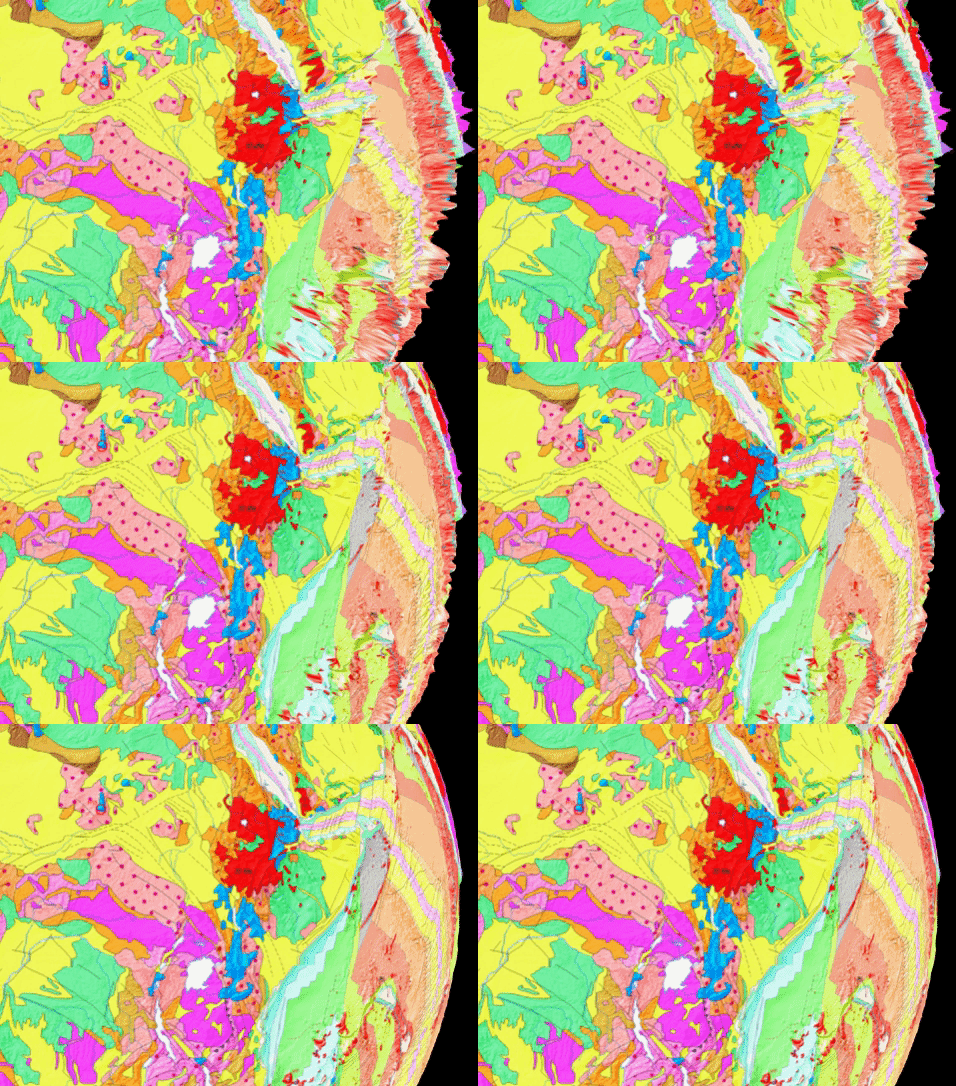
Fifth vectorial provocation, on the techniques of 3D volume visualization
who is behind the proposers of the Mercator12 projection
postcolonial or hegemonic structures of development13
who is behind one more eurocentric view of it
“the centrality of mathematical and technological science… structured by masculinist ideologies of domination and mastery”
from 2D to 3D
such institutional, cultural, and scientific practices also affect glaciological knowledge
you are the camera!
Questions of who produces glaciological knowledge, and how such knowledge is used or shared, take on real implications when considered through feminist postcolonial science studies and feminist political ecology lenses
At Gplates you can replace the pole location grab the pole and drag it
indigenous accounts do not portray the ice as passive, to be measured and mastered
while time happens along a linear highlight of cascading data
folk glaciologies diversify the field of glaciology and subvert the hegemony of natural sciences
Gplates applies deep familiar metaphors like child plates
Of the Earth, the present subject of our scenarios, we can presuppose a single thing: it doesn’t care about the questions we ask about it14
slide the zoom in and out of a data set of magnetic information
to speak of a world which is “prior” and “independent” without implying that it is “single” and “determinate”: it encounters an earth which is very much “already composed” without it thereby being “already totalized”15
now relocate the pole
having “a stable identity” in relation to scientific study does not imply stasis or stability per se
slide deeper down smoothly
but how when where but who what why
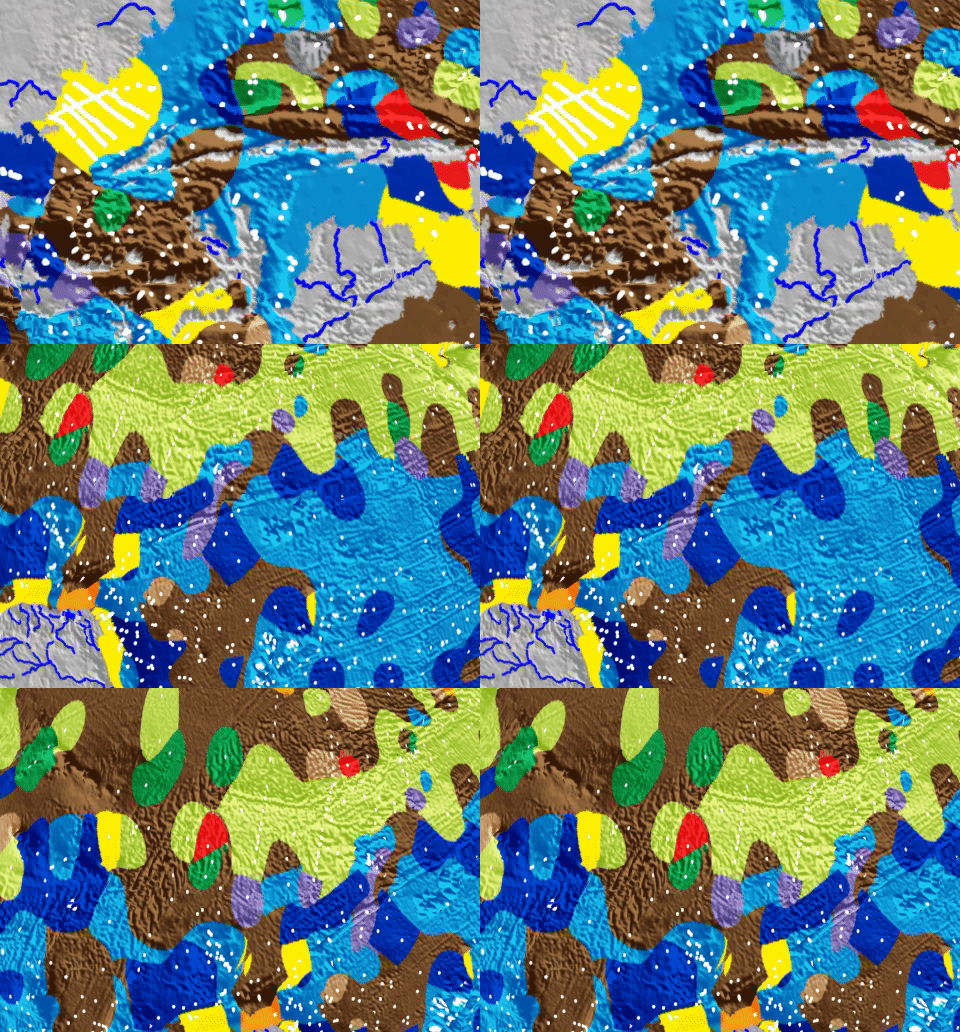
In the process of working on the Possible Bodies project, the urgency to consider the implications of making “disobedient action-research” made itself intensely evident. All questions emerging around the main vectors of inquiry on the political constraints of body volumetrics expose a key need to not comply with disciplinary methods, tools, languages, media nor scales. Instead, the invention of situated rigor should be made on the go, as well as a sharpening of the ongoingness of the research interlocution. This is the reason why we chose to pay attention to the very particular piece of writing a bug report is: it operates as a performative document that in itself is always already activating a change in the environment it inhabits. Technically, the fragments above still don’t compile a bug report. This is why I consider it fundamental to at least take the five vectorial provocations of the workshop and gather some open questions and potential research paths to move on, in case they can slide into the interlocution machinery otherwise. These include:
How could the material and semiotic conditions of possibility associated with softwares like Gplates be reissued for a collective problematization of the imaginaries and conceptions of temporality?
What would constitute an appropriate set of tools for a widening of more complex, non-fixed agencies that go beyond technocracy, perhaps also inviting participation fuelled by intersectional sensibilities, other curiosities and/or urgent struggles?
There seems to be a pendant task in strengthening the understanding of software-making as worldmaking, and an urgent need to visualize and represent earth phenomena without augmenting the values of universalism. For this to happen, we first need to train ourselves to better identify and problematize the non-innocent matrix of regimes—of truth, representation, economy, and ideology—that converge in scientific software environments.
Software Resources
Possible Bodies(dt. Mögliche Körper) ist eine fortlaufende Forschungszusammenarbeit über die technischen und lebhaften Spannungen zwischen sogenannten Körpern und volumetrischen Praktiken.16 Die Untersuchung kann an jeder möglichen Überschneidung zwischen zwei Vektoren ansetzen. Ein Vektor besteht aus physischen Körpern, die somatisch sein können oder auch nicht, menschlich oder auch nicht, isoliert oder auch nicht, benannt oder auch nicht. Der andere Vektor verdichtet sich durch die Berechnung des Volumens, das Körper durch ihre Anwesenheit im Raum einnehmen, ob virtuell – aus Bits bestehend – oder physisch – aus Atomen bestehend.
Das Projekt zielt darauf ab, „Körper“ im Zusammenhang von 3D-Tracking-, Modelling-, Rendering-, Kalibrierungs- und Scan-Verfahren als konkrete und fiktionale Entitäten zu problematisieren. Solche Verfahren sind durch die Digitalisierung vielleicht ausgereifter und schneller geworden, sind aber keineswegs neu. Die spezifische zeitgenössische Topologie der Volumetrie stützt sich auf verschachtelte Genealogien verschiedener Wissenscluster der Moderne (Verfahren zur Einstellung der Perspektive, Techniken zur Aktivitätsmessung, Werkzeuge zur Waagenkalibrierung, Normierung von Durchschnittsmengen, Methoden zur Positionsvorhersage). Verbreitete Protokolle und Paradigmen bestätigen die Grenzen dessen, wie, wann, wo und warum Körper untersucht und gemessen werden könnten oder sollten. Anders gesagt, es gibt ein Kontinuum, das den ruhigen Fluss sehr spezifischer Volumetrien (und nicht anderer) von der Architektur über die Grenzüberwachung bis hin zum Rechtlichen, Militärischen und Pornografischen ermöglicht – und dabei auch die Spektakularisierung des Sports und biomedizinischer Praktiken durchläuft. Aus den technikwissenschaftlichen Bedingungen für die Gleichmäßigkeit dieses Flusses ergibt sich eine gewisse Unbeweglichkeit in Bezug aufwahrscheinlicheVerläufe entlang des Volumetrie-Kontinuums. Sie beschränken potenzielle wilde Verdrehungen und überraschende Hacks, die erforderlich sind, um vom Wahrscheinlichen zum Möglichen zu gelangen!
Natürlich beeinflusst der Maßstab sehr stark die Mathematik der Präsenz. Nehmen wir den Maßstabssprung zwischen individueller somatischer Leiblichkeit (etwa von zoologisch anerkannten Organismen) und dem sogenannten Erdenkörper. Dieser enorme Unterschied belegt, wie der infrastrukturelle Komplex von Geo-Verfahren wie Bergbau und Bodenmessungen abhängig von verwandten Software-Werkzeugen ist, wie sie im biomedizinischen Bereich Anwendung finden (etwa die Tomografie). Hierfür werden sie jedoch an ein anderes Feld angepasst, um geologische Daten verarbeiten, interpretieren und dreidimensional visualisieren zu können. Solche Werkzeuge treiben sowohl biomedizinische Bildgebung als auch verdeckte technikkoloniale Erkundungen an. So erhalten sie Wissensbestände aufrecht, die einander beharrlich beeinflussen.Possible Bodies liegt die Frage zugrunde, wie diese parallelen technischen Entwicklungen zu einer Kristallisation und Standardisierung solcher Verfahren beitragen.
In Form eines Nachmittagsworkshops bei der transmediale 2019 lud Possible Bodies eine Gruppe von Festivalbesucher:innen dazu ein, gemeinsam quelloffene Werkzeuge des Geo-Modellings zu erkunden. Dabei stand die Beschäftigung mit verschiedenen Regimen im Mittelpunkt, unter denen die Software operiert – Wahrheit, Repräsentation, Sprache oder politische Ideologie. Der Workshop versuchte, Bezüge zwischen den Werkzeugen und einer Auswahl an Texten herzustellen. So sollten widerständiges Vokabular und Fiktionen eingespeist und Fehlnutzungen und/oder Reibungen erzeugt werden, um auf die extraktivistische Voreingenommenheit Einfluss zu nehmen, die Teil der Berechnung von Tiefen und Dichten der Erde sind. Der Workshop war ein transfeministisches[fn]Wir nennen ihn transfeministisch, um rund um dieses Sternchen () alle möglicherweise erforderlichen intersektional und intra-sektionalen Aspekte zu versammeln. In diesem Fall ist eine transfeministische Linse durch queere und antirassistische Sensibilitäten geschärft und an generationen-, medien-, disziplinen-, geopolitisch expertisen- und genealogienübergreifenden Forschungsformen ausgerichtet (aber nicht darauf reduziert).[/fn] Experiment, aus dem in einem Akt der affirmativen Verantwortungsübernahme für diese turbokapitalistische Dynamik die Kompilation eines „Fehlerbericht“17 hervorging.
In einer praxisbezogenen Situation wurde die GPlates-Software-Plattform zur Fallstudie. GPlates ist ein interaktives Visualisierungsprogramm zur Plattentektonik. Die quelloffene Anwendungssoftware rekonstruiert sehr komplexe Datensätze visuell, die für die Geophysik-Community von Nutzen sind.18 Als voreingenommene, affektive und potenziell anschauliche Infrastruktur für diese Auseinandersetzung wurde diese Plattform als Drehpunkt des Workshops gewählt. Wir befassten uns mit ihr und triangulierten ihre Visionen der Erde mit weiterer Softwaretechnologie und ein wenig kritischer Theorie.
Der WorkshopDepths and Densities wurde von einer Mischung aus altbekannten Gefährt:innen und neu hinzugestoßenen Teilnehmenden besucht (insgesamt flossen etwa 30 Stimmen zusammen). Sie alle brachten ihre eigene besondere Stärke hinsichtlich der vor uns ausgebreiteten Werkzeuge, Theorien, Vokabularien und Dringlichkeiten mit. Die Gespräche wurden vor Ort aufgezeichnet und später transkribiert. Die vorliegende Veröffentlichung durchschneidet eine dichte Masse schriftlicher Notizen, Transkriptionen und exzerpierter Theorietexte, die sich entlang fünf vektorieller Provokationen sedimentieren: zur Standardisierung von Zeit, zu Software-Sprachen, zur Aktivierung von Geontologien, zur Berechnung von Geschwindigkeiten und zu den Techniken der 3D-Visualisierung. Jede dieser Provokationen – jeder Vektor – wurde von einer Gruppe Teilnehmender aufgegriffen, die es sich zur Aufgabe machten, einen Teil von GPlates als Ganzem zu öffnen (etwa eine technische Funktion, ein Forum, eine Anleitung, eine Oberfläche etc.) und sie mit einem Textstück aus einem von Helen Pritchard, Femke Snelting und mir komponierten Reader in Spannung zu setzen. Die Plattform wirkte als Katalysator unserer Gespräche und somit wurde ihre Entwicklungsgemeinschaft schließlich zur indirekten Gesprächspartnerin eines Berichts.
Der folgende Ausschnitt ist entstanden, um eine Probe der eklektischen Dialoge jenes Nachmittags in etwas zu zerteilen, das in einen vielstimmigen Abhörbericht übertragen werden könnte.19
**Erste vektorielle Provokation, zur Standardisierung von Zeit ** wenn sich in gegenwärtigen Software-Umgebungen der Geophysik vielfache Zeitskalen sedimentiert haben, können dann die Praktiken zur Extraktion fossiler Energieträger als Praktiken des Zeitreisens verstanden werden?
wie wird – in einem modellierenden Sinne – das Ende der Zeit imaginiert?
wir sehen getrennt aufgetragene Farben
existiert der Erdenkörper in derselben Zeitskala wie du?
oder: Versuche, die Wenns auf andere Weise zu bezeugen
Zeit ist tendenziell auf die Wahrnehmung der beobachtenden Person begrenzt (und von ihr) beeinflusst,
doch was sind die materiellen und semiotischen Bedingungen für eine andere Art der Zeitwahrnehmung?
sedimentierte Zeit und Koexistenz
in Ökologien des Nichts (auch Leere)
TEXT **Zweite vektorielle Provokation, zu Software-Sprachen ** die Herausbildung einer anders angetriebenen Sprache der Geologie muss einen Wortschatz bieten, mit dem geologische und geopolitische Traumata adressiert werden können
TEXT Nutzer:innenbindung an die Erde durch eine 3D-Visualisierungssoftware beruht auf Metaphern, die auf Besitz und Besetzung verweisen wie handling oder grabbing
TEXT
du kannst immer noch nach der Erde greifen:
auf GPlates steht eine statische Erde zum Zugriff bereit
TEXT auch die Nutzung des Verbs „(zu)greifen [to grab]“ bringt die Geschichte und Praxis der Landnahme, des Missbrauchs und der willkürlichen Eigentums- und Aneignungshandlungen mit sich, die sowohl mit der Enteignung anderer Menschen durch die Inbesitznahme von Boden als auch mit ökologischer Zerstörung einherging.
doch was wenn
die Erde zurückgreift?
TEXT wenn das ganze semantische Netz vonGPlates auf Bearbeitung [handling] und Zugriff [grabbing] als zentralen Gesten im Verhältnis zum Erdenkörper beruht, dann schleichen sich allzu leicht und allzu schnell der Verlust der Handlungsfähigkeit und eine extraktivistische Grundhaltung ein
TEXT
die meisten Software-Plattformen gestatten keinen Widerstand,
keine mögliche Nichtverfügbarkeit
TEXT
Mittelklick und ziehen
¡la tierra para quien la trabaja!24
TEXT
und was wenn
die Erdezurückgreift?
TEXT
**Dritte vektorielle Provokation, zur Aktivierung von Geontologien **
unser Sprechen legt sich übereinander
wie tektonische Platten und Strata
TEXT
anzuschauen, was Geologie eigentlich ist,
beinhaltet eine Neubetrachtung der Annahmen darüber,
was Leben ist
TEXT Mineralien Felsen Platten
TEXT kann nicht von Zeit losgelöst werden
TEXT aber wo ist die Legende, wir konnten sie nicht lesen
Leben (Leben{Geburt, Wachstum, Reproduktion} vs. Tod) vs. Nichtleben
warum diese Aussetzung
Zersetzung des Lebendigen
das Anthropozän sollte im Fehlerbericht auftauchen
in derMutter aller Fehlerberichte
TEXT
andernfalls wird die Zukunft weiterhin fehlen
aber warte, die Vergangenheit fehlt auch
die Linie geht 172 Millionen Jahre zurück, aber die Erde ist 4,5 Milliarden Jahre alt
TEXT
eine farbkodierte Chronologie
ist dieser Farbton das Jahr der Entstehung
oder des Andauerns
des Zusammenbruchs der Vereinigung
TEXT eine Steigerung an Abstraktion wird auf gefährliche Weise dargestellt
TEXT
was ist die Haut eines Körpers
ihre Dichte
ihre Farbe?
TEXT aber warum?
TEXT eine Farbgrafik wäre toll
TEXT
wie die absolute Altersdatierung von Felsen
du bist lebendig, ich bin lebendig / Los geht’s!
TEXT
der Erde die Haut abziehen
den Mantel
Ich denke, auch das liegt im Kern des ProjektsPossible Bodies, dieses Kippen im Zugang zu einer anderen Art von Optik
und sie wieder aufziehen, wo die vierte Dimension die Zeit ist und auf 5D trifft: Unbestimmtheit
TEXT sie lässt sich nicht ganz wieder aufziehen
TEXT Geontologies: der Bedarf aller Fehlerberichte
- 1
- 2 We name it transfeminist in order to convoke around that star () all possibly needed intersectional and intra-sectional aspects. In this case, a transfeminist lens is sharpened by queer and anti-racist sensibilities, and oriented towards (but not limited to) transgenerational, transmedia, transdisciplinar, transgeopolitical, transexpertise, and transgenealogical forms of study
- 3 Bug reports are a particular kind of document written and emitted with the aim of fixing a software problem. The receiver is an agent capable of technically intervening in the functioning of the program and hence bug reports can be understood as one of the key performative devices in software development processes.
- 4
- 5 Karen Barad, “Troubling time/s and ecologies of nothingness: on the im/possibilities of living and dying in the void,” New Formations 92: Posthuman Temporalities (2018).
- 6 David C. Nobes, “Pitfalls to Avoid in Void Interpretation from Ground Penetrating Radar Imaging,” Interpretation. 6. 1-31. 10.1190/int-2018-0049.1. (June 2018).
- 7 Kathryn Yusoff, A Billion Black Anthropocenes or None (Minneapolis: University of Minnesota Press, 2018).
- 8 Emiliano Zapata (c.1911)
- 9 Elizabeth A. Povinelli, Geontologies: A requiem to late liberalism (Durham: Duke University Press, 2016).
- 10 Excerpts from Helen Pritchard’s oral intro to the workshop
- 11 Possible Bodies feat. Helen Pritchard, “Ultrasonic dreams of aclinical renderings,” Ada: A Journal of Gender, New Media, and Technology, No. 13 (2018).
- 12
- 13 Mark Carey, M Jackson, Alessandro Antonello and Jaclyn Rushing, “Glaciers, gender, and science: A feminist glaciology framework for global environmental change research,” Progress in Human Geography, 40(6), 770-793 (2016).
- 14 Isabelle Stengers, The Invention of Modern Science (Minneapolis: University of Minnesota Press, 2000).
- 15 Nigel Clark, “Inhuman Nature: Sociable Life on a Dynamic Planet” (London: SAGE Publications, Published in association with Theory, Culture & Society, 2011), pp. 38-39.
- 16
- 17 Fehlerberichte sind eine besondere Art von Dokument, das mit dem Ziel geschrieben und ausgesandt wird, ein Software-Problem zu lösen. Die Empfänger*in ist handlungskompetent und fähig, technisch in die Funktionsweise des Programms einzugreifen. Somit können Fehlerberichte als eines der zentralen performativen Mittel in Prozessen der Softwareentwicklung verstanden werden.
- 18
- 19 Alle Texteinfügungen (kursiv, rechtsbündig) sind Zitate aus den Texten im Workshopreader. Die Abschnitte, die einem bereits mit Quellverweis versehenen Zitat folgen, stammen von derselben Autor*in, bis die nächste Quellenangabe an einem kursiv gesetzten Zitat folgt. Alle linksbündig gesetzten Stimmen kamen in den Workshopgesprächen auf, die von Fanny Wendt Höjer transkribiert wurden.
- 20 Karen Barad, „Troubling time/s and ecologies of nothingness: on the im/possibilities of living and dying in the void“, New Formations 92: Posthuman Temporalities (2018).
- 21 David C. Nobes, „Pitfalls to Avoid in Void Interpretation from Ground Penetrating Radar Imaging“, Interpretation. 6. 1-31. 10.1190/int-2018-0049.1. (Juni 2018).
- 22 Kathryn Yusoff, A Billion Black Anthropocenes or None (Minneapolis: University of Minnesota Press, 2018).
- 23 A.d.Ü. Das Konzept der „Maroonage“ bezieht sich auf jene Menschen, die sich der rassistischen Versklavung und dem kolonialen Gewaltsystem entziehen konnten und an von der Außenwelt abgeschnittenen Orten widerständige, isolierte und geheime Gemeinschaften bildeten (siehe: maroons, marrons, cimarróns).
- 24 Emiliano Zapata (ca. 1911); dt. etwa: Der Boden denen, die ihn bebauen!
- 25 Elizabeth A. Povinelli, Geontologies: A requiem to late liberalism (Durham: Duke University Press, 2016).
- 26 Auszüge aus Helen Pritchards mündlicher Einführung in den Workshop