What happens if I wave my arm?
What happens if I move my body in this different manner?
Why would somebody want to kill you?
Opposition, or what does opposition mean?
Could you describe what’s going on on a normal day in the cybercafé?
Who actually carries the burden in this context?
Can you turn it off now?
Me?
So where was I?
Should…No beep?
What looks like a butterfly?
What does it mean to practise anti-militarism when technologies of warfare increasingly become part of everyday life?
During their research in the transmediale archive, eeefff encountered materials related to drones and the tension between militarist and anti-militarist imaginaries. These questions surface across different moments in the festival’s history: from Harun Farocki’s Eye/Machine II at transmediale.04 FLY UTOPIA, which examined machine vision and the operational images of the Gulf War, to the 2012 discussion War Machines: Military Technologies between Civility and Authority, and Drone-2000 for transmediale 2016 Conversation Piece, which confronted audiences with the autonomy and unpredictability of drone technologies.
Today, drones, machine vision, and remote forms of warfare have become impossible to separate from the political reality of Europe. Russia’s full-scale invasion of Ukraine has produced new forms of warfare in which drones and remote operations play a central role. At the same time, civilian initiatives in Ukraine and across Europe assemble drones as forms of solidarity and defence. In Germany, renewed debates around rearmament, military service, and defence confront a long history of anti-militarist and pacifist movements.
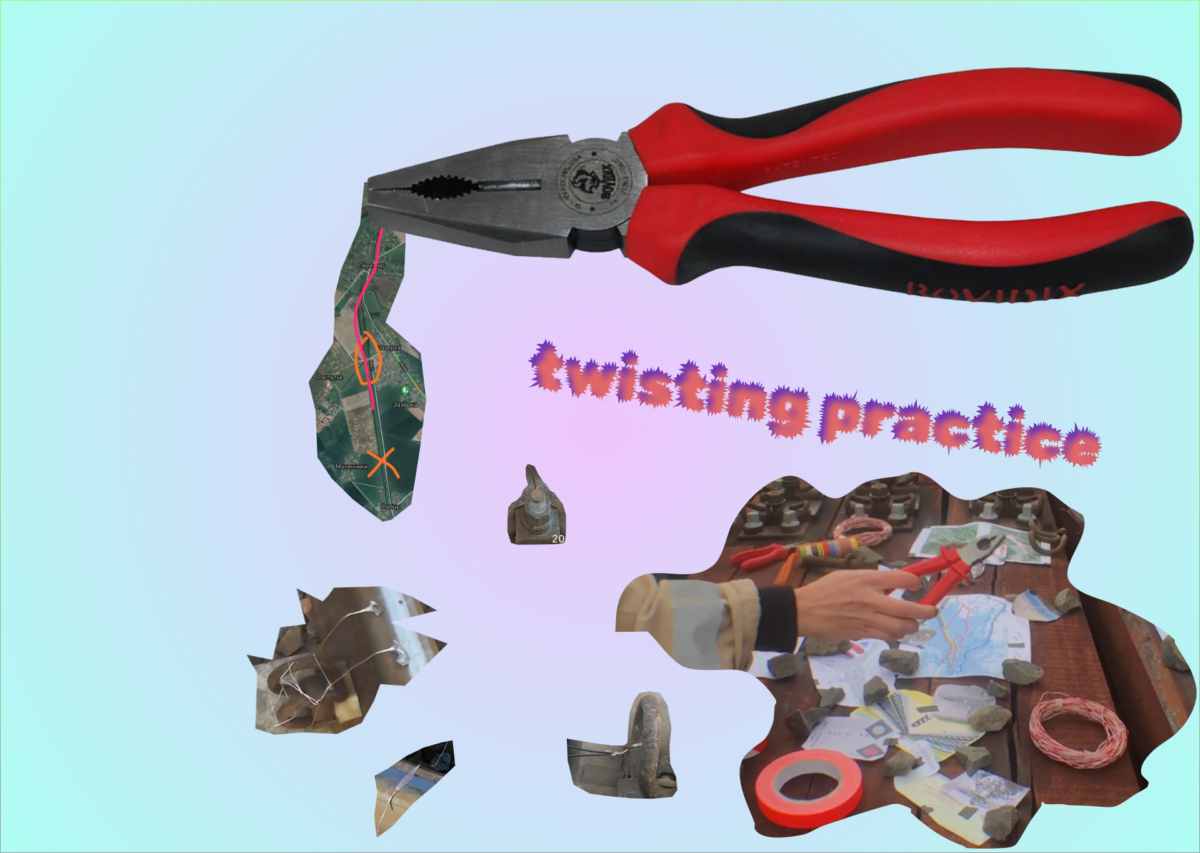
The session does not attempt to resolve the tensions between defence and pacifism, solidarity and violence, or action and refusal. Instead, it creates a practical situation in which these contradictions can be encountered through making and unmaking.
The exercise is approached through techniques inspired by ergotherapy: rather than separating thinking from doing, participants engage political questions through their bodies, movements, coordination, attention, and interaction with materials. The drone becomes a device through which motor skills can be practised, while motor action becomes a way of encountering the political and social conditions embedded in technology.
The exercise does not aim to produce a functional object or to reach consensus. Instead, it asks participants to notice how bodies are trained through technical tasks: how movements become coordinated, how attention is directed, how cooperation is organised, and how action can also be interrupted or refused.
Here, anti-militarism is approached not simply as a position of refusal, but as a technique: something that can be practised, rehearsed, and collectively tested through bodies, materials, and social relations.
Anti-militarism is not the absence of action. It is also a form of action.
Please note that this session will be documented on video. By registering, participants should be aware that documentation produced during the session may be used as part of a subsequent artistic installation and/or presented in the context of the project and its future public presentations.