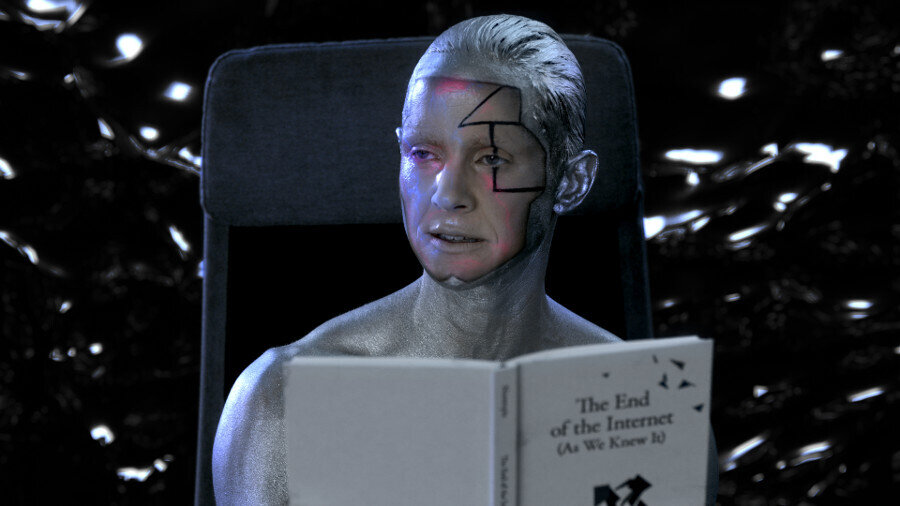
What is the face of the internet? Do the countless images of faces and bodies circulating within it affect what it looks like and how it is experienced? Although we like to think of the internet as an open, multivocal, and diverse space, this image is no longer accurate. Today’s platforms of communication are zones of sameness, with algorithms filtering out anything that is considered unknown or unfamiliar. With echo chambers and filter bubbles shaping homogenized and polarized pseudo-public spheres, it becomes difficult to reimagine a unifying and emancipatory internet. Taking the role of viral posts, memes, and selfies as a starting point, this unmoderated conversation will discuss the potential of opacity, queerness, and blaccelerationism, and speculate about networks of affect and excess.
The European Commission’s support for the production of this publication does not constitute an endorsement of its contents, which only reflect the views of the authors; the Commission cannot be held responsible for any use that may be made of the information contained therein.

Was ist das Gesicht des Internets? Beeinflussen die unzähligen Bilder von Gesichtern und Körpern, die darin zirkulieren, die Art und Weise, wie es aussieht und erlebt wird? Obwohl wir das Internet gerne als einen bedeutungsoffenen und vielfältigen Raum betrachten, ist diese Vorstellung nicht mehr zutreffend. Kommunikationsplattformen sind heute Zonen der Gleichförmigkeit, aus denen Algorithmen alles herausfiltern, was unbekannt oder fremd erscheint. Wenn Echokammern und Filterblasen homogenisierte und polarisierte pseudo-öffentliche Sphären prägen, wird es schwierig, ein einendes und emanzipatorisches Internet neu zu entwerfen. Ausgehend von der Rolle viraler Posts, Memes und Selfies wird in diesem unmoderierten Gespräch das Potenzial von Opazität, Queerness und blaccelerationism diskutiert und über Netzwerke des Affekts und Exzesses spekuliert.
Dieses Projekt wurde mit Unterstützung der Europäischen Kommission finanziert. Die Verantwortung für den Inhalt dieser Veröffentlichung tragen allein die Verfasser_innen; die Kommission haftet nicht für die weitere Verwendung der darin enthaltenen Angaben.

Related Artworks
Related Media
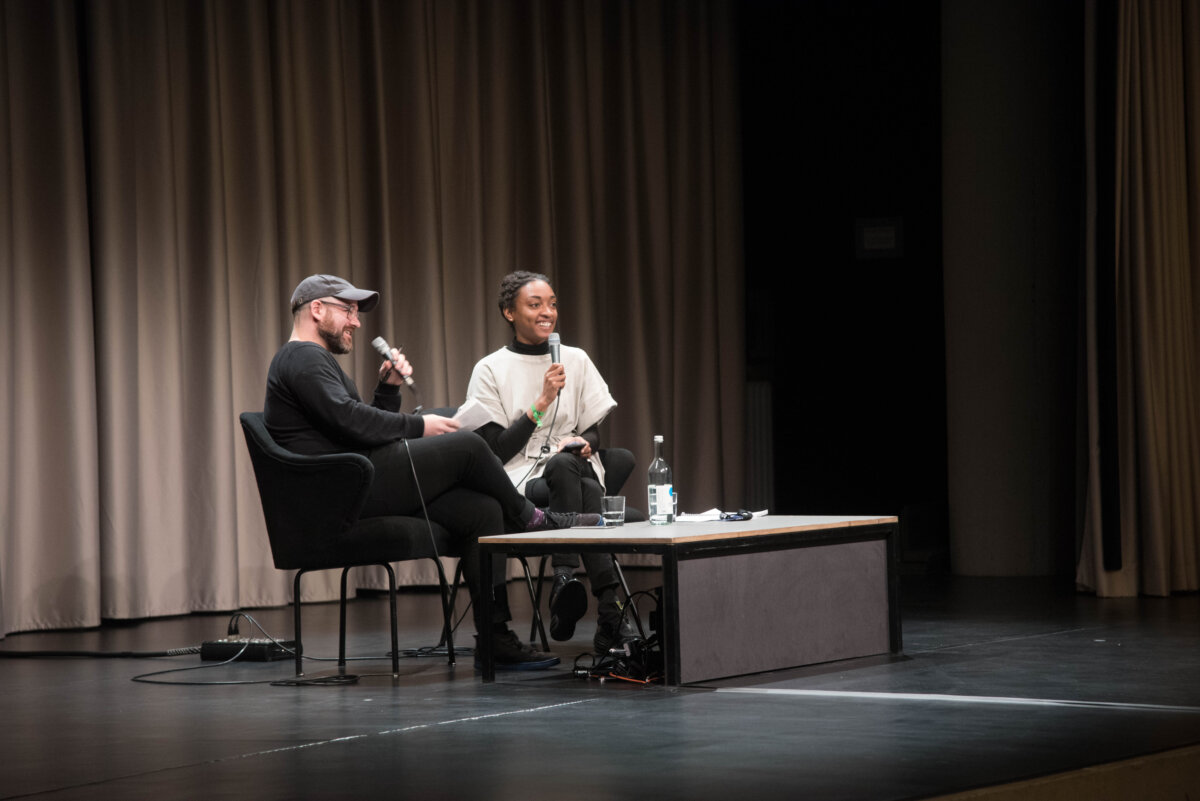 Zach Blas (left) and Aria Dean (right) at the discussion "Reimagine the Internet: Affect, Velocity, Excess"
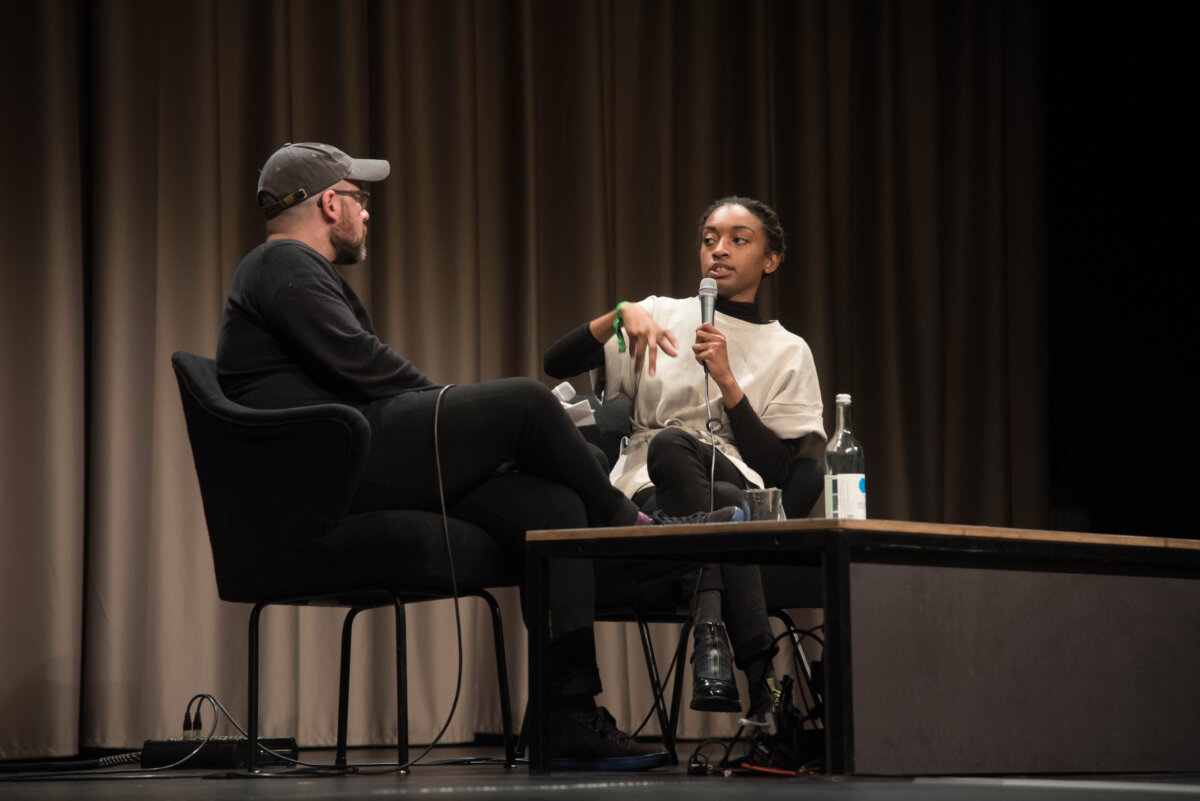 Zach Blas (left) and Aria Dean (right) at the discussion "Reimagine the Internet: Affect, Velocity, Excess"
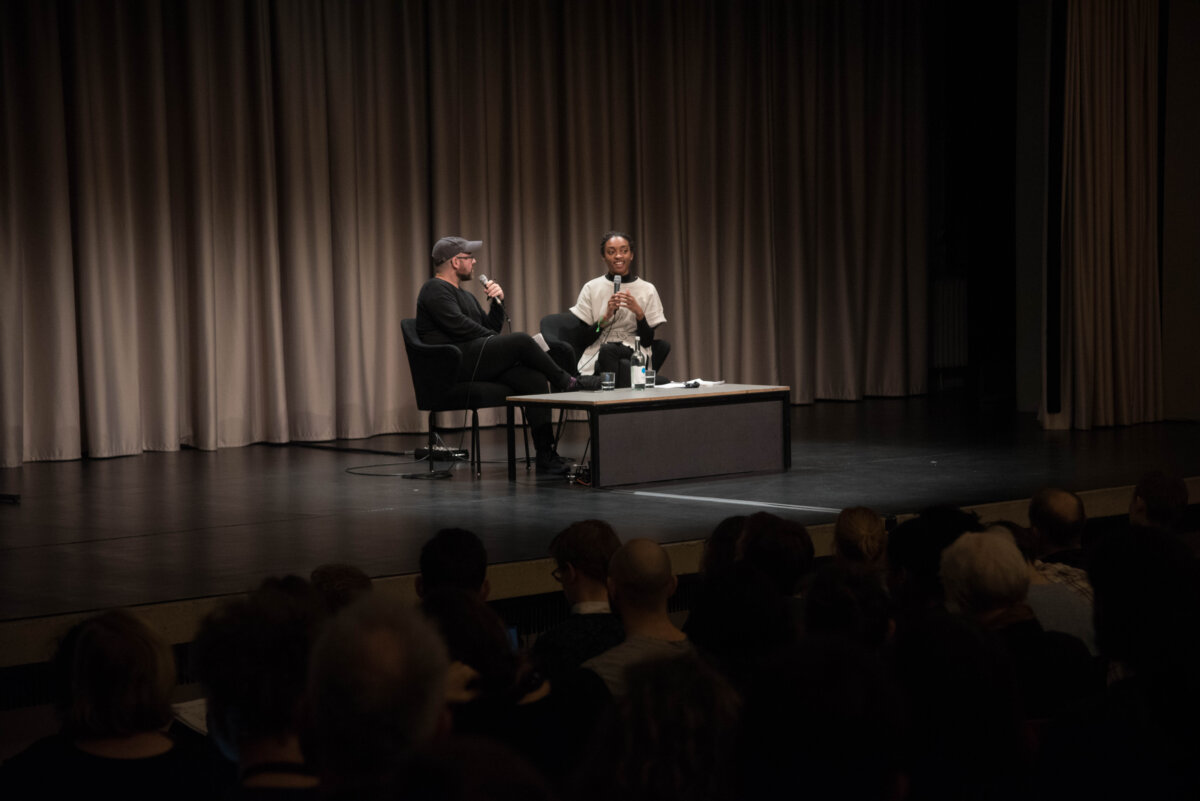 Zach Blas (left) and Aria Dean (right) at the discussion "Reimagine the Internet: Affect, Velocity, Excess"
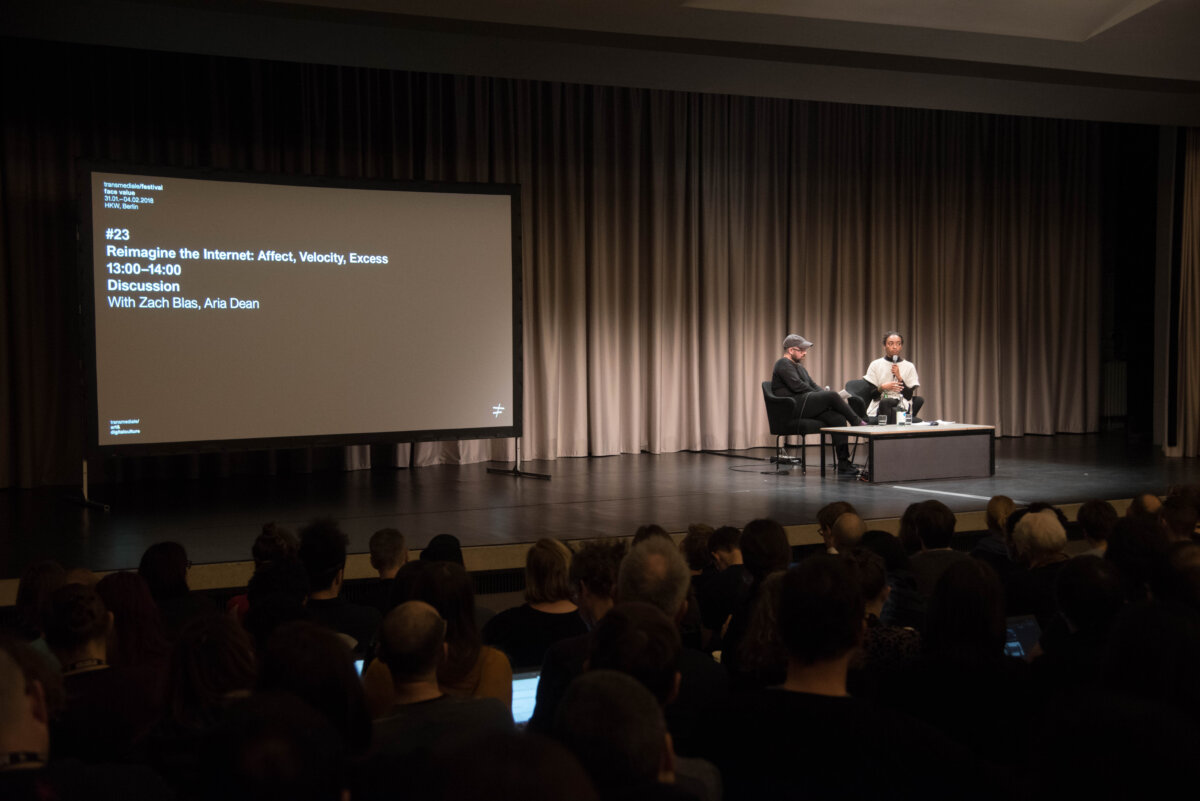 Zach Blas (left) and Aria Dean (right) at the discussion "Reimagine the Internet: Affect, Velocity, Excess"
- Reimagine the Internet: Affect, Velocity, Excess