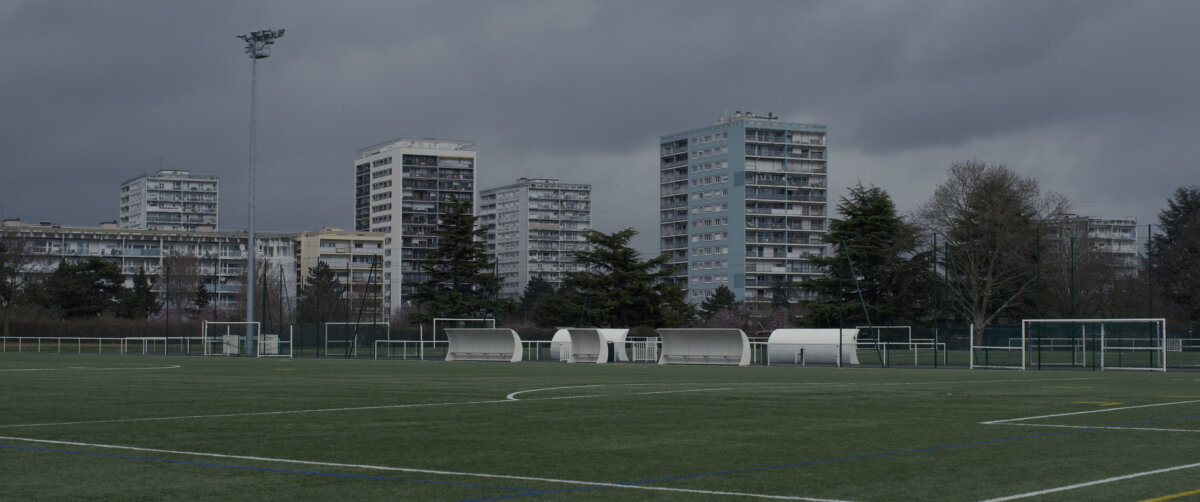
Eric Baudelaire’s artistic documentary follows the progress of a young man’s journey from France to Syria—and back to France, where he is incarcerated for allegedly joining the so-called Islamic State. The film is based on real events and draws from judicial and police documents. It employs the landscape theory (fukeiron in Japanese) first introduced in the 1969 film AKA Serial Killer by Masao Adachi, who was the subject of Baudelaire’s earlier film works. In Also Known As Jihadi, the character’s paths to radicalism are rendered through a series of landscape shots filmed at the locations he traversed: a biography determined not by what he did, but by what he saw, thereby questioning how these places reflect the social and political structures that form the backdrop for this journey of alienation and return.
…
Eric Baudelaires künstlerischer Dokumentarfilm folgt der Reise eines jungen Mannes von Frankreich nach Syrien – und zurück nach Frankreich, wo er aufgrund seiner vermeintlichen Zugehörigkeit zum sogenannten Islamischen Staat inhaftiert wird. Der Film basiert auf realen Ereignissen und stützt sich auf gerichtliche und polizeiliche Dokumente. Zudem greift er die Landschaftstheorie (japanisch fukeiron) auf, die Masao Adachi, mit dem sich Baudelaire bereits in früheren Arbeiten auseinandergesetzt hat, erstmals 1969 in seinem Film AKA Serial Killer anwandte. In Also Known As Jihadi wird der Weg des Protagonisten zum Radikalismus durch eine Reihe von Landschaftsaufnahmen dargestellt, die an einzelnen Stationen seiner Reise gedreht wurden: eine Biografie, die nicht von dem bestimmt ist, was er getan hat, sondern von dem, was er gesehen hat. Hierdurch wird hinterfragt, in welcher Weise diese Orte die sozialen und politischen Strukturen widerspiegeln, die den Hintergrund dieses Weges der Entfremdung und Rückkehr bilden.